Full Article
about Mantinos
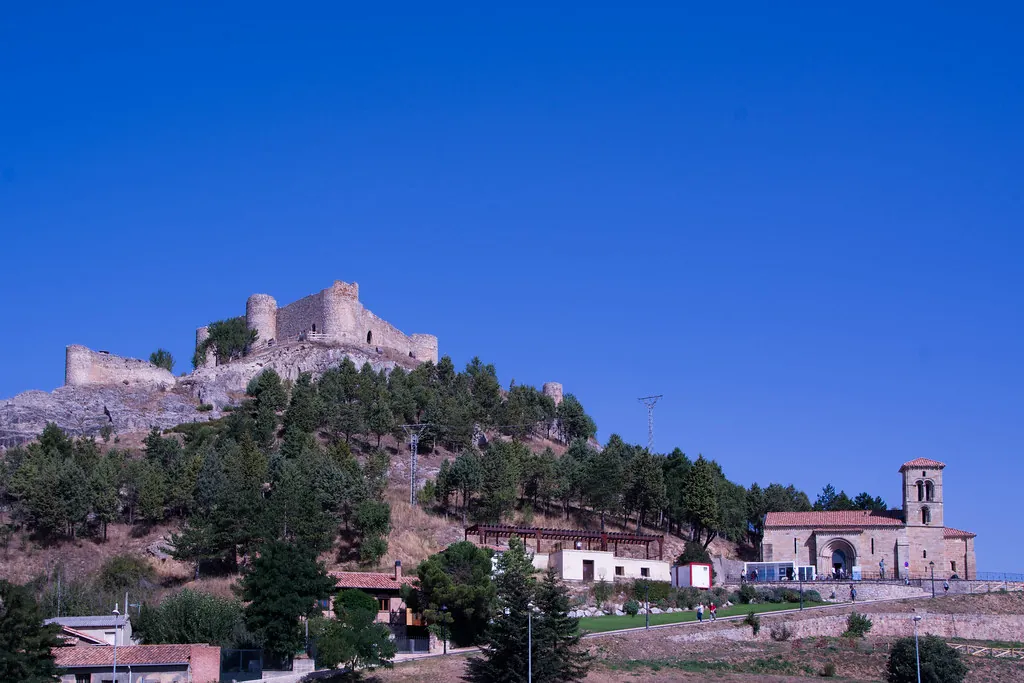
Mountain village near Guardo; green landscapes and trails to the Sierra del Brezo; stone architecture.
Ocultar artículo Leer artículo completo
The church bell strikes noon and the only other sound is a tractor reversing into a barn. No café terraces, no gift shops, not even a vending machine. At 1,050 metres on the Palentine upland, Mantinos keeps its distance from the tourism industry—and that, perversely, is what makes it interesting.
Stone, Stock and Silence
Limestone walls half a metre thick shoulder most houses; roofs wear the soot-black Arabic tile still made in Guardo, ten minutes down the road. Timber balconies sag under tubs of geraniums, but look closer and you’ll spot satellite dishes and PVC windows shoved into the same façade—life here is practical, not curated. The parish church of San Andrés squats at the top of the single paved lane; its belfry is a simple cube punched with two arched openings, more barn than cathedral. Inside, the cool air smells of candle wax and grain stored in the sacristy over winter.
Fields press right up to the doorsteps. Cows graze within stone’s throw of the church, and every house seems to own a patch of meadow stretching behind it. The village still works the 24-hour clock of livestock: milking at six, feed run at four, lights out by ten. Visitors who expect a folk museum quickly realise the soundtrack is pneumatic tools and lowing cattle, not pan-pipes.
Walking Without Waymarks
There are no signed trails, yet the web of farm tracks heading north makes getting lost surprisingly difficult. A thirty-minute shuffle along the concrete lane past the last house brings you to the collado where the province’s grid of dry-stone walls suddenly makes sense: every ridge reveals another valley of pasture and every pasture carries a yellow tag denoting which herd may graze it. Spring arrives late; by May the verges explode with purple digitalis and cowslip, while boot-sucking clay lingers in the hollows until June. In October the same paths turn bronze and crunch underfoot; if an early storm arrives, snow can seal the CL-626 for half a day.
Serious walkers sometimes string Mantinos into a two-day loop linking Cervera de Pisuerga and the Romanesque jewels of Olleros de Pisuerga, but most people simply stroll until the village roofs look like a spilled box of dominoes, then turn back. A free GPS track is available from the Guardo tourist office; phone ahead—staff work part-time and the printer is often out of toner.
How to Provision Like a Local
The economics are simple: if Mantinos doesn’t produce it, you bring it. The nearest honest-box stall—eggs, onions, the occasional jar of mountain honey—sits by the cattle grid at the entrance; carry €1 coins because notes flap away on the breeze. Everything else is in Guardo: a Masymas supermarket open until 21:30, a bakery that sells still-warm baguettes at 08:00, and a Saturday farmers’ market where two stalls do excellent queso de Valdeón, the region’s gentler answer to Stilton. Fill the tank there too; the village pump closed in 2003 and the next garage is 28 km north in Aguilar de Campóo.
Meals follow the same rule. Bar La Paz in Guardo dishes out cocido montañés, the local bean-and-cabbage stew, for €9; ask for a media ración if the full trough looks daunting. Tostón (roast suckling pig) appears only at weekends at Posada El Remanso, 8 km towards Cervera—ring before 18:00 or the chef won’t fire up the wood oven. Back in the village, most visitors self-cater; rental kitchens come with sharpening steel and a paella pan the size of a satellite dish, hinting at the Spanish belief that rice solves everything.
When the Weather Picks the Itinerary
Altitude keeps July bearable—nights drop to 14 °C—but January can park the thermometer at –6 °C for a week. If the provincial plough hasn’t passed, the lane into Mantinos becomes a bobsled run; park at the junction and walk the last 400 metres. Landlords leave snow shovels by the door and instructions to drip taps all night. Conversely, August can feel airless; thunderstorms brew over the Cantabrian watershed and crack open at sunset, turning clay paths into calf-deep chocolate mousse.
Spring and autumn give the best ratio of daylight to mud. In April you get luminous green pasture, snow still striping the higher summits, and migratory kites overhead. Mid-September coincides with the fiestas patronales: temporary bar in the square, mass followed by doughnuts and cider, and a Saturday-night disco run from the back of a cattle lorry. Accommodation prices don’t budge—there simply aren’t enough beds to trigger surge logic.
Beds, Bars and Bad Signal
Overnighters have two choices. Stay in the village itself at Maravillosas Vistas, a three-bedroom house with oak beams, Wi-Fi that flickers whenever the microwave’s on, and a roof terrace that earns its name at dawn when mist pools in the valley. Expect £70–£95 per night depending on exchange rate; the key is fetched from a lockbox, so midnight arrivals are fine. Alternatively, drop 8 km towards the reservoir to Casa San Martín, a stone complex with heated pool and breakfast featuring homemade cheesecake—€124 a night, children welcome, dogs negotiable.
Mobile coverage is patchwork. EE picks up a usable 4G signal on the knoll behind the church; Vodafone users stand in the road, arm aloft, looking like lost mountaineers. Treat the digital detox as part of the package, but download offline maps before you leave Guardo’s ring road.
Leaving Without a Fridge Magnet
Mantinos won’t suit everyone. Coaches can’t turn round, the nightlife ends at the church bell, and souvenir hunters leave empty-handed. Yet for travellers who measure value in silence, star-thick skies and the smell of new-mown hay drifting through open windows, the village delivers without trying. The risk is discovering that two nights feel plenty; the reward is remembering what rural Europe looked like before it started selling itself back to us.