Full Article
about Polentinos
Small high-mountain village near the Requejada reservoir; spectacular setting for nature tourism.
Hide article Read full article
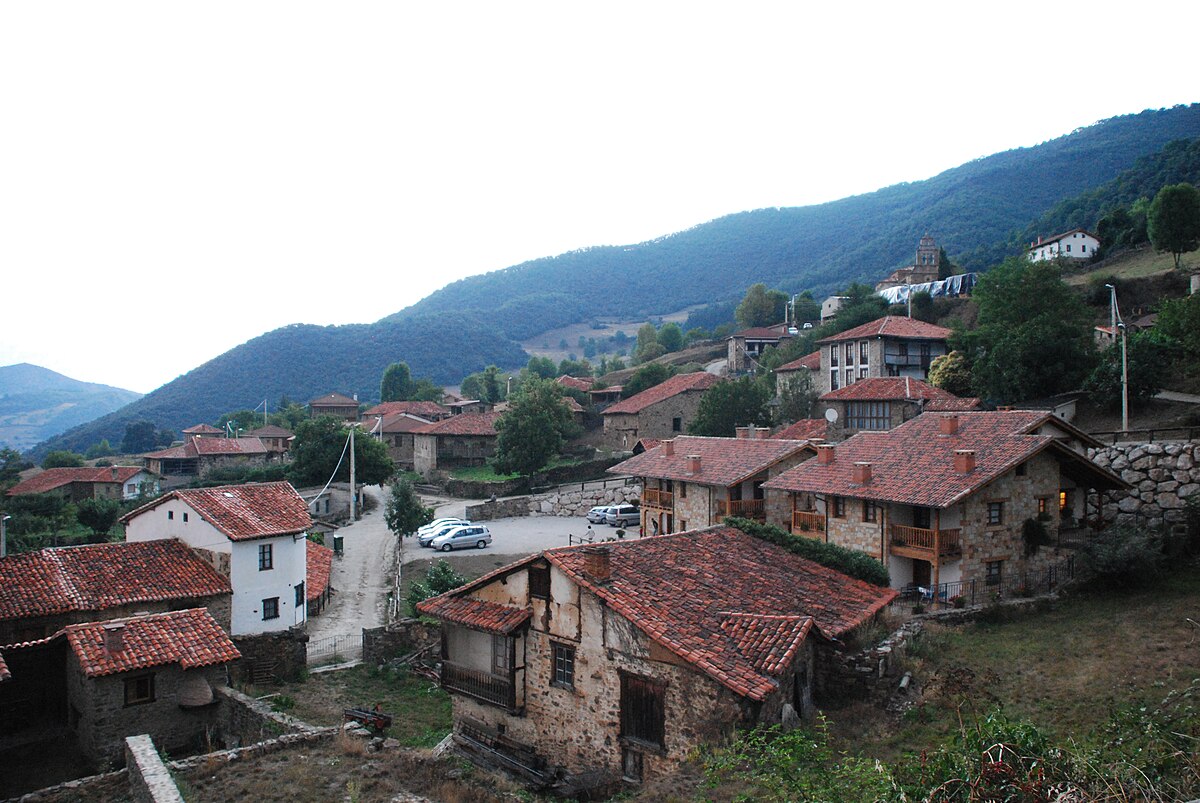
The first sound you notice is water, a steady rush from the stream behind the houses. Then, the dull clank of a cowbell from the hillside. The air at this hour holds a mineral chill, the kind that seeps into wool and stone. Polentinos, a village of forty-one souls in the Montaña Palentina, is not so much asleep as waiting. Light cuts down the tight lanes between granite houses, touching only the upper halves of their dark slate roofs.
This is a place built for purpose, not for show. The streets are short, some still just packed earth, and they give way quickly to the tracks that lead out to the meadows. Life here pivots around the church of the Asunción and the daily movement of cattle. You come to Polentinos to walk its old paths and to feel the weight of a mountain climate that dictates everything from the building materials to the rhythm of the day.
Driving the Last Few Kilometres
The road in feels like a closing door. After Cervera de Pisuerga, the tarmac narrows and the beech woods press in from both sides. In autumn, they form a tunnel of burnt gold. You will not see another car for long stretches. The sign for Polentinos appears suddenly, a small brown plaque that points down a final descent. Fill your tank beforehand; there are no services here. In winter, check the forecast. Black ice forms early on these shaded curves, and snow can make the last approach impassable for ordinary cars.
Arrival is quiet. There is no welcome sign, no designated parking, just the solid presence of houses gathered on a slope. You park where others have, near the church, and the silence settles back around you.
A Church of Worn Stone
The parish church of the Asunción anchors the village. Its simple bell gable is the highest point among the rooftops. Push the heavy wooden door open and the air inside is several degrees cooler, smelling of old wood and damp stone. The interior is plain, lit by a few high windows. The baptismal font is notably older than the 18th-century structure that houses it, its surface worn smooth by generations.
Outside, a patch of flat ground serves as a plaza. On a summer evening, you might find a few plastic chairs set out, neighbours talking in low tones as the light fades behind the western ridge. For most of the year, it is simply an empty space where wind scatters leaves. The village layout makes no concession to outsiders; lanes end abruptly at a barn wall or merge into a cattle track without warning.
The Paths Are The Point
Do not look for waymarked trails or signposts. The real network here is made of caminos de herradura, old bridle paths worn deep by livestock and cart wheels. One starts just past the last house, its entrance barred by a wooden gate you must unlatch and close behind you.
The path climbs through a meadow still glistening with morning dew, then enters a beech wood where sound becomes muffled. The ground is soft with centuries of leaf litter. After about twenty minutes of steady walking, you break out onto a ridge where the view opens up across the entire valley—a sweep of pasture, forest, and rock. This is not a scenic overlook built for photos; it is a working vantage point for shepherds.
These walks are functional landscapes. You will step around fresh cow pats and hold gates open for curious heifers. The rhythm is slow, dictated by footfall and breath. In October, the beech leaves turn a brittle copper and crunch underfoot; by November, they form a silent, sodden carpet.
Sky and Silence
Sit on one of the granite boulders that line the upper meadow and look up. Griffon vultures circle on thermals rising from the southern rock face. Their shadows drift over the grass. If you stay until dusk, you might see roe deer emerge at the tree line, their coats grey against the fading light.
Night falls completely here. The few streetlamps in the village cast only small pools of orange light. Walk fifty metres beyond them and you are in darkness so deep it feels physical. The Milky Way is often visible as a smudge of chalk dust across black velvet. The cold settles quickly after sunset, even in August, carrying with it the smell of damp earth and woodsmoke.
Practicalities: Food and Season
You will not eat in Polentinos. Bring supplies with you or plan to drive to Cervera de Pisuerga or another larger village in the valley for meals. The local cuisine is heavy, built for insulation: slow-cooked cocido, grilled lamb chops, morcilla from nearby butcheries.
Come in late spring for the greenest meadows and running streams, or in autumn for the forest colour and clearer air. Summer weekends can see a handful of visiting families; weekdays remain quiet but for the buzz of flies in the midday heat. Winter is for those who understand mountain weather—the beauty here is stark, wrapped in mist or sharpened by frost, but access cannot be taken for granted.
Polentinos does not try to keep you entertained. It asks you to slow down, to notice where water runs and where cattle have passed, to feel the altitude in your lungs when you climb its paths. You leave with mud on your boots and the sound of cowbells still echoing in your ears long after you have driven back down through the tunnel of trees.