Full Article
about Respenda de la Peña
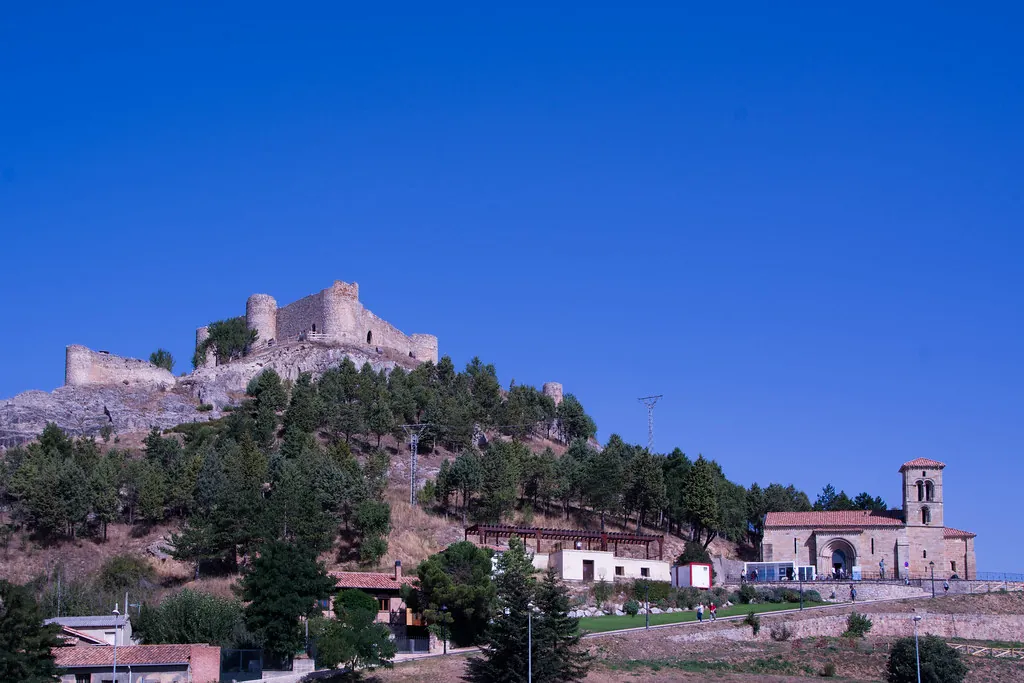
Located in the Peña region; it offers spectacular mountain views and interesting hiking trails.
Hide article Read full article
First Light in the Valley
Arrive early in Respenda de la Peña and the air comes down cool from the hillsides. It is not a harsh cold, but a clean freshness that lingers on the skin while the village is still half asleep. The stone houses hold on to the night’s shadow and their small windows let in a thin strand of light that stretches across the walls. Pause for a moment and there is water nearby, perhaps a narrow channel or the river, moving quietly without drawing attention to itself.
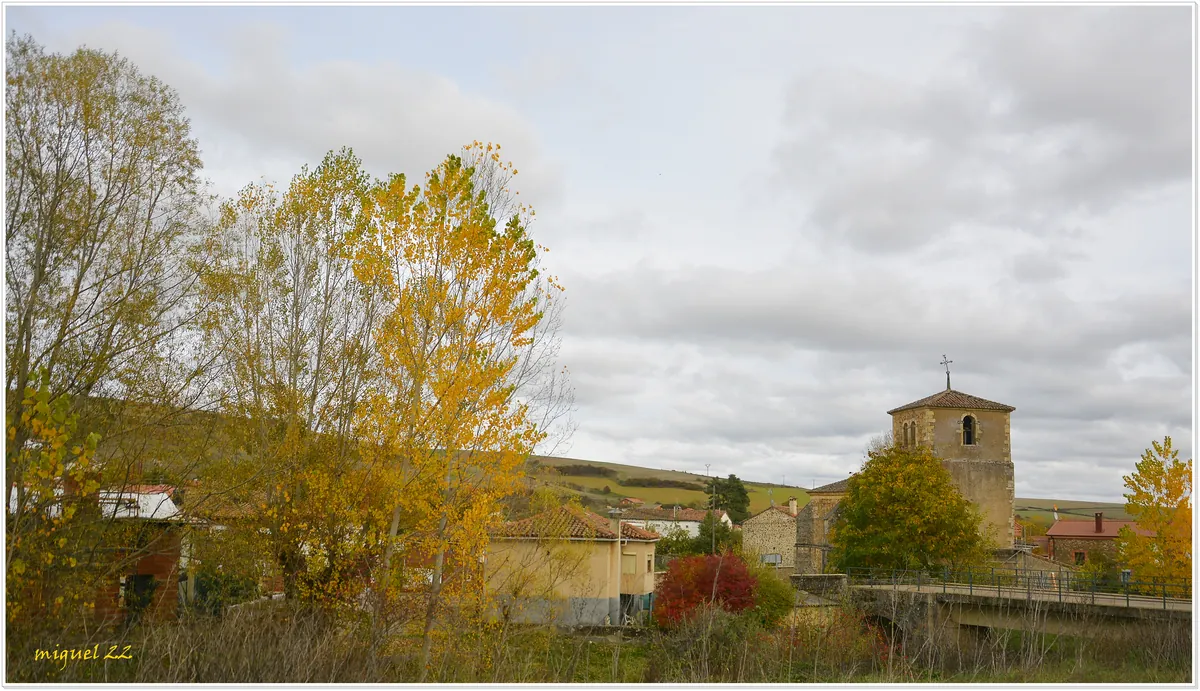
In this part of the Montaña Palentina, in the north of the province of Palencia, villages do not reveal themselves all at once. They appear between meadows and low rises in the land, and Respenda follows that pattern. Its streets climb and dip irregularly between dark stone houses and slate roofs that turn almost silver by mid-afternoon when the light hits them at an angle. Wooden balconies creak as doors open, farmyards are still in use, and thick walls show the marks of careful repairs made layer upon layer over time.
Nothing feels arranged for effect. The layout responds to the slope and the weather, to the need for shelter and storage, to a way of living that adapts to the seasons rather than trying to control them.
A Small Village in the Montaña Palentina
Respenda de la Peña belongs to a scattered network of small villages spread across the quieter valleys of the Montaña Palentina. The impression is one of open space. Meadows shift in colour as the months pass, from bright greens to drier tones, broken by small patches of woodland. Higher up, pale rock slopes fracture into irregular shapes where the terrain becomes rougher.
Water is a constant presence. Throughout the village there are fountains and small spouts where water falls steadily and without fuss. Many are still used. It is often worth keeping an empty bottle in the car if passing through, as the water runs very cold even in summer. Even so, it is sensible to check whether a fountain is marked as potable, since not all are signposted.
These everyday water points are part of the rhythm of the place. People stop briefly, fill a container, exchange a few words. There is no sense of spectacle, just the practical value of water that has always been there.
The surrounding landscape feels broad rather than dramatic. Fields open out towards low hills, and beyond them the higher ground begins to define the horizon. The Montaña Palentina is known for its varied terrain, and here that variety appears in subtle shifts of vegetation and texture rather than in sudden landmarks.
Walking the Surroundings
Step beyond the edge of the village and dirt tracks begin almost immediately. Some cross meadows where the most constant sound is the clinking of cowbells from grazing cattle. Others thread their way between young beech and oak trees, the ground covered in leaves once autumn arrives.
There is no need to plan a long route to grasp the character of the landscape. A walk of a couple of hours along the paths that circle the village reveals plenty. Cows look for shade beside a wall. A roe deer may dart quickly between trees before disappearing from sight. On higher ground, limestone walls emerge, pale and solid against the grass.
The proximity of the Parque Natural de Fuentes Carrionas y Fuente Cobre can be felt in the vegetation and wildlife. This protected natural area, one of the most important in the region, is known for its forests and mountain scenery. Respenda de la Peña lies in a quieter zone, however, without the steady flow of hikers found in better-known access points. The result is a slower atmosphere. Walkers share the tracks mainly with livestock and the occasional local vehicle rather than organised groups.
The terrain invites unhurried exploration. Paths rise gently, dip towards streams, and curve around fields bounded by stone walls. Views shift gradually. From one point the village roofs are visible between trees; from another, they disappear entirely behind a fold in the land.
Mist, Silence and the Pace of the Day
On some days, especially in autumn and at the beginning of winter, mist settles low over the valley. The village seems smaller then. Rooflines fade bit by bit, and sound becomes clearer, as if everything were closer. A distant bell carries further. Footsteps on damp ground are more distinct.
These conditions change the way Respenda de la Peña feels. The outlines soften and the slopes lose their sharp edges. Time appears to slow, not because anything dramatic has happened but because visibility narrows and attention turns to what is immediately at hand: the texture of stone, the drip of water from a fountain, the muted colour of slate.
For walking or simply wandering without a set destination, morning is usually the best moment. Light spreads gradually across the valley and the air remains fresh. By mid-afternoon the temperature drops quickly and the valley’s humidity becomes noticeable. Even in warmer months there is a distinct coolness once the sun begins to fall behind the higher ground.
The day follows a clear rhythm shaped by light and shade. Early brightness gives way to softer tones, and the slate roofs catch the last reflections before turning dark again.
Before You Come
Respenda de la Peña is very small and services are limited. It is not advisable to rely on finding open shops or a wide choice of places to eat. The practical approach is to arrive with supplies already bought or to stop in larger towns in the area beforehand.
It also helps to come without haste. There is nothing to “do” here in the conventional sense. The usual pattern is simple: walk for a while, sit near a fountain, listen to cattle in the distance, and watch the light change on the slopes as the afternoon moves on.
For some travellers that may feel uneventful. For others it is precisely the point. In a setting like this, where water runs cold from the hills and the streets follow the natural shape of the land, quiet observation becomes the main activity. The landscape does not demand attention. It rewards those who are prepared to slow down and notice it.
Respenda de la Peña does not present itself all at once. It unfolds gradually, between meadows and stone walls, in the sound of cowbells and the steady fall of water. Given time, that is more than enough.