Full Article
about Salinas de Pisuerga
Riverside village on the Pisuerga with a beautiful medieval bridge; ideal spot for swimming and water sports in summer.
Hide article Read full article
A detour into the Montaña Palentina
Some places are reached almost by accident. You are on the way somewhere else, glance at the map, spot a turning and think it might be worth a look. Salinas de Pisuerga fits that idea. On arrival, the first thing that stands out is the quiet: open meadows, mountains all around, and a small village where everything moves at a different pace.
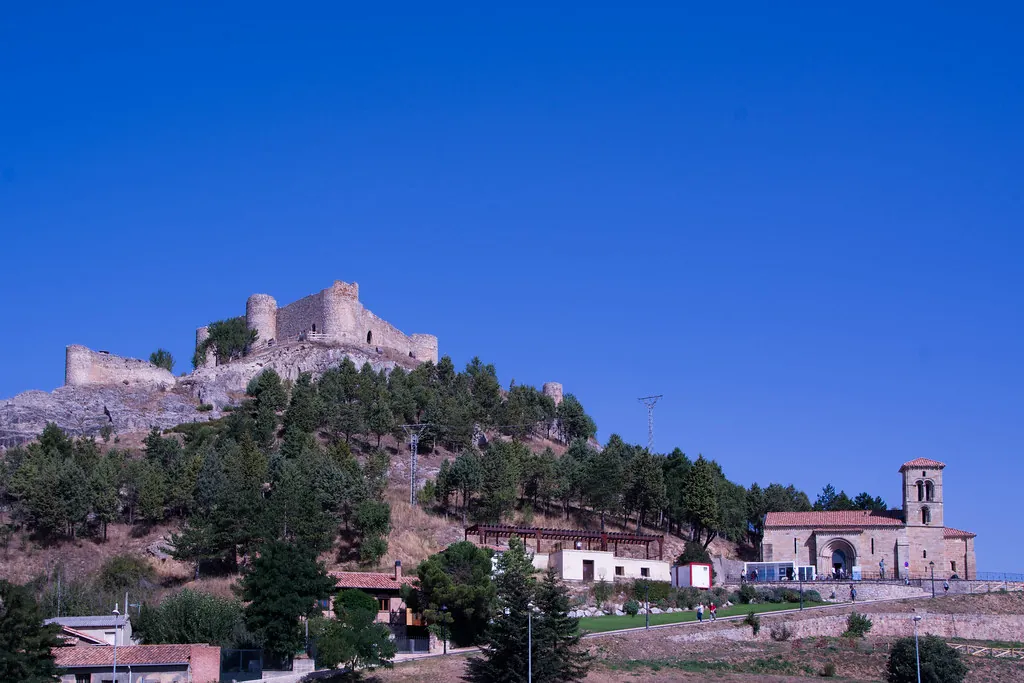
At around 960 metres above sea level, on the northern side of the Montaña Palentina, this municipality of roughly 350 inhabitants still carries the memory of its salt-making past. It is not presented through large facilities or visitor centres. Instead, it appears as scattered traces, place names, stories still told, and a few structures that survive in the surrounding land.
A small village shaped by salt
The name Salinas is no coincidence. For centuries, saline springs were worked here and that activity sustained the village. The saltworks stopped operating in the mid-20th century, but remains can still be found on nearby slopes and in fields around the settlement.
Walking through the centre, there are hints that money once circulated here. Several stone houses display coats of arms on their façades and large gateways that suggest carts once passed through, loaded with goods. It is not a monumental ensemble, but it has the feel of a place that lived a more prosperous period before settling into a quieter rhythm.
Short streets, mountain houses
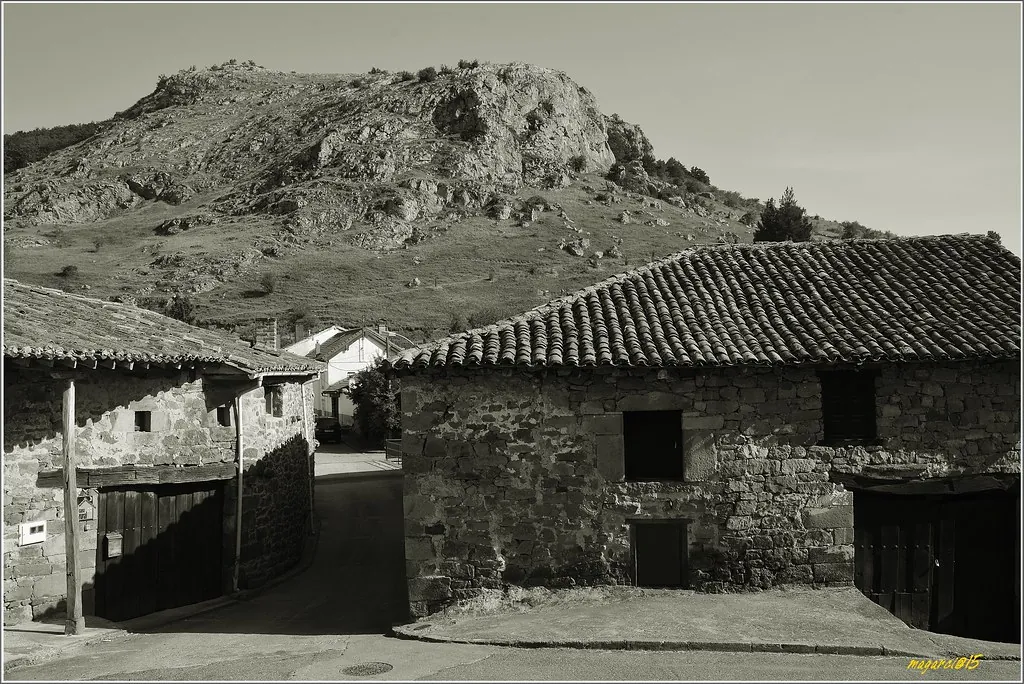
The village core is compact, so there is little need for planning. The main streets can be covered in under an hour at an unhurried pace. Buildings follow a mountain style: local stone, sloping roofs and simple wooden balconies.
Every so often, a more imposing house breaks the line. These are usually linked to families who made money from salt or from trade connected to mining and livestock in the area.
At the centre stands the parish church of San Esteban. It was built towards the end of the 16th century and later expanded. It is not a grand monument, but it is one of those rural churches that clearly remained in continuous use over generations.
Traces of the old saltworks
In the fields close to the village, vestiges of the former salt operations can still be seen. There is no organised site to visit and no explanatory panels. What remains is scattered: a few wells or low structures that are easy to overlook if you do not know what you are looking at.
The sense of history here sits more in the land than in buildings. It is easy to picture people working these grounds, extracting salt, moving carts, and to realise that this activity supported an entire community until not so long ago.
Easy walks and a wide valley
One of the main draws of Salinas de Pisuerga is its setting. Paths leave directly from the village and run through meadows and small woods of oak and beech. They are straightforward routes, without complicated navigation or steep gradients.
From certain higher points, the view opens out and the Pisuerga valley stretches northwards. It is the kind of place that invites a pause, perhaps sitting on a rock and taking in the landscape without any rush.
There are also longer routes that link up with areas of the Parque Natural Montaña Palentina. For those who enjoy walking, it is easy to extend a short outing into a full day.
Quiet nature, as it is
It is common to come across grazing livestock in the surrounding fields. Early in the morning or when there are few people around, roe deer or wild boar may be seen moving through the hills. Nothing is staged or arranged for visitors, it is simply the countryside going about its routines.
Some of the local rivers and streams hold trout, which is typical in this part of Palencia. Anyone considering fishing should check the relevant rules and permits beforehand, as there are usually regulations in place.
Food shaped by the climate
Cooking here follows the demands of the weather: hearty, warming dishes. In many bars around the area, you will find options such as lentils cooked slowly, potatoes with chorizo, and a range of local cured meats.
Cheeses made in nearby villages using local milk are also common. There is nothing elaborate about it, just familiar products that suit a day spent walking or exploring the hills.
The changing look of the seasons
The landscape around Salinas shifts noticeably over the year. In spring, everything turns a vivid green and the meadows fill with livestock. By late summer, more ochre tones appear and the woodland becomes more prominent.
In winter, it is not unusual for the nearby mountains to be covered in snow on some days. The village continues its normal rhythm, though the atmosphere becomes even quieter.