Full Article
about San Cebrián de Mudá
Known for the European Bison Reserve; a prime mountain setting with trails and wildlife-viewing hides.
Hide article Read full article
A place that works at walking pace
Tourism in San Cebrián de Mudá is straightforward. You arrive, park where you can along the main street, and start walking. There is no heavy infrastructure and very little traffic to worry about. In summer, especially around midday, finding a space near the centre can be tricky. Early morning or late afternoon tends to be easier.
The village itself is small. A slow wander takes less than an hour, without rushing or trying to tick anything off.
Getting around without a car
Most cars stay on the main street. From there, everything is reached on foot. Driving within the village does not really make sense.
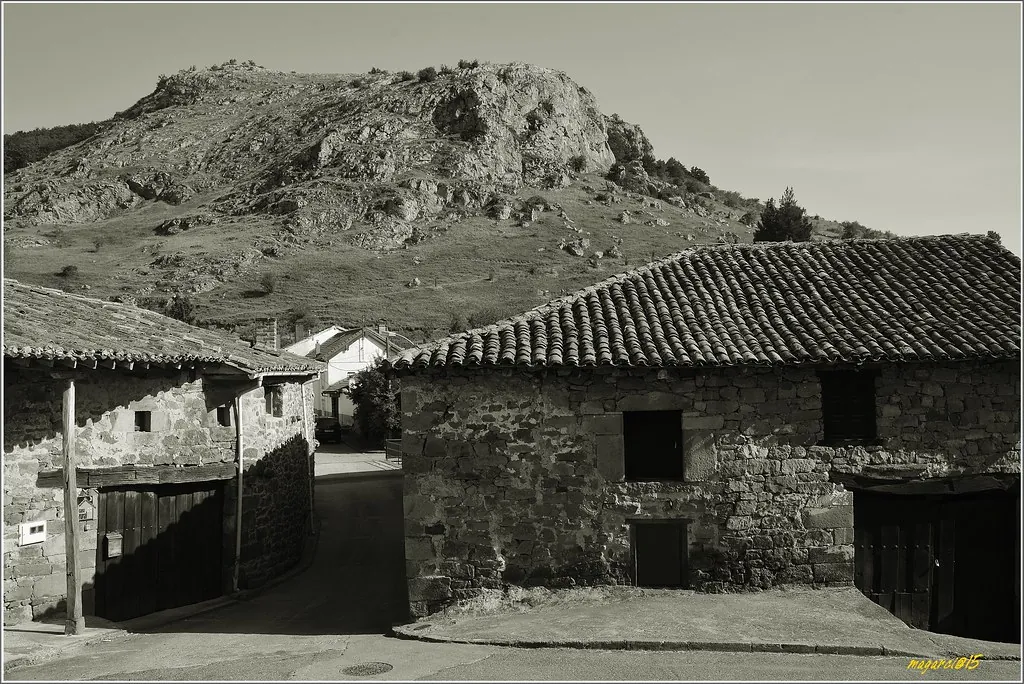
The streets are short and slightly sloped in places. Ordinary walking shoes are fine, though some sections can become slippery when it rains. In winter, ice forms early in the morning, which changes how the ground feels underfoot.
What the village looks like
San Cebrián de Mudá has just over a hundred residents throughout the year. The buildings follow a familiar pattern for this part of Castilla y León: stone walls, slate roofs, and the occasional wooden balcony. Some houses have been refurbished while keeping their basic structure. Others mix in more modern materials. That contrast appears in many nearby villages too.
Calle Mayor leads to a small square at the end. This is where people tend to gather when there is a celebration, or simply when the weather is good enough to sit outside and talk.
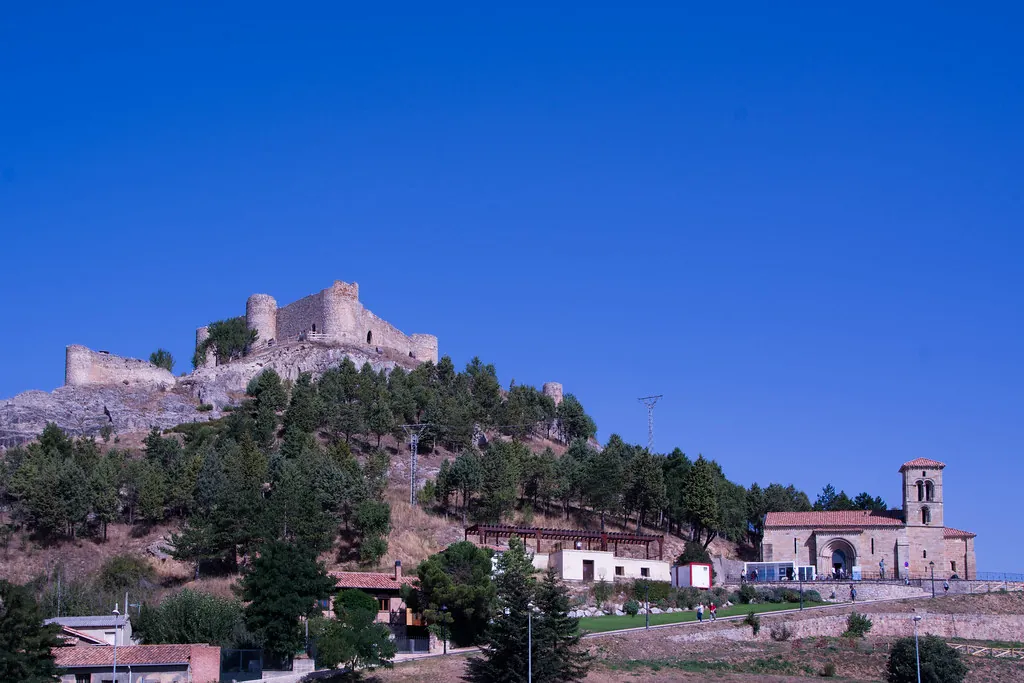
The parish church is plain. It has stone walls and a square bell tower, with little decoration beyond that. It is not a building that draws visitors on its own. It serves its purpose, and that is enough.
Around the edges of the village, traditional hórreos can still be seen. These raised granaries, typical of northern Spain, are reminders of the valley’s agricultural and livestock past.
Beyond the houses: paths and open ground
What really defines San Cebrián de Mudá lies outside the built-up area. The village sits within the Natural Park of Fuentes Carrionas and Fuente Cobre, a protected mountain landscape in the Montaña Palentina. The surrounding peaks are visible on clear days, with some of the higher summits of the massif appearing in the distance.
Several paths leave directly from the village, heading towards brañas, the high mountain pastures traditionally used for grazing, and other open grazing areas. Some routes lead towards Puentecillas or climb towards elevated majadas, seasonal livestock settlements. Not all of these paths are signposted, but many have been used for generations to move animals across the terrain.
The landscape shifts as you walk. Meadows open out into oak woods, then give way to patches of beech forest. In autumn, the area fills with people searching for wild mushrooms, especially níscalos and boletus. Those who come for that usually set out early.
There are also traces of former mining activity in some nearby valleys. These routes remain quiet, with very few people around outside weekends.
Wildlife, light and changing weather
Early in the day, there is often movement across the meadows. Deer are common, particularly in autumn. Foxes sometimes appear at dusk. Wolves have been present in the area for years, according to studies and tracking of footprints, although actually seeing one is not usual.
Fog is part of the rhythm here. On cold mornings, it often settles in the valley and can linger for hours. When it lifts, the mountains reappear sharply, and the contrast between low cloud and clear peaks is striking.
At night, the sky is easy to see. There is very little artificial light, so darkness falls cleanly and the outline of the surrounding terrain becomes more pronounced.
When to come, and what to expect
Spring and autumn are generally the most comfortable times to visit. The landscape is active, and temperatures are moderate enough for walking. Winter brings snow at times, and the paths can change quite a bit under those conditions.
It helps to arrive with the right expectations. San Cebrián de Mudá is not a place packed with things to do. The appeal lies in walking for a while, looking at the landscape, and continuing the journey through the Montaña Palentina. If that sounds enough, it works. If not, it may feel limited quite quickly.