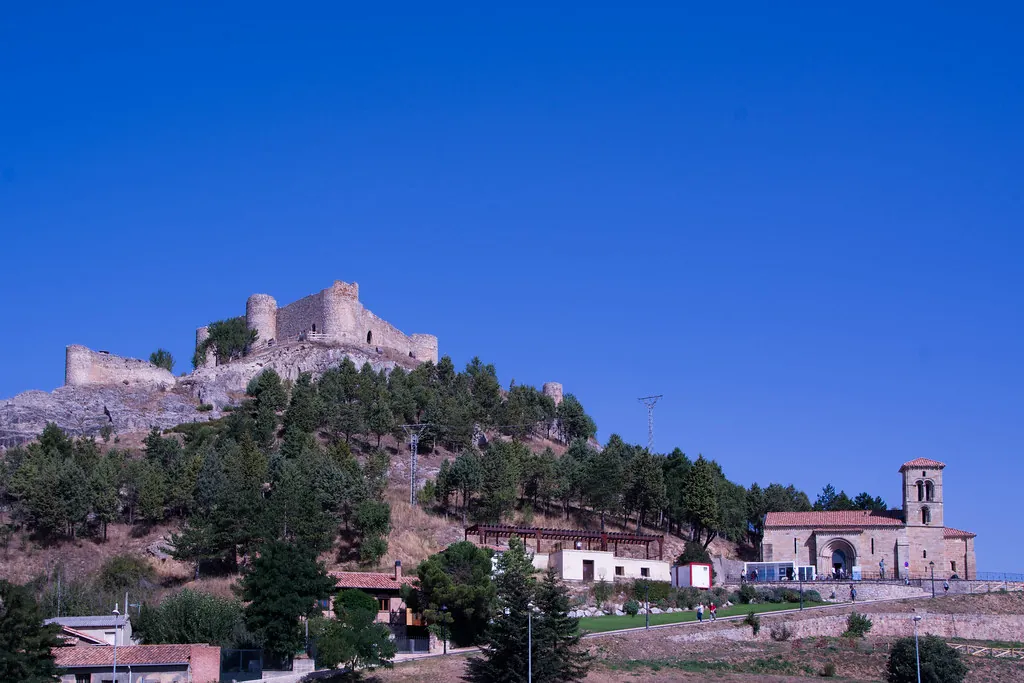
Velilla del Río Carrión - Flickr
Miguel. A. Gracia · Flickr 4
Castilla y León · Cradle of Kingdoms

Velilla del Río Carrión

The first thing you notice is the hush. Not the spooky, nobody-home silence of abandoned hill towns, but the deliberate quiet of people who rise ea...

1,104 inhabitants · INE 2025
1120m Altitude

Why Visit

Mountain Tamáricas Springs Route of the Tamáricas Springs

Best Time to Visit

summer

San Juan (June) junio

Things to See & Do
in Velilla del Río Carrión

Heritage

  • Tamáricas Springs
  • Church of El Salvador
  • Espigüete Peak

Activities

  • Route of the Tamáricas Springs
  • Climb to Espigüete
  • Fishing

Festivals
& & Traditions

Fecha junio

San Juan (junio), Nuestra Señora de Areños (septiembre)

Las fiestas locales son el momento perfecto para vivir la autenticidad de Velilla del Río Carrión.

Full Article
about Velilla del Río Carrión

A key town in the Montaña Palentina, known for its Fuentes Tamáricas and the Espigüete landscape; nature tourism.

Ocultar artículo Leer artículo completo

The first thing you notice is the hush. Not the spooky, nobody-home silence of abandoned hill towns, but the deliberate quiet of people who rise early to check the weather before deciding whether cattle go up or stay down. At 1,120 metres Velilla del Río Carrion sits high enough for exhaust-battered ears to re-calibrate, and the second thing you notice is the river arguing with the stones as it leaves the village, a sound that follows you even when you think you've walked out of earshot.

British drivers usually meet Velilla by accident: a coffee stop on the A-67 sprint to the Santander ferry, 90 minutes away. They pull off for fuel, see the slate roofs elbowing each other up a narrow ridge, and stay long enough to discover the Repsol pumps shut on Sunday and the ATM sometimes runs out of €20 notes. That is often the whole story—unless they stay the night, in which case the place starts to complicate nicely.

Stone, Slate and the Smell of Oak Smoke

There is no postcard-white here. Walls are granite and brown sandstone, timber is painted the dark red of oxidised ploughs, and winter light can feel distinctly Welsh. The main street tilts steeply enough to make calf muscles remember they exist; side lanes are essentially drainage channels with cobbles. What saves the scene from gloom is altitude clarity: on a sharp April morning you can pick out individual beech trees on the opposite slope as if someone has slid the lens to maximum resolution.

Local builders still repair roofs with hand-split slate hauled down from Las Herrerías quarry, 12 km west. The same trucks carry on to Guardo, the nearest railhead, so if you arrive by train you'll share a taxi with sheets of rock clanking behind you. Fare is a fixed €28—worth knowing because Guardo's lone taxi driver clocks off at nine.

The parish church of San Juan Bautista keeps the highest ground. Romanesque bones support a Baroque skin, and the south doorway smells of wax and the sheep that graze the adjoining graveyard. Inside, 17th-century carpenters carved an altarpiece busy enough to keep you counting cherubs until the bells toll—useful, because the church is locked outside service times and the key lives with the sacristan's mother two streets away. Ask the man polishing boots in Bar Norte; he enjoys watching pilgrims hunt.

Walking Tracks That Start at Your Doorstep

Velilla likes to call itself the "natural entrance" to the Fuentes Carrionas Natural Park, a phrase that sounds like marketing until you realise the park boundary is literally the last cattle grid on the north road. Within five minutes you can swap tarmac for a path that climbs through hay meadows to the summer pastures of Las Llomas de la Cañada, where stone huts still store cheese over summer. The National Parks office prints a free 1:50,000 map; locals dismiss it as "for people who like getting lost", then draw their own routes on napkins. Both work, provided you note two things: afternoon cloud drifts in faster than you can say "Cumulus", and every second track ends at a shepherd's gate that may, or may not, be locked.

The classic half-day circuit follows the Carrión upstream to the Embalse de Compuerto, a modest reservoir cupped between limestone bluffs. Distance is 7 km out, same back, and gradients are gentle enough for anyone who can manage Snowdon's Miners' Track. Anglers cast for brown trout from the dam wall; their season runs March to August and day licences cost €22 from the regional website—print at home because phone signal dies half-way down the gorge.

Serious altitude starts behind the village. Follow the signed track past the water treatment works (ignore the smell) and you reach the Collado del Vallina, gateway to Pico Espigüete, a 2,450 m shark-fin popular with Spanish climbers but still empty mid-week. Allow six hours return and carry water: sheep troughs look inviting until you notice the flotation layer of sheep. Winter transforms the same route into a snow-shoe corridor; local guides rent aluminium raquetas for €18 a day in Guardo, but bring your own poles—hire stock is mostly snapped skiing relics.

Food Meant for Frosted Windows

Mountain cooking here is not tapas-and-tinto. Lunch starts with a clay bowl of cocido montañés, white beans and collard greens thick enough to hold a spoon upright, proceeds to lechazo asado—milk-fed lamb slow-cooked in a wood oven until the rib bones can be snapped like biscuits—and finishes with quince paste and a glass of fiery local orujo that tastes of aniseed and regret. Vegetarians survive on tortilla and roasted peppers; vegans should probably self-cater.

Los Faroles, on the main drag, will split a half-rack of lamb if you ask nicely, saving waistlines and cholesterol readings. A whole portion feeds three, costs €24, and comes with chips that arrive in a separate basket because the meat alone needs the plate. Restaurante Orquídea Café, down by the river, tones things down with a vegetable stew reminiscent of a chunky minestrone; they also open at 19:30, earlier than anyone else, useful if you're still on Greenwich time.

Breakfast is taken standing. Bar Norte begins serving at 6 am to shift workers driving to the Guardo power station. Order a café con leche and you'll get a glass of hot milk and a separate espresso to doctor it; ask for "café inglés" and they hand over a teabag with a smirk. Croissants are frozen and rebaked—go for the slab of sponge cake under the glass dome instead, invented locally and nicknamed "bizcocho de la abuela" because every grandmother claims proprietary rights.

When the Village Lets its Hair Down

Fiesta week, 15 August, doubles the population and halves the water pressure. Visitors book rooms a year ahead to parade a giant papier-mâché effigy of San Roque through streets carpeted with pine needles, then dance until dawn in the polideportivo to cover bands playing Spanish eighties rock. If your idea of heaven is communal singing of "Resistiré" with 2,000 new best friends, reserve early. If not, arrive the following week when the rubbish trucks have departed and hotel prices drop by a third.

November hosts the Matacabras livestock fair, a business morning where goats change hands over plastic cups of aguardiente. Tourists are welcome but cameras provoke suspicion; ask first, offer to buy a round, and you'll leave with invitations to Sunday lunch. March brings the mushroom festival—boletus, chanterelles and the elusive níscalo—celebrated with guided walks at dawn and menus that sneak fungi into coffee cream. Yes, really, and yes, it works.

Getting There, Getting Out

No railway, no coach on Sunday, and the nearest airport is Santander, 110 km north. Ryanair's Stansted route lands at 11:30, giving time to pick up a hire car and reach Velilla for a late lunch of mountain stew. The drive is motorway almost to the foot of the pass; only the last 20 km twist, but winter tyres or chains are compulsory when the red sign flashes—often as late as April. Petrol on the mountain stretch is scarce; fill at Aguilar de Campoo where supermarkets undercut the motorway services by 15 cents.

Accommodation clusters in three price bands: riverside hostales (€45 double, thin walls, lullaby of passing trucks); stone manor houses converted into small hotels (€85, breakfast included, heating that actually works); and an apartment block built for fishing weekends (€60, kitchenette, bring your own coffee). The manor option is worth the upgrade for insulation alone—night temperatures can dip below freezing any month with an "r" in it.

Leave time for the detours. Potes and the Picos lie 70 minutes east, the Romanesque churches of the Valderredible valley 45 minutes south, and the coal-mining museum in Sabero 25 minutes west, where ex-miners guide you through shower rooms that smell of damp pit props and 1970s soap. Circle back to Velilla for sunset on the river bridge; the water turns bronze, swallows stitch the surface, and the mountains that looked forbidding at breakfast soften into a silhouette you half-remember from a childhood geography book. Then walk uphill to the square, order a cider, and discover the hush again—only now it feels like something you can pack in your suitcase and take home, minus the sheep smell.

Key Facts

Region
Castilla y León
District
Montaña Palentina
INE Code
34199
Coast
No
Mountain
Yes
Season
summer

Livability & Services

Key data for living or remote work

2024
ConnectivityFiber + 5G
TransportTrain nearby
EducationHigh school & elementary
Housing~6€/m² rent · Affordable
Sources: INE, CNMC, Ministry of Health, AEMET

Official Data

Institutional records and open data (when available).

  • FUENTE, ERMITA DE SAN JUAN, HUERTA Y OTROS
    bic Monumento ~0.8 km

Planning Your Visit?

Discover more villages in the Montaña Palentina.

View full region →

More villages in Montaña Palentina

Traveler Reviews