Full Article
about Casasola de Arión
A farming municipality on the banks of the Bajoz river; noted for its bridge and parish church with notable altarpieces.
Ocultar artículo Leer artículo completo
The plateau at 715 metres
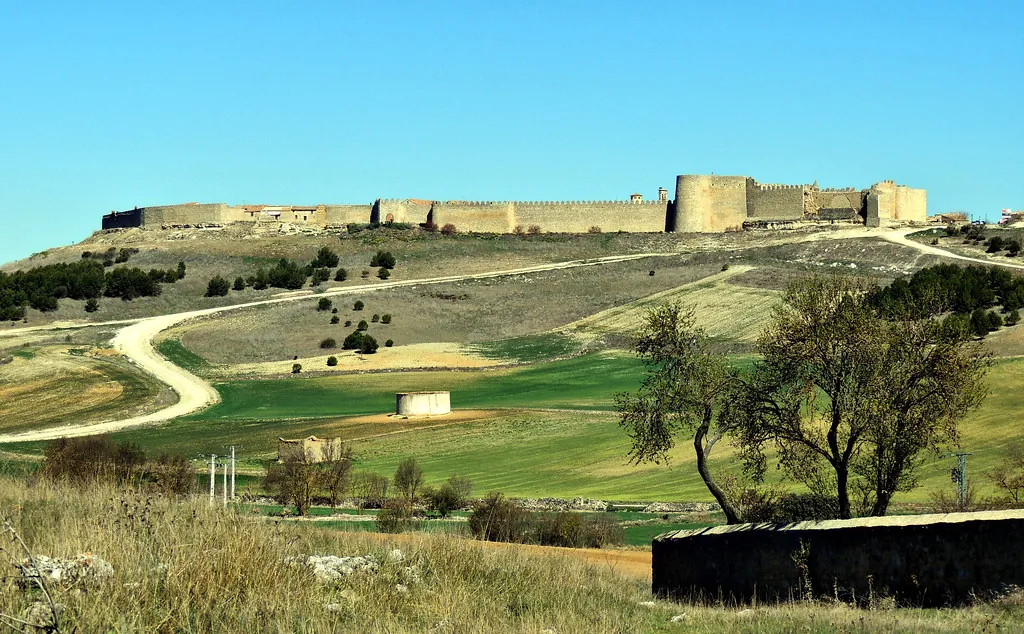
Dawn breaks over the Montes Torozos with a sharpness that makes the ears pop. At 715 m above sea level, Casasola de Arión sits on a natural platform that feels closer to the weather than to the rest of Castilla y León. The thermometer can swing fifteen degrees between night and noon in April; by August the air is so dry that laundry hung at breakfast is ready before the coffee cools. This is cereal country, where the calendar is still dictated by sowing and harvest, and where the village’s 220 registered souls multiply three-fold when the wheat turns gold.
The approach road turns off the N-601 just after the industrial estate at Boecillo. From there it is 26 km of single-lane tarmac that snakes through folds of barley and oats. Mobile signal drops out at kilometre 12; GPS keeps working, but the screen shows more contour lines than place names. First-time visitors usually arrive expecting a ruin and find instead a functioning settlement: adobe walls patched with modern brick, television aerials sprouting from 19th-century roofs, and a stone church tower that still serves as the only skyline the village has ever needed.
Adobe, brick and the smell of bread at ten
Casasola’s streets are barely two cars wide. The older houses are built from the ground up in the same material as the fields: mud, straw and river stone pressed into 60-centimetre walls that keep interiors cool until mid-July. Wooden gates hang on hand-forged iron hinges; open one and you will likely find a paved courtyard where a diesel generator once stood during the 1950s electrification. Look up: many gables still carry the miniature brick towers of former dovecotes, a reminder that pigeon squabs were exported to France long before tourism brochures existed.
There is no bakery. Bread arrives in a white van at ten o’clock, driven from nearby Mucientes and sold from the tailgate. By ten-fifteen the queue has dissolved; by ten-thirty the van is already in the next hamlet. If you miss it, the nearest supermarket is 18 km away in Tudela de Duero. Planning is part of the rhythm here.
Walking without waymarks
The council has not installed signposted footpaths, yet the village is surrounded by usable tracks. Head south past the last house and the lane becomes a farm road that rims the Arroyo Valdefresno. In May the verges are loud with calandra larks; in October the same stretch is a corridor of rustling stubble. A circular route of 8 km brings you back via the abandoned threshing floor on the Cerro del Moro—no interpretive panels, just stone pavers dark with century-old linseed oil. Take water: there are no bars en route and the only fountain is on the plaza, labelled “agua no potable”.
Cyclists fare better. The gradient rarely exceeds 3 %, which means you can cover 40 km before lunch and still be back for the bread van. Locals wave at riders the way coastal Spaniards greet fishermen: a raised hand that says “we know why you are here, and the weather is your problem”.
Roast lamb without a restaurant
Even in August you will not find a menu del día within the village boundaries. The single guesthouse, Casa Rural Don Diego, has four rooms and will cook if you preorder—think roast lechazo (milk-fed lamb) for four people minimum, 24 hours’ notice, €22 a head. Otherwise, food is what you bring or what you are invited to share. The August fiestas change that briefly: one weekend the plaza fills with folding tables and volunteers serve cocido maragato (a hearty stew eaten backwards: meat first, chickpeas last) at cost price. Beer is €1.50, poured from plastic barrels kept cool in the shade of the church. When the stew runs out, the kitchen closes; nobody apologises because everyone understands the rules.
For a sit-down meal you drive 25 minutes to Cuéllar, whose medieval walls hide half a dozen asadores. Order the lechazo at Asador de los Reyes; expect to pay €28–32 for a quarter portion, enough for one hungry adult or two polite ones. House wine is from the nearby Rueda DO and arrives in a glass porrón—tip from height if you can, or ask for a conventional glass without embarrassment.
When the village re-inflates
January and February are whisper-quiet: dogs outnumber humans on the streets, and the only heating smell is almond-shell smoke from the few occupied houses. March brings tractors coughing into life; by mid-April the population has climbed to perhaps ninety. Then August happens. Emigrants with Madrid licence plates return in SUVs loaded with folding bikes and city children who have never walked barefoot on stubble. The plaza becomes an open-air crèche, grandparents preside over gossip benches, and teenagers invent excuses to visit the petrol station in Matapozuelos just to drive the ring road at 80 km/h. On the night of the 15th, a modest firework is let off from the church roof; the echo rolls across the plateau like distant thunder. By the 31st the cars are gone, the gates locked, and the village exhales back to its default size.
Hard truths and soft light
Come prepared for wind. The Torozos act as a natural windbreak for the Duero valley, which means Casasola takes the hit. In March the gusts can reach 70 km/h; they scour the eyes and make even a short walk feel like an assault course. Summer afternoons are oven-dry and shade is scarce—bring a hat, not an umbrella, because the latter will not survive.
Mobile coverage is patchy; Vodafone works on the north side of the plaza, Orange on the south, Movistar nowhere. Wi-Fi exists in Casa Rural Don Diego and nowhere else. If you need constant connectivity, this is not your place.
Yet the compensation is clarity. At night the Milky Way is a smear of chalk across black slate; shooting stars leave after-images that last a second longer than they should. Photographers complain about the bleached midday light, then apologise at 7.30 pm when the cereal turns liquid gold and the stone walls glow like hot coals. The best images are not taken but received, usually when you have given up and gone for a beer that you have to fetch from a cool box in the boot of a car.
Leaving without promising to return
Casasola de Arión will not beg you to stay. It has survived Romans, Moors, civil war and rural exodus; it will survive your visit. Drive away at dawn and the plateau folds behind you like a book closing. Six months later you may smell dry straw on a British allotment and remember the bread van, the wind, the way the sky pressed down like a lid. No souvenir shops sell that memory; perhaps that is the point.