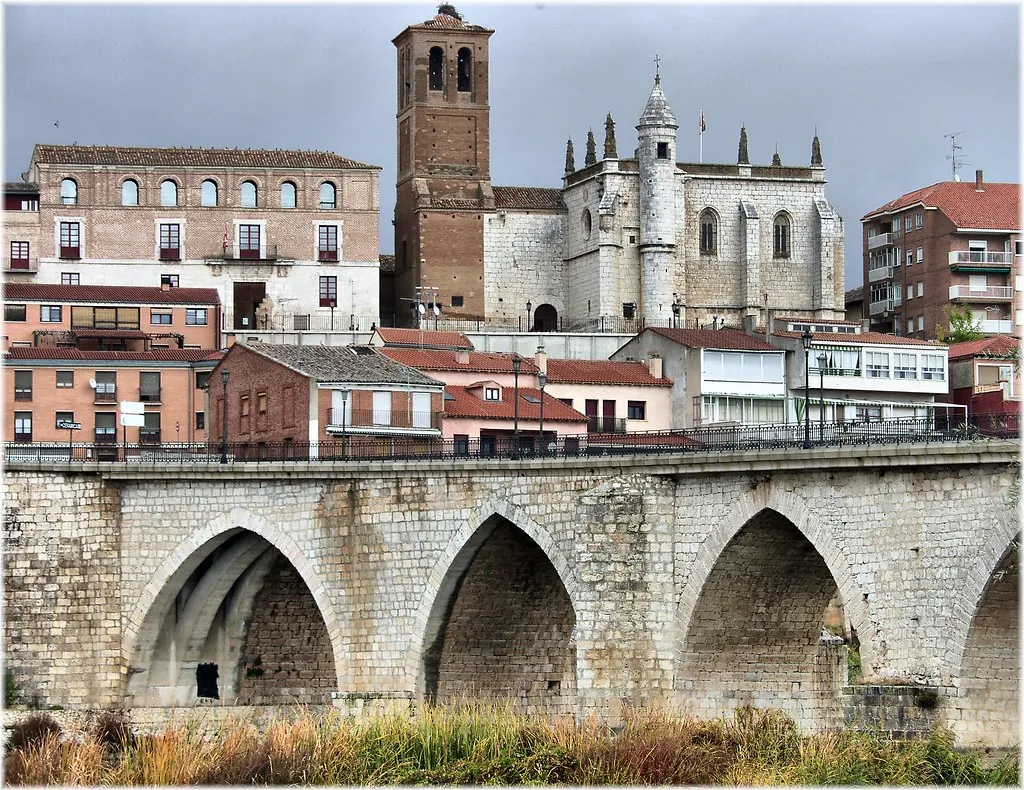
Velilla - Flickr
Miguel. A. Gracia · Flickr 4
Castilla y León · Cradle of Kingdoms

Velilla

At 780 metres above sea level, Velilla sits high enough that the first morning breath feels sharper, cleaner, almost medicinal. The village perches...

109 inhabitants · INE 2025
782m Altitude

Why Visit

Church of the Assumption Hiking

Best Time to Visit

summer

Our Lady of the Assumption (August) agosto

Things to See & Do
in Velilla

Heritage

  • Church of the Assumption

Activities

  • Hiking
  • Photography

Festivals
& & Traditions

Fecha agosto

Nuestra Señora de la Asunción (agosto)

Las fiestas locales son el momento perfecto para vivir la autenticidad de Velilla.

Full Article
about Velilla

Town on a slope of the Torozos; noted for its church and views over the valley.

Ocultar artículo Leer artículo completo

At 780 metres above sea level, Velilla sits high enough that the first morning breath feels sharper, cleaner, almost medicinal. The village perches on the Montes Torozos plateau, a raised fist of land northwest of Valladolid that gazes down over endless cereal fields. From here, the horizon stretches so wide that even on hazy days you can pick out the distant silhouettes of the Cordillera Cantábrica, snow-dusted until late April.

The Plateau and Its People

Velilla’s population hovers around five hundred souls—fewer than a London Underground carriage at rush hour. Houses are built from the earth they stand on: ochre adobe, sun-baked brick, slate roofs weighted with stones against the wind. Walls bulge gently, as if the buildings themselves are easing into old age. Narrow lanes twist between them, just wide enough for a tractor and the odd stray cat. There is no centre in the tourist-board sense, merely a small square where the bar opens at seven for coffee and closes when the last customer leaves, usually before midnight.

The altitude shapes everything. Winter nights drop to –8 °C; radiators clank, and locals swap the morning beer for carajillo—coffee laced with brandy. Summer afternoons can nudge 35 °C, but the air is dry and a breeze rifles up the plateau after 6 pm, so a simple ceiling fan suffices. Without the sticky humidity of the coast, even August feels tolerable, though midday walks are best postponed until the sun tilts westward.

What You’ll Actually See

Start at the Iglesia de San Andrés, a sixteenth-century parish church that looks more fortress than place of worship. Its tower is short and square, built for defence against roaming bands long before package tours existed. Inside, the altarpiece is gilded but restrained; no dripping baroque excess here, just the confident craftsmanship of farmers who tithed wheat instead of coin. Mass is still sung at eleven every Sunday, the priest’s voice echoing off bare stone while swallows dart through the open door.

Behind the church a lane climbs past bodegas—cellars scooped into the hillside. Half are padlocked, half serve as family dining rooms: plastic tables, fading football posters, the smell of wood-smoke and last year’s grapes. No signage invites you in; if the door is ajar and laughter spills out, you’ve probably wandered into a private party. Politeness is to wish buen provecho and retreat.

Ten minutes’ walk north the tarmac gives way to a gravel track that snakes between wheat and barley. Crest the first rise and the plateau falls away on three sides, revealing a patchwork of browns, greens and the occasional shock of yellow rapeseed. This is the paramo, Castile’s answer to the steppe: huge sky, larks instead of traffic, and absolute silence broken only by the wind humming through telephone wires.

Walking Without Waymarks

There are no gift-shop maps, no colour-coded arrows. Instead, villagers gesture vaguely: “Follow the track past the ruined cortijo, then bear left at the oak.” The network of farm lanes links Velilla to its neighbours—Villalón de Campos 12 km east, Medina de Rioseco 18 km south—making for easy there-and-back walks of any length you fancy. Spring brings red poppies stitched through the wheat; autumn smells of crushed fennel and distant stubble fires. Stout shoes suffice; boots are overkill unless you plan a full day.

One gentle circuit (7 km, two hours) drops off the plateau into the valley of the Sequillo, a seasonal stream that trickles between reed beds and stands of poplar. Griffin vultures circle overhead, and if you sit quietly by the water you’ll hear bee-eaters overhead before you see their rainbow flash. The climb back up is stiff but short; reward is the view of Velilla’s roofs glinting like a pile of old coins in the afternoon sun.

Eating (or Not) in Velilla

The village contains one bar, one grocer that opens three mornings a week, and a bakery van that toots its horn on Tuesdays and Fridays. That is it. Self-caterers should stock up in Medina de Rioseco (20 min drive) where the Mercadona sells proper cheddar for homesick Brits and the local carnicería will trim a lamb shoulder to fit your rental-oven tray.

If you fancy eating out, the bar serves raciones from 7 pm: plate of morcilla (blood sausage sweetened with onion), bowl of sopa castellana thick enough to stand a spoon in, and chuletón weighing a kilo, all at prices that make Yorkshire pubs look extortionate. Cash only—cards are regarded with suspicion. Kitchen closes when the cook feels like it; ring ahead if you’re driving specially.

For a blowout, drive 25 minutes to Villalón and book a table at Mesón del Cid. Their lechazo—milk-fed lamb roasted in a wood-fired oven—comes in quarter portions precisely because British visitors keep ordering half a lamb and faint at the richness. Pair it with a sharp arroz con leche (rice pudding dusted with cinnamon) and a glass of tinto de Toro heavy enough to stain the tablecloth.

Altitude Practicalities

Fly into Santander (Stansted and Manchester year-round with Ryanair). Hire cars queue directly outside arrivals; ignore the upgrade spiel—an economy hatchback handles the mountain roads fine. Take the A-67 south, then CL-626 via Aguilar de Campóo. After 115 km the sat-nav loses its nerve and announces “unknown road”; keep going, you’re 8 km out. Total drive: just under two hours, toll-free.

Mobile coverage is patchy on the plateau. Download Google Maps offline before you leave the airport and remember the golden rule: if you haven’t seen a village for 30 minutes, you’ve probably missed the turning. Petrol stations are scarce after 10 pm; fill up in Guardo, the last reliable pump before Velilla.

Accommodation is mostly self-catering. Casa Rural La Torre sleeps six, has beams a foot thick and Wi-Fi that works if the wind isn’t blowing the wrong direction. Weekends in May and September book up with Spanish families escaping Valladolid; midweek you’ll have the place to yourself for €90 a night. Bring slippers—stone floors are cold even in July.

When to Come, When to Stay Away

April and May turn the plateau emerald; temperature hovers round 18 °C, ideal for walking. September repeats the trick, adding the aroma of drying hay. July and August are hot but quiet; Spaniards flee to the coast, leaving the night sky brilliantly clear for star-watching—Orion looks close enough to snag on a weather vane.

November to March is stark. The landscape becomes a sepia photograph, beautiful but severe. Snow falls two or three times, drifting across the single access road and cutting power for hours. If you relish solitude and keep emergency wine, winter can be magical; if you need streetlights and central heating, wait for spring.

Easter week swells the population five-fold as diaspora villagers return. Processions are short, candle-lit, and followed by communal potaje (chickpea stew) in the square. Rooms disappear months ahead; book early or time your visit for the following week when daffodils replace incense and prices drop.

Velilla will never make the cover of glossy Spain brochures. It offers no flamenco, no alabaster cathedral, no infinity pool. What it does provide is altitude-bright air, the creak of a church door that has never locked, and the realisation that somewhere between the wheat and the sky, five hundred people have worked out how to live quietly and well. Bring walking shoes, a taste for lamb, and the ability to cope with silence. Leave the phrasebook glamour at home; you won’t need it.

Key Facts

Region
Castilla y León
District
Montes Torozos
INE Code
47190
Coast
No
Mountain
No
Season
summer

Livability & Services

Key data for living or remote work

2024
Connectivity5G available
HealthcareHospital 30 km away
EducationElementary school
Housing~5€/m² rent · Affordable
CoastBeach nearby
January Climate4.3°C avg
Sources: INE, CNMC, Ministry of Health, AEMET

Planning Your Visit?

Discover more villages in the Montes Torozos.

View full region →

More villages in Montes Torozos

Traveler Reviews