Full Article
about Villalba de los Alcores
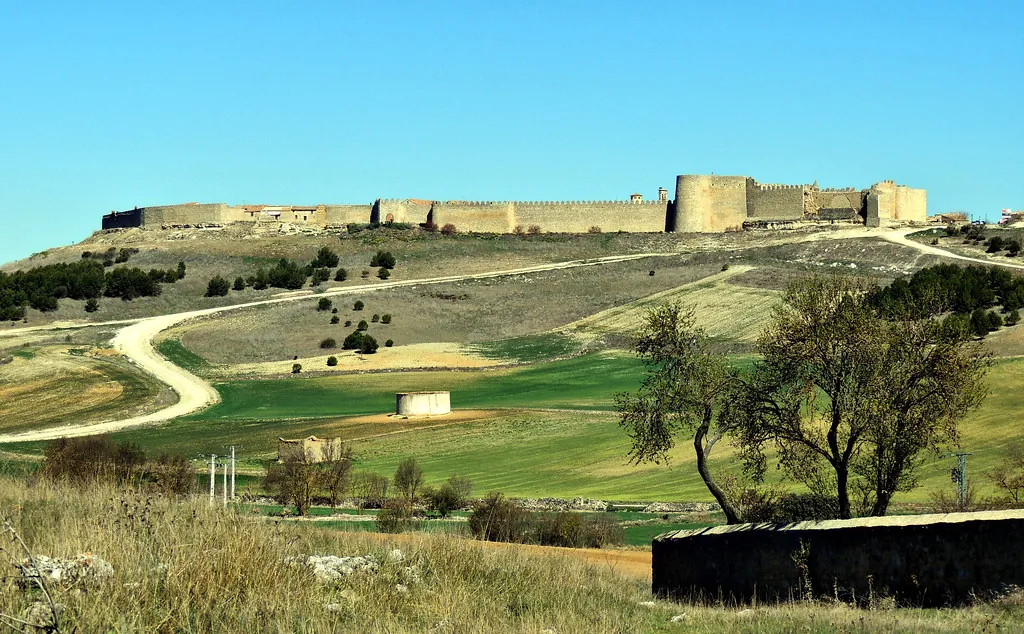
Walled medieval town with a castle; noted for its historic heritage and the abandoned village of Fuenteungrillo.
Hide article Read full article
Villalba de los Alcores en los Montes Torozos
Villalba de los Alcores se asienta sobre la plataforma caliza de los Montes Torozos, al norte de Valladolid. Es un páramo abierto, de horizontes largos y viento frecuente, que ha condicionado la vida aquí durante siglos. El secano, los pueblos construidos con la piedra y el barro del lugar y una densidad de población baja definen esta parte de Castilla. Hoy viven aquí unas 380 personas, una cifra que habla de la escala de las comunidades agrarias de la comarca.
El nombre del pueblo aparece en documentos medievales vinculados a la repoblación de la cuenca del Duero, un proceso ligado al avance de la frontera entre los reinos cristianos y musulmanes. "Alcores" se refiere a las elevaciones suaves del terreno, los cabezos calizos que rompen la llanura. Estas lomas influyeron en la estrategia defensiva y en la disposición del asentamiento.
Los Montes Torozos no son una sierra propiamente dicha, sino una meseta elevada que desciende hacia los valles cercanos en pendientes suaves. Desde los caminos que rodean Villalba, la geografía se lee con claridad: campos de cereal que se extienden casi sin interrupción y pueblos separados por kilómetros de tierra labrada.
El castillo y una posición estratégica
El recordatorio más visible de aquella historia temprana es el castillo, situado en un extremo del casco urbano. Lo que queda son tramos de muralla y trazas estructurales que sugieren el perímetro original de una fortaleza medieval. Su razón de ser estaba ligada a las tensiones fronterizas de una época en la que Castilla consolidaba su territorio hacia el sur.
Incluso en estado ruinoso, su ubicación explica su función. Desde este punto se observa con facilidad la tierra circundante y las rutas que cruzaban el páramo. Muchos asentamientos en los Torozos tuvieron pequeñas fortificaciones similares, aunque no todas han perdurado con tanta presencia en el paisaje.
El castillo no domina por su escala, sino por su posición. Ancla el límite del casco construido y conecta el pueblo actual con las preocupaciones estratégicas que lo definieron en su origen.
Piedra, adobe y bodegas subterráneas
En el centro de Villalba de los Alcores está la iglesia parroquial. El edificio actual responde mayormente a reformas de la época moderna, aunque probablemente sustituyó a un templo anterior. Construida con piedra local, muestra la contención propia de la arquitectura rural castellana: muros gruesos, vanos pequeños y una silueta que se reconoce a distancia cuando se llega por carretera.
Pasear por las calles permite ver casas tradicionales de adobe combinado con ladrillo, un sistema constructivo extendido en esta parte de Castilla y León. Algunas viviendas conservan portones anchos, hechos para el paso de carros, que dan acceso a patios interiores vinculados a la vida agraria. Los materiales y la disposición hablan de una comunidad organizada desde hace siglos en torno a la agricultura y la ganadería.
Un elemento distintivo de la zona son las bodegas excavadas en el suelo calizo. En muchos pueblos de los Torozos forman barrios subterráneos. En Villalba aparecen dispersas en las afueras o integradas en parcelas particulares. Siguen usándose en el ámbito privado, principalmente como espacios frescos para guardar vino o alimentos. Estas estructuras subterráneas son una respuesta práctica al clima y a la geología, que aprovecha la temperatura constante de la tierra.
El núcleo urbano se recorre a pie en poco tiempo. Más que buscar un hito único, el interés está en caminar sin prisa entre el castillo, la iglesia y las calles donde las casas tradicionales siguen siendo claramente reconocibles.
Campos, encinas y cielos amplios
El entorno inmediato es el páramo cerealista. Trigo, cebada y otros cultivos de secano dominan durante buena parte del año. En primavera, los campos cambian de color con rapidez conforme crece el nuevo verde. En verano, vuelven los tonos ocres, una paleta que mucha gente asocia con Castilla.
Entre las parcelas cultivadas quedan rodales pequeños de encina y quejigo. Son fragmentos del bosque que cubría el territorio antes de la expansión agrícola. En otoño, cuando las lluvias son suficientes, algunos vecinos salen a estos manchones en busca de setas silvestres.
El carácter abierto de los Montes Torozos los convierte también en buen territorio para aves rapaces. Cernícalos y ratoneros se ven con frecuencia cabalgando las corrientes de aire sobre los campos. El cielo aquí parece expansivo, sin interrupciones de relieve alto o bosque denso.
Caminos por el páramo
Caminos agrícolas rodean Villalba y permiten explorar los alrededores sin dificultad técnica. Son rutas llanas o con pendientes muy suaves, que cruzan tierras de labor y enlazan con pueblos vecinos.
Conviene tener presentes dos características del páramo. El viento es una presencia habitual y puede soplar con fuerza. La sombra es escasa en muchos tramos. En verano esto se nota especialmente, pues el terreno abierto ofrece poca protección ante el sol.
A cambio, los días despejados regalan vistas largas hacia el norte y el oeste, donde el terreno comienza a descender hacia otras comarcas de la provincia. La sensación de espacio es una de las impresiones que definen cualquier paseo por la zona.
La vida diaria en un pueblo agrícola
La economía local sigue ligada a la tierra. Durante las campañas agrarias, el movimiento de maquinaria y remolques marca el ritmo del día. Los campos exigen atención en momentos concretos del año, y la actividad se intensifica entonces. En invierno, el pueblo entra en una calma marcada.
Las fiestas patronales y las reuniones vecinales concentran gran parte de la vida social a lo largo del año. Estas ocasiones atraen también a quienes mantienen vínculos familiares con el pueblo aunque vivan fuera. Para una comunidad pequeña, esos momentos refuerzan la continuidad entre los que se quedaron y los que se fueron.
Villalba de los Alcores está a menos de una hora en coche de Valladolid. Su proximidad a la capital provincial facilita llegar para una visita breve, sin dejar de estar firmemente arraigado en el paisaje agrario de los Montes Torozos. La experiencia aquí tiene menos que ver con ver monumentos y más con entender cómo la geografía, el clima y la historia han combinado para dar forma a un asentamiento en las llanuras altas de Castilla y León.