Full Article
about Melgar de Fernamental
Monumental town on the banks of the Pisuerga and beside the Canal de Castilla; noted for its imposing Renaissance church.
Ocultar artículo Leer artículo completo
The church bell tolls twice. Nothing opens, nothing shuts, nobody moves faster. At 820 metres above sea level, sound carries; you can hear the same bell from the cereal fields two kilometres out. That auditory reach is handy, because Melgar de Fernamental runs on bell time, not Google Calendar. Mid-morning coffee ends when the tower strikes eleven; lunch starts at the second stroke of two. Miss the slot and the metal shutters roll down with a finality that reminds you this is Castilian plateau country—polite, stubborn, indifferent to rush.
A Plateau Town that Never Learned to Whisper
Melgar’s high, flat setting gives the light a glassy edge. In June the cereal heads shimmer like bronze filings and the horizon feels a very long way off. Winter is the opposite: the same horizon collapses into grey-brown nothing, the wind picks up loose topsoil and flicks it sideways, and every degree the thermometer drops is announced by a fresh crack in the masonry of the houses. Stone and adobe walls, two feet thick, were built for this climate; modern cavity-wall Britain they are not. Step inside any bar at 11 a.m. in January and you’ll still see farmers keeping their coats on.
The town keeps 1,500 permanent souls but swells at weekends when children return from Burgos or Santander. That modest injection of life is enough to keep three butchers, two bakeries and a ironmonger trading—everyday commerce that has vanished from many English villages of the same size. Park on Plaza España (free, no meters) and the first thing you notice is hardware selling door handles next to racks of birthday cards. Practical retail, no gift-shop whimsy.
The Church that Outgrew its Parish
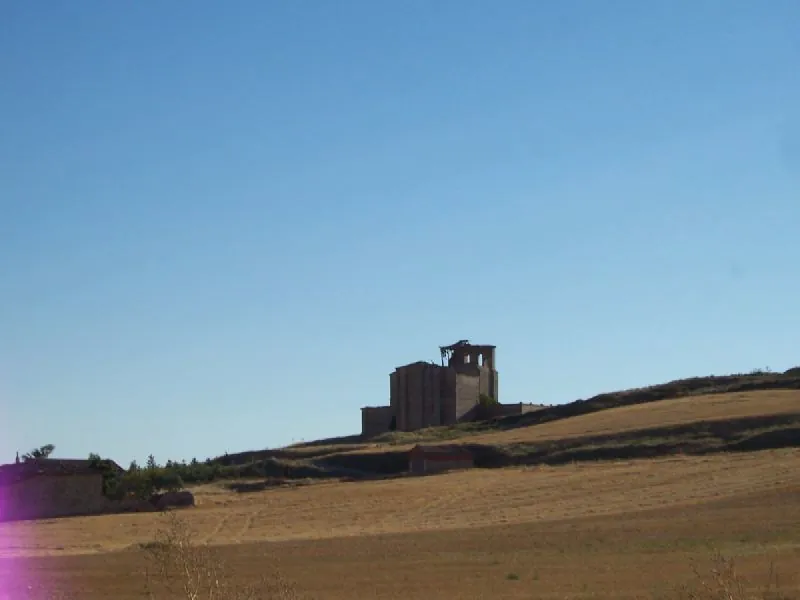
The late-Gothic tower of Nuestra Señora de la Asunción rises 47 metres, taller than anything between here and Burgos twenty-five minutes north on the A-67. British visitors usually stumble on it while hunting coffee halfway along the Santander–Madrid run. Push open the west door—ring the sacristan first; his mobile number is taped to the wood—and the nave opens like a pocket cathedral: star-ribbed vault, alabaster saints, the faint smell of wax polish over dust. The sacristan, José Luis, conducts an enthusiastic Spanish-only sprint that lasts exactly nine minutes and ends at the 16-century Flemish retablo. A €2 donation funds lightbulbs; he’ll hand you the receipt as proof.
Outside, the stone chess-piece silhouette turns up on every local logo, from the football club shirts to the council’s letterhead. Pride in a parish church is hardly unique in Spain, but Melgar’s residents talk about “la torre” the way English seaside towns talk about their pier: part orientation device, part weather vane, part identity.
Eating According to the Fields
Forget tasting menus. Local gastronomy is a three-item equation: lamb, pulses, blood sausage. Lechazo asado—milk-fed lamb roasted in a wood-fired brick oven—arrives on a clay dish, half a baby sheep flattened and scorched to the colour of burnt umber. The meat tastes like the best Sunday roast, minus any hint of gaminess. A medio portion feeds two modestly hungry Brits and costs €18 at Restaurante Emilio on Calle Real. Order it before 14:30 or the kitchen switches the oven off.
Morcilla de Burgos, the region’s famous black pudding, comes crumbled over chickpea stew. The pudding carries a faint cinnamon note; British palates register Christmas rather than breakfast. For reluctant offal-eaters, pimientos de Gernika arrive fried whole, mild enough for children. House red from the Arlanza valley is poured into short, thick tumblers—no stemware here—and drinks like Beaujolais’ quieter cousin.
Postre options are limited but honest: fresh white cheese drizzled with honey, or pastas de melgar, a shortbread biscuit that dissolves into almond-scented grit. Sunday lunch is the social event; every extended family eats out, so book or queue for 45 minutes while the church bell keeps time.
Flat Roads, Big Sky
The Meseta is not spectacular; that is the point. Its appeal lies in scale, emptiness and the way sound and weather announce themselves well in advance. Melgar sits on the northern edge of the plateau, where the land is still dead-flat but the altitude gives crisp air. Cyclists use the town as a midway stop on the Canal de Castilla tow-path, a tarmacked strip that once carried grain barges and now carries Dutch touring bikes and the occasional Labrador out for a run. Borrow a bicycle free from the ayuntamiento reception (Mon-Fri 10:00–13:00; leave your passport as deposit) and you can ride 20 km east to Fromista among reeds and herons without a single lock gate.
Walkers head south along farm tracks signposted “SL-BU 14” in fading paint. The path passes a ruined pigeon loft, a 19-century stone shelter and, if you start at 07:30, a fox trotting home before the sun turns serious. There is no shade; carry water. In April the fields switch from brown to green overnight; by late May poppies appear in tractor-width strips and the colour scheme resembles a Dulux chart left out in the rain.
Winter hiking is possible—skies are cobalt, paths empty—but daylight is rationed and the wind can drop the perceived temperature by five degrees. Come December the council salts the pavements, a reminder that at 820 m frost arrives early and lingers.
When the Town Decides to Party
Fiestas in honour of the Virgen de la Asunción explode across the second week of August. The population triples, trestle tables appear in Plaza España, and a travelling funfair sets up next to the municipal pool. Brits passing through sometimes book the single boutique guesthouse without realising they’ve landed in party week. Expect brass bands at 03:00 and fireworks that ricochet off the church tower. If you crave silence, stay away; if you want to see how a farming community stretches its vocal cords, this is the time.
Winter celebrations are low-key: a community dinner on New Year’s Eve, Three Kings’ procession on 5 January, and the smell of anis seeping from every kitchen. January temperatures hover around freezing; bring a jacket worthy of the Pennines.
Getting There, Getting Fed, Getting Gone
Melgar sits 25 km south of Burgos on the A-67 Santander–Madrid route. There is no train; ALSA buses link Burgos twice daily (journey 35 min, €3.45). If you’re driving, leave the motorway at junction 122, fill up at the 24-hour Repsol on the southern ring-road—last fuel for 35 km in any direction—and park free anywhere inside the urban lattice.
Accommodation is thin: two guesthouses and a rural hotel in a converted wheat mill. Double rooms start at €60, including breakfast strong enough to restart a tractor. Everything, including the church, shuts 14:00–17:00; plan lunch early or embrace the siesta in the small park behind the town hall. The only ATM is inside a locked BBVA branch after 20:00, so withdraw cash before evening drinks.
Leave time for the plateau light at either end of the day. At dawn the fields steam; at dusk long shadows race the horizon and the church tower glows like a struck match. There are no selfie queues, no audio guides, no fridge-magnet stalls—just the bell marking another hour in a town that has never needed to shout to be heard.