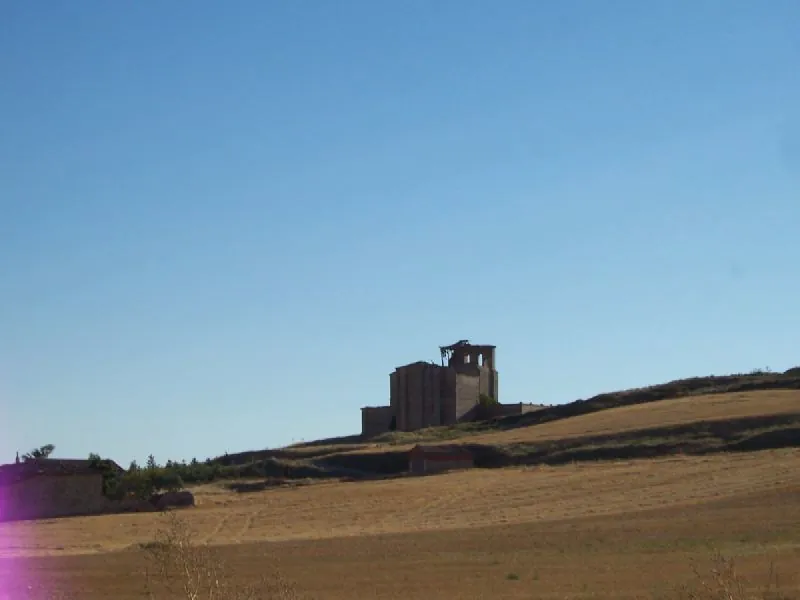
Sasamon Burgos Cerradura 1.jpg
Grosasm (talk) 18:54, 18 April 2013 (UTC) · Public domain
Castilla y León · Cradle of Kingdoms

Sasamón

The tractor driver lifts one hand from the steering wheel as he passes the collegiata tower. It's 07:30, the wheat stubble is still silver with dew...

898 inhabitants · INE 2025
826m Altitude

Why Visit

Mountain Church of Santa María la Real Roman route

Best Time to Visit

summer

Santa María la Real Festival (September) septiembre

Things to See & Do
in Sasamón

Heritage

  • Church of Santa María la Real
  • Arch of San Miguel
  • Roman bridges

Activities

  • Roman route
  • Visit to the cathedral church
  • Photography

Festivals
& & Traditions

Fecha septiembre

Fiestas de Santa María la Real (septiembre)

Las fiestas locales son el momento perfecto para vivir la autenticidad de Sasamón.

Full Article
about Sasamón

Ancient Roman city of Segisamo; its huge Gothic church, visible from afar, stands out.

Ocultar artículo Leer artículo completo

The tractor driver lifts one hand from the steering wheel as he passes the collegiata tower. It's 07:30, the wheat stubble is still silver with dew, and the Gothic bell tower—built when Sasamón mattered more than Burgos—cuts a rectangle of pale limestone against a sky that promises 32 °C by midday. This is everyday theatre at 826 metres on the Castilian plateau: machinery and medieval masonry sharing the same horizon.

A Town That Outgrew Its Boots, Then Shrank

Segisamo, as the Romans called it, once straddled the silver route north. Today the same roads bring weekenders from Bilbao and Santander, though not many. With 5,000 registered inhabitants but barely 1,000 living year-round in the nucleo, Sasamón feels like a place that forgot to update its business card. The effect is space: wide Plaza Mayor arcades where conversations echo, cereal silos you can circle without bumping shoulders, and a fifteenth-century collegiate church whose portal is larger than the entire high street.

Approach from the N-120 and the landscape tricks you. kilometre after kilometre of flat durum wheat convinces drivers they've fallen asleep. Then the tower appears, a vertical exclamation mark that signals a rise of only 40 metres—just enough to command the crossroads. Park on Calle Constitución (free, no meter) and the altitude makes itself known: UV sharp, air thin enough that a brisk walk to the archway of San Miguel will leave low-landers slightly breathy.

Inside the Walls That Rome Started

Only one proper gate survives, the Arco de San Miguel, a horseshoe of medieval stone patched so often it resembles geological strata. Walk through and the calles are still laid out to Roman cadence: cardo maximus straight north, decumanus east–west. Houses are granite below, adobe above, their wooden balconies painted the same ox-blood tone you see in Soria. Number 7 Plaza Mayor has a reja with 1657 forged into the iron; the bakery next door opens 07:00–13:00, then again 17:30 if the owner feels like it—plan breakfast accordingly.

The Colegiata de Santa María la Real demands attention not because it's pretty but because it's over-qualified for the job. Bishop-grade buttresses, a south portal crowded with apostles whose noses have been polished away by centuries of wheat-laden backs brushing past. Inside, the retablo is pure 1550s competition: gilt pine cones, Flemish curtains, a Virgin whose face was repainted during the Civil War and now looks faintly startled. Entrance is free; the sacristan will appear if you hover by the velvet rope long enough. Ask nicely and he'll unlock the tower—sixty spiral steps, no handrail, view extending 18 km to the solar farm at Villadiego. Donations welcome; €2 covers bulb money.

Across the square, the smaller Iglesia de San Pedro keeps earlier hours. Romanesque nave, Baroque tower tacked on like an afterthought. The font inside is where locals were baptised, married, and eventually memorialised; the same surnames—Herrero, Mena, Castrillo—repeat on the wall tablets for four centuries. Photography permitted, flash frowned upon by the widower who sweeps the floor each Tuesday.

Wheat, Wind and the Odra-Pisuerga Light

Sasamón sits on the watershed between two modest rivers. The land looks dull until you walk it. From the Puerto de Ronte, an unsigned track heads south-east for 7 km, looping through fallow fields where great bustards tread. Spring brings poppies the colour of railway posters; by July the soil cracks like broken biscuits. Take water—there's none en route—and expect to share the path only with a seasonal tractor. Mid-October sees stubble burning at dusk; the sky turns copper, the tower silhouette could be a logo for Castile itself.

Cyclists find the same topography perfect for chain-gang training: dead-straight caminos, tarmac edges eroded so you ride on packed dirt. Wind is the adversary; it accelerates across 40 km of unobstructed plateau. Local club riders leave at 06:00 to avoid both traffic and gale; visitors are advised to do likewise or face a 25 km/h head-blast that feels personal.

Winter alters the rules. At 826 m, January nights drop to –8 °C, and the N-120 can ice over. The council spreads grit liberally, but side streets stay slick; boots recommended. Snow is infrequent yet photogenic—one dusting and the granite glows graphite against white. The collegiata's heating is off-grid and temperamental; Sunday mass relocates to San Pedro if the temperature inside falls below 10 °C.

What You'll Eat, and When

Forget tasting menus. The only restaurant in the village centre is Mesón la Plaza (Calle Sta. María 4), open Thursday–Sunday lunch, Friday–Saturday dinner. Expect cordero lechal for four people minimum—order when you book. A half-lamb, slow-roasted in a wood-fired clay horno, costs €48 and arrives with judías blancas and a bottle of Ribera del Duero crianza. If you're solo, the bar does a respectable plato combinado: morcilla de Burgos, a fried egg, and piquillo peppers for €9. Coffee comes in glass tumblers; accept it.

Outside those windows, provisions come from the Co-op on Avenida de Castilla (08:00–14:00, 17:00–20:30). Local cheese is Queso de Burgos, sold in 500 g tubs, best before ten days—buy early in your trip. Fresh fish arrives Tuesday and Friday; locals queue from 09:00, so should you. There is no cash machine in Sasamón; the nearest is in Hortigüela, 9 km east—fill your wallet in Burgos before you arrive.

Beds, or the Lack of Them

Sasamón contains zero hotels. The ayuntamiento runs a small albergue in the former girls' school (€15 dorm, shared bathroom, bring towel). Book through the tourist office wedged beside the arch—open Tuesday and Thursday 10:00–13:00, or ring +34 947 14 XX XX and hope someone's in. More comfortable is Casa Tía Mencia, a rural cottage sleeping six, patio overlooking wheat. €90 per night, two-night minimum, kitchen includes wood-burning stove. Otherwise, stay in Burgos (25 min drive) and day-trip; the NH Palacio de la Merced often drops to €65 mid-week.

Timing the Visit, or Missing It

September's fiestas honour the Virgen de Ronte. The population triples, the plaza fills with casetas, and a running-of-the-heifers ends at the church steps. Accommodation within 20 km books out months ahead; arrive then only if you crave drums at 03:00. Early May is subtler: green wheat, cranes overhead, and the romería when locals walk 5 km to the ermita for a countryside mass followed by sardines and beer. You'll need a car; there's one bus a day from Burgos, but it leaves before the picnic starts.

Spring and autumn give the best hiking light and temperatures in the low twenties. Mid-summer is fierce: 35 °C by noon, shade only in the arcades, siesta observed religiously from 14:00–17:00. Plan dawn walks or twilight photography; midday is for reading in the bar with a caña and free Wi-Fi that actually reaches 30 Mbps—better than most London cafés.

The Honest Verdict

Sasamón will not change your life. It has no castle hotel, no Michelin star, no souvenir shop—just stone, wheat, and the confidence of somewhere that peaked a long time ago. Come if you like your history unvarnished, your horizons wide, and your villages quiet enough to hear a bike freewheel at 500 metres. Bring walking shoes and a sense of Spanish time. Leave before the festival if you value sleep, or stay for it if you don't mind sharing a plaza with half of Burgos province. Either way, the tower will still dominate the plain when you go, and the tractor driver will still lift his hand to the next early riser.

Key Facts

Region
Castilla y León
District
Odra-Pisuerga
INE Code
09363
Coast
No
Mountain
Yes
Season
summer

Livability & Services

Key data for living or remote work

2024
ConnectivityFiber + 5G
HealthcareHospital 29 km away
EducationElementary school
Housing~5€/m² rent · Affordable
Sources: INE, CNMC, Ministry of Health, AEMET

Official Data

Institutional records and open data (when available).

  • IGLESIA DE LA ASUNCION
    bic Monumento ~2.6 km
  • IGLESIA DE NUESTRA SEÑORA DE LOS REYES
    bic Monumento ~5.9 km
  • IGLESIA DE SANTA MARIA
    bic Monumento ~0.5 km
  • LA VILLA
    bic Conjunto Histã“Rico ~6.9 km
  • LA VILLA
    bic Conjunto Histã“Rico ~0.7 km
  • CASTILLO DE OLMILLOS DE SASAMON
    bic Castillos ~2.5 km
Ver más (1)
  • MURALLA
    bic Castillos

Planning Your Visit?

Discover more villages in the Odra-Pisuerga.

View full region →

More villages in Odra-Pisuerga

Traveler Reviews