Full Article
about Villadiego
Historic quarter with medieval layout and arcaded square; heart of the Odra-Pisuerga district
Ocultar artículo Leer artículo completo
The church bell strikes noon and the only sound afterwards is the scrape of metal chairs on stone. Outside Bar Emilio, three men in flat caps push away empty coffee cups and reach for cigarettes. Nobody checks a watch. Villadiego runs on a different clock: the one that says lunch starts when the lamb is ready and the wine is cool enough.
At 840 metres on the northern edge of the Castilian plateau, this small market town keeps the hours Spain abandoned decades ago. Shops pull down shutters at two. Bars reopen at five. The single cash machine locks itself inside the bank at eight sharp, so if you need money for dinner you’d better remember before pudding. It’s the kind of place that reminds you how recent 24-hour culture really is.
A Town That Outlived Its Own Saying
Spaniards still mutter “tomar las de Villadiego” when someone bolts for the door. The phrase means to do a runner, coined centuries ago when prisoners gave the town’s constables the slip. These days the irony is thicker than the local morcilla: visitors arrive expecting a quick photo of the medieval arch and end up staying for a second glass of rosado, then a third, then overnight. The road out can wait.
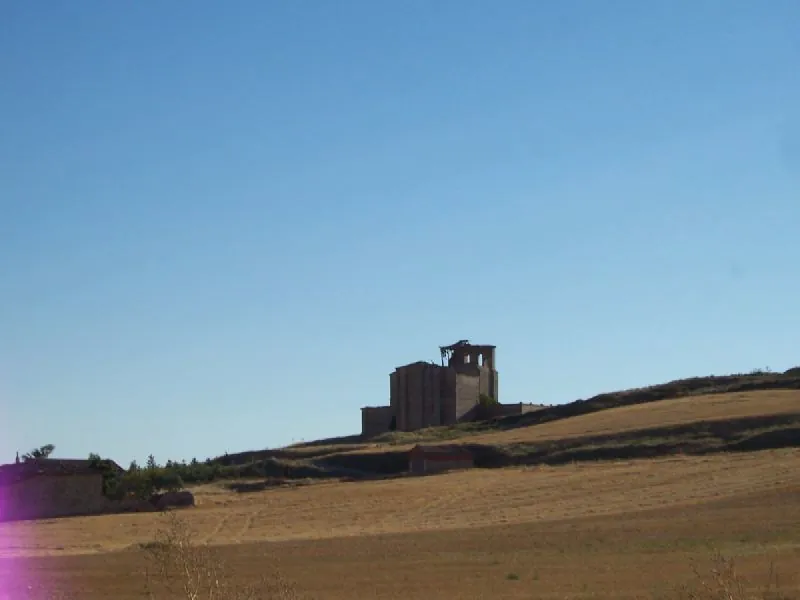
The town doesn’t look dramatic. Low, ochre houses the colour of dry earth line narrow lanes that tilt gently towards the main square. Grain fields press against the last row of houses; beyond them the horizon is so wide you can watch a rain shower travel for twenty minutes before it arrives. What makes Villadiego unusual is what it lacks: souvenir stalls, tour buses, multilingual menus. The only English you’ll hear is inside the tiny Las Loras Geopark visitor centre, where a cheerful geologist will explain why the surrounding limestone cliffs look like stacks of half-melted books. Step outside again and it’s all Spanish, all the time.
Stone, Wood Smoke and the Smell of Roast Lamb
Start at the Arco de la Cárcel, the town’s former prison gate. The thick walls still carry iron rings where chains once rattled. Above the arch sits the Radio Museum, a surprisingly absorbing jumble of 1930s valve sets and Franco-era transmitters. Even if you can’t read the Spanish captions you can twiddle the knobs and watch the dials glow amber. Children aren’t shooed away; the curator actively encourages them to Morse-code each other across the room.
From the arch, Calle de San Lorenzo slips downhill between stone houses whose wooden balconies sag like old bookshelves. Halfway down, the late-Gothic church tower appears, its pinnacles nibbled by five centuries of wind. Inside, baroque retablos glimmer in the gloom; someone usually leaves a €1 coin on the altar rail to keep the lights on for strangers. If the door is locked, try the house opposite – the sacristan lives there and will open up for anyone polite enough to ask.
By now the smell of oak smoke and lamb fat is drifting from the asadores near the square. Lunch is a serious business. The set menú del día costs around €14 and runs to three courses, but most visitors skip straight to the lechazo: a quarter of milk-fed lamb roasted in a wood-fired clay oven until the skin crackles like parchment. It arrives on a plain metal plate, no garnish, just a wedge of roast potato and a jug of local Arlanza rosado. The wine is light enough to drink at midday without needing a siesta afterwards – though the town certainly won’t mind if you take one.
Plains, Cliffs and the Ghost of a Market
Walk off lunch by following the old grain road eastwards. Within ten minutes the houses thin out and you’re between cereal fields that run dead straight for kilometres. In April the wheat is still green and skylarks hang overhead; by July everything has turned gold and the air shimmers with heat. The path eventually reaches the rolled jurisdictional, a stone pillar that once marked where town law began. It’s just a column with a ball on top, but stand here at sunset and you can see why medieval councils chose the spot: no one could ride past without noticing.
Back in town, the Plaza Mayor fills slowly. Grandmothers queue at the bakery for the 6 p.m. batch of baguettes; teenagers circle on bikes older than they are. On Thursdays the square doubles as a produce market – four stalls at most, selling honey so thick it needs a spoon, morcilla blanca spiced with cinnamon, and tomatoes that actually smell of earth. Bring cash; the stallholders don’t do cards and the ATM is already locked.
When to Come, How to Leave
Spring and early autumn are kindest. In May the fields glow green and daytime temperatures sit comfortably in the low twenties. October brings the grape harvest and the air smells of crushed juice; you can tag along with a local coop and stomp a barrel if you ask nicely. Summer is fiercely hot – 35 °C by noon – and most locals shift life to the evening. Winter is crisp, often below freezing at night, but the wood ovens burn all day and hotel prices plummet to €45 for a double. Just check the weather before you set out; the BV-2005 from the A-62 can ice over.
Public transport exists, barely. One bus leaves Burgos at 15:30 and returns at 07:00 next morning. It doesn’t run Sundays. Driving is simpler: from Santander it’s 90 minutes south on the A-67, then 25 minutes across empty plateau. Petrol stations are scarce once you leave the motorway – fill up at Villarcayo, 20 kilometres short.
Stay overnight if you can. The town’s single three-star hotel occupies a 17th-century manor on the square; rooms have beams, stone walls and Wi-Fi that flickers when the wind blows. A handful of village houses rent out rooms for €35–50; hosts leave the key under a flowerpot and trust you to switch the heating off when you leave. Book dinner ahead – after 22:00 even the bars turn the lights out.
The Exit Test
Leave before the church bell rings nine and you’ll catch the sun rising over the grain silos, the whole plateau pink and silent except for the clink of milk churns. That’s when you understand the real joke behind the old saying. Taking “las de Villadiego” isn’t about running away; it’s about slipping off before the town makes you miss whatever you thought came next.


