Full Article
about Posada de Valdeón
Heart of the Leonese Picos de Europa; starting point of the Ruta del Cares
Hide article Read full article
A village beneath high limestone walls
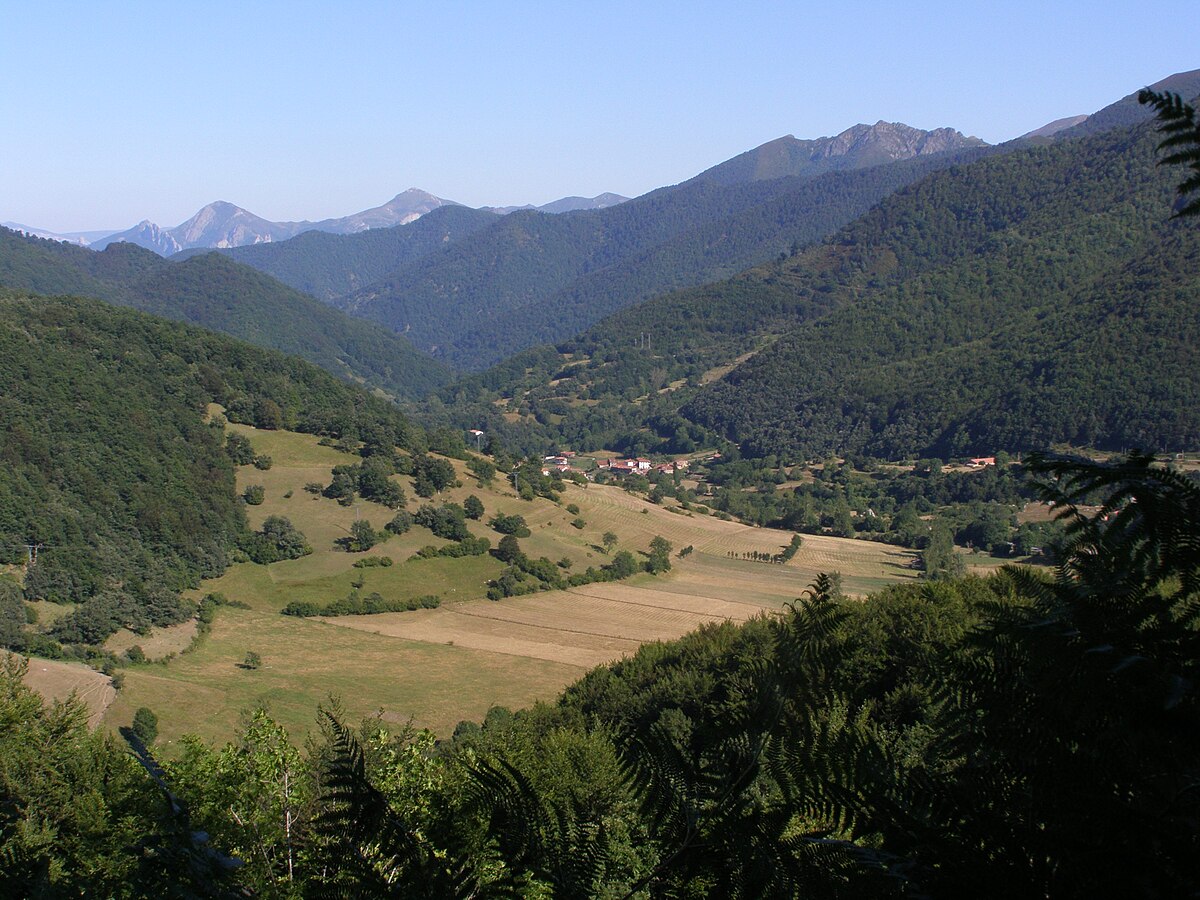
Posada de Valdeón sits at the bottom of a glacial valley, around 900 metres above sea level. The geography is definitive: you are enclosed by the limestone walls of the Central and Western massifs of the Picos de Europa, with peaks rising well over two thousand metres. The village is the administrative centre for the municipality, which counts just under four hundred inhabitants spread across several smaller settlements along the valley floor.
Architecture here follows the logic of a pastoral economy. Stone houses with wooden galleries line the streets, many with stables on the ground floor. Enclosed meadows, or praos, extend right up to the edges of the built-up area. While there are newer constructions, the working landscape is still present, not preserved.
On the slopes, beech and oak woods give way to open pasture. Wildlife from the adjacent national park is part of the fabric: chamois on the high crags, wolves known to be in the area, and the occasional brown bear in the wider mountain range. In summer, the arrival of visitors is most visible on the roads and at the trailheads.
The shape of Valdeón
From Posada, you can read the valley. It is a wide, flat corridor that quickly steepens into slopes climbing towards the ridges. The land was carved by ancient glaciers and is still being shaped by water working on the limestone.
Settlements like Soto, Prada, Cordiñanes and Santa Marina retain elements of traditional Leonese mountain architecture. You will see hórreos—raised granaries typical of northern Spain—alongside haylofts and stone walls that continue to mark property and contain livestock. It is a lived-in landscape: renovations and newer builds stand beside older structures, which is typical for villages that are inhabited year-round.
In Santa Marina de Valdeón, the parish church of Santa María de la Asunción is a simple, rural construction. Its significance historically was as much social as religious, serving as a gathering point for the scattered hamlets of the valley.
A practical starting point is the Casa del Parque for the Valdeón sector of the Picos de Europa National Park. The exhibition explains the glacial and karst geology that formed this terrain. More importantly, it provides updated information on trail conditions and route advice. If you plan to walk, it is worth stopping here first.
The drive to Caín
The road from Posada to Caín is short but demands attention. The valley narrows steadily into a gorge, with tight bends and rock walls close to the tarmac. Progress is slow.
Caín is the León-side start of the Ruta del Cares. The drive itself introduces the scale of the mountains. In summer, proceed with caution: the road is narrow, and you may encounter livestock or parked vehicles.
Paths from the valley
Walking is how you engage with this terrain. Routes range from gentle meadow walks to demanding mountain itineraries.
The Ruta del Cares is the most frequented. Its 12 kilometres follow a path engineered into the rock face along the River Cares gorge. The footing is generally good, but it is not a casual stroll: sections lack shade, minor rockfalls can occur, and summer crowds are substantial.
For longer days, routes lead into the Central massif or over mountain passes connecting to other valleys. These are high mountain paths where conditions change rapidly; fog can settle in this sector with little warning.
For quieter alternatives, the beech woods on the valley slopes offer shelter. The path through the Bosque de Pinar is one such route. In autumn, you walk on a carpet of leaves under a full canopy. After rain, expect mud and slippery roots underfoot.
A working landscape
Livestock farming remains central here. Its most famous product is Queso de Valdeón, a blue cheese with protected designation of origin status, produced within the valley. Traditionally matured in sycamore leaves, its production is now regulated but still based on local milk.
The cheese is a reminder that Valdeón is not merely a scenic backdrop. It is a working valley where pastoral life continues alongside tourism.
Before you go
Posada itself can be seen quickly. The substance of a visit lies in the valley and the paths that lead from it.
Always check the weather forecast before heading into the mountains. Distances are deceptive in steep terrain, and fog or rain can alter a route's character completely. In summer, high visitor numbers affect roads and popular trails, especially around Caín and the Ruta del Cares.
What you find here is access to a glacial valley defined by pastoral life and enclosed by high limestone walls—a geography that shapes everything.