Full Article
about Cabrejas del Pinar
Gateway to the Pinares area, near the natural monument of La Fuentona.
Hide article Read full article
Morning in the pine forest
Early in the morning, when the sun barely reaches the highest treetops, the air in Cabrejas del Pinar smells of damp wood and turned soil. The pine forest absorbs sound. Footsteps on gravel come out muted, and at times the only thing to hear is the wind moving through the needles. Tourism in Cabrejas del Pinar begins like this, with quiet and with that deep green colour that surrounds almost everything.
Cabrejas is small, with around three hundred residents for much of the year, and sits in the Pinares region in the north-west of the province of Soria. The forest has shaped life here for centuries. It shows in the design of the houses, in courtyards where firewood is still stored, and in conversations that continue to revolve around the woodland, timber, or mushrooms when the season arrives.
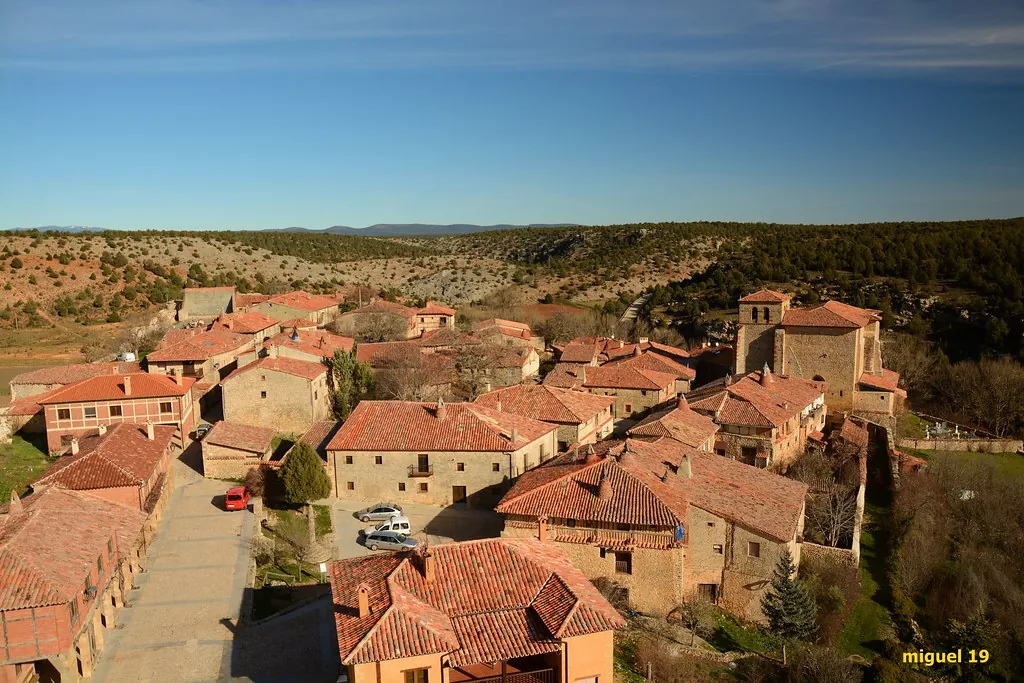
Stone houses with wooden balconies darkened by time are built for long winters. Windows tend to be small and walls thick. In January and February the cold settles into the narrow streets. In summer, the pine forest keeps the air cooler than in other parts of the province.
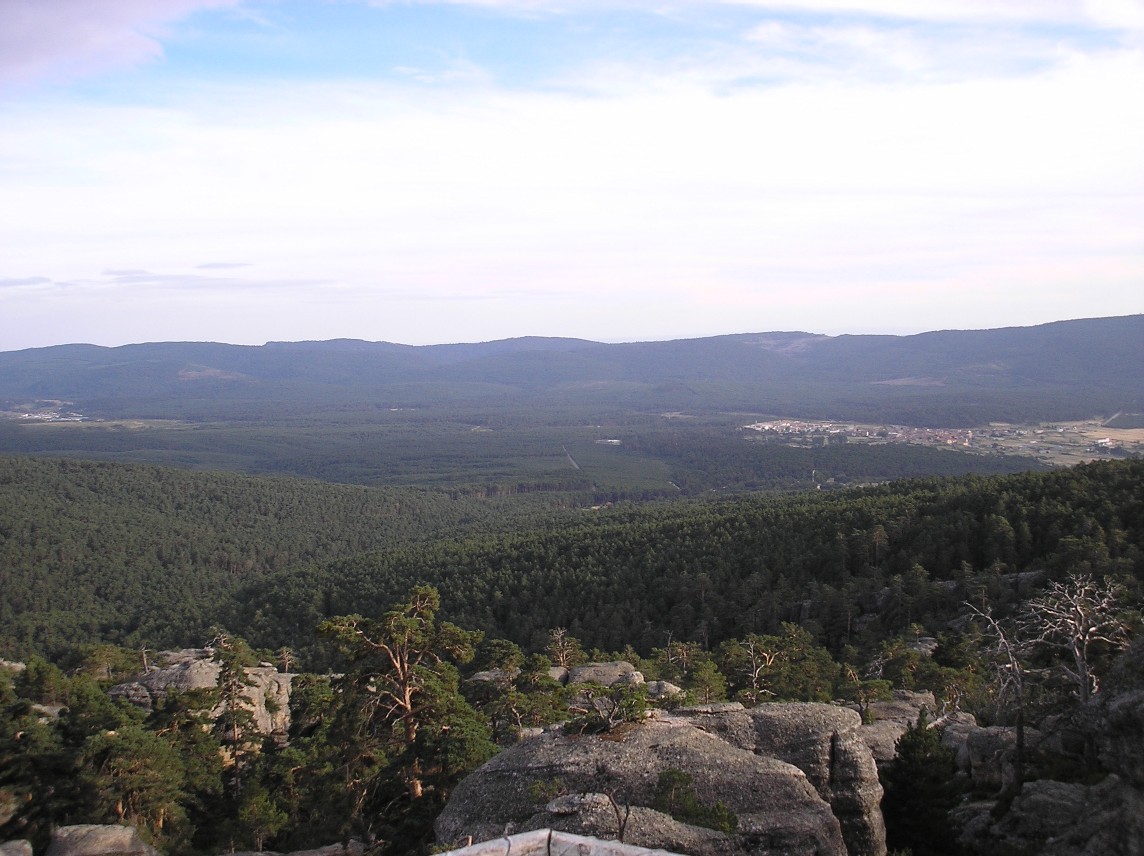
A short walk from the centre is enough to be surrounded by tall, straight trunks. Scots pine, known locally as pino albar, dominates the landscape and forms a continuous forest across much of the region. Among the trees are traces of past forestry work: the odd abandoned structure, clearings once used to extract timber, signs of an economy that for decades depended almost entirely on the woodland.
Not far from the village, people often mention the source of the river Abión. It is a discreet spot where water emerges among damp rocks and moss. There is nothing monumental about it, and it is not especially signposted. It is simply a quiet corner of the forest where the sound of running water breaks the stillness of the pines.
The church and the streets
The parish church of San Millán stands with the same restraint as the rest of the village. Pale stone, simple lines, and a compact form that seems designed to withstand the mountain climate rather than attract attention. Around it are houses from different periods, many with large gateways that recall a time when animals and farmyards were part of daily life.
Walking through Cabrejas is straightforward. There are few streets, a slight change in level here and there, and a sense of calm that holds even in summer. At certain times of the afternoon, light falls low between the façades, leaving half the street in shadow. In the colder months, the smell of firewood or chimney smoke appears before nightfall.
Paths through the pines
The main reason many people come here lies beyond the village itself. Several forest tracks and paths cross the pine woods that surround Cabrejas del Pinar. These routes are wide in many sections, having been used for years in forest management, and they are easy to walk with comfortable footwear.
Autumn brings more movement thanks to mushroom gathering. Níscalos, a type of saffron milk cap, and boletus appear among dry needles and forest clearings when conditions are right. It is worth checking the rules in advance, as in much of the region collecting mushrooms is regulated and usually requires a permit.
In winter the landscape changes completely. When it snows, the pine forest becomes quiet in a different way. Branches carry a weight of white, paths are almost erased, and only the occasional track crosses the forest road.
Seasonal food from the land
The cooking in this area is direct and closely tied to what the surroundings provide. Roast lamb is common, along with products from the matanza, the traditional winter pig slaughter that supplies cured meats and other staples. In autumn, many dishes feature mushrooms as a central ingredient. Honey from hives placed in clearings within the pine forest is also typical.
Cabrejas itself does not function as a food destination, but anyone spending a few days in the region will likely come across these dishes in simple bars or at local celebrations.
Festivals and village life
The festivities of San Millán, held in September, bring together residents who live elsewhere for much of the year and return for a few days. There is a procession, music, and activities organised by the villagers themselves. The atmosphere is familiar and relaxed, and the main square becomes a meeting point over several days.
In winter, some customs linked to the rural calendar remain alive. The matanza continues to be part of life for many families, although it now takes place in a smaller circle than in the past.
August usually brings more activity. With the good weather, those who have homes in the village return, and simple events are organised: games, gatherings in the square, or small displays about traditional life in the area.
Getting there and around
Cabrejas del Pinar is just over half an hour by car from the city of Soria, along roads that cross large stretches of the province’s pine forests. It can also be reached from the province of Burgos via local roads that pass through the same wooded landscape.