Full Article
about Casarejos
Pine-forest town near the Cañón del Río Lobos with deep-rooted traditions.
Hide article Read full article
Arriving Between the Pines
Tourism in Casarejos makes sense almost as soon as you arrive. The road in runs through dense pine forest, and there is a moment when lowering the car window brings in the smell of resin. Anyone who has travelled through other villages in the Pinares area will recognise it: stone houses, sloping roofs, and a kind of silence that comes from steady, everyday life rather than emptiness.
Around 145 people live here, and the pace is shaped more by cold winters and short summers than by any visitor plans. Casarejos sits at just over 1,000 metres above sea level, and that altitude shows. The houses look built with winter in mind before anything else. Thick walls, dark timber, roofs ready for snow. Nothing showy, but everything practical when you picture how life worked here decades ago.
The Pine Forests That Define It
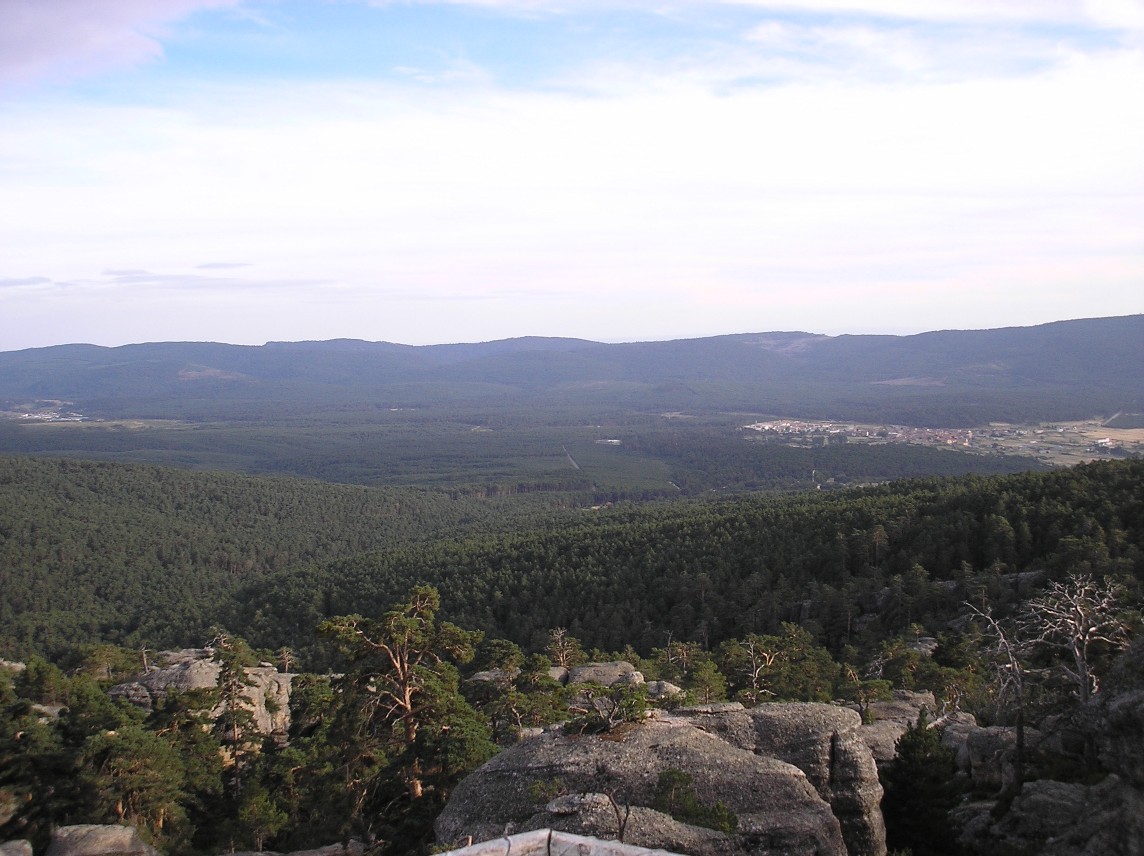
What truly dominates Casarejos is the surrounding pine forest. Kilometres of pino albar cover hills and shallow valleys, forming the kind of woodland where it is easy to walk for a long time without seeing anyone.
For generations, this landscape was about work rather than scenery. Resin extraction played a role in the local economy, and traces of that past are still visible. Some tree trunks carry the vertical scars left by tapping, and if you look closely you may spot the remains of small shelters or forestry huts tucked among the trees.
This is not an area of heavily marked trails or signposts every few metres. There are plenty of forest tracks leading out from the village itself, but it helps to carry a map or a GPS track if the area is unfamiliar. It feels more like open woodland than a managed park, and that shapes how you move through it.
Easy Walks, Unhurried Time
Several paths leave directly from Casarejos and head into the pines. They are not technical routes, but rather forest tracks, gentle trails and the occasional small ravine.
It is the kind of place where a short walk easily stretches into a couple of hours. The terrain encourages you to keep going, following one path into another. At times the forest opens up, offering views towards the surroundings of the Cañón del río Lobos or across the rolling hills that frame the area.
The seasons shift the experience quite noticeably. In spring, the ground tends to be full of green growth. In autumn, the woodland changes character again, with different colours and textures. Winter brings a further variation, though snowfall is not the same every year. When it does arrive, the landscape feels quieter and more enclosed, with white-covered pines and muted paths, giving the sense of walking through a forest that seems larger than it really is.
A Small Village Centre
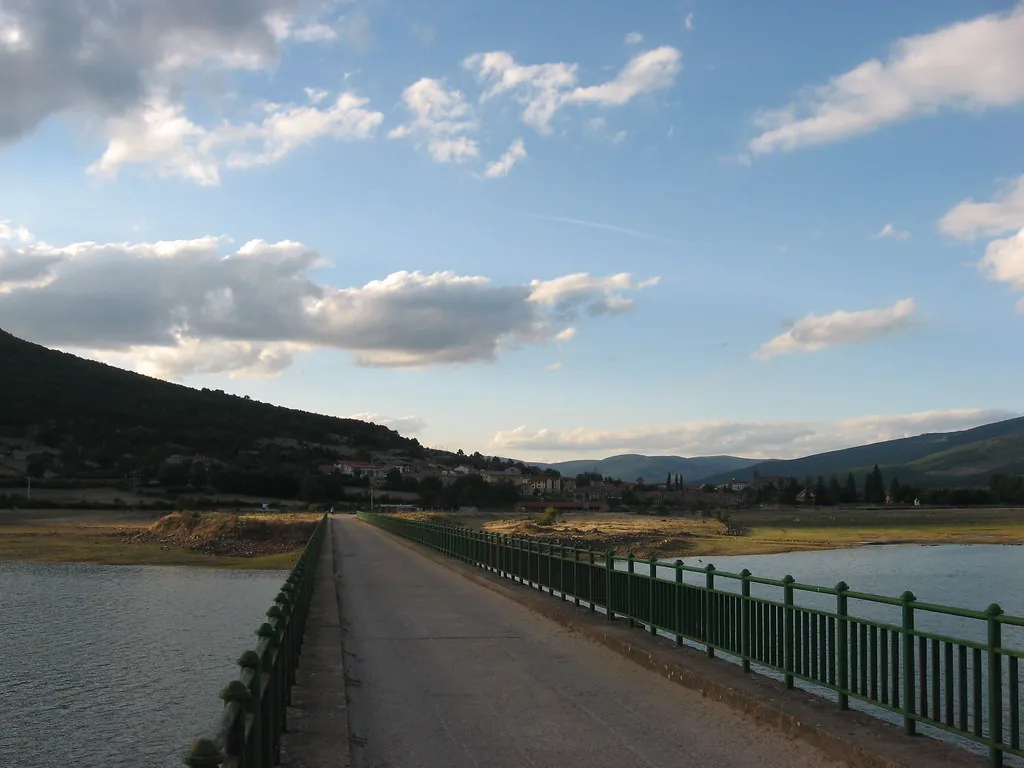
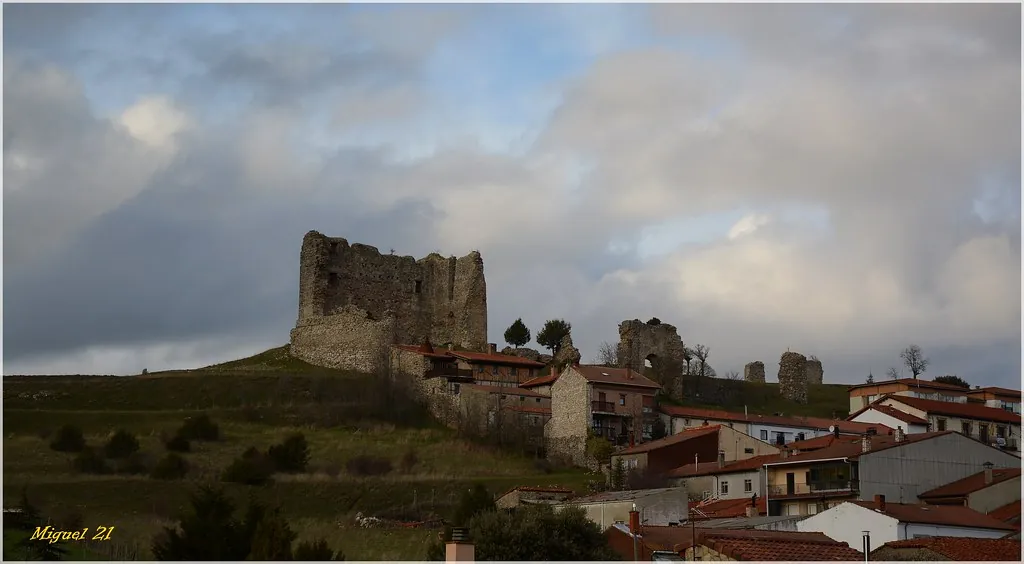
The centre of Casarejos is compact and can be seen in a short walk. The streets are calm, lined with stone houses and the occasional façade where wood has darkened over time.
At its centre stands the parish church of San Pedro. It is not a monumental building, nor does it try to be. Instead, it reflects the architecture common in these mountain villages: solid, functional and built to last.
What matters here is not a single landmark but the overall setting. Walking through the streets quickly makes it clear that this is a place designed for living rather than display. There is a coherence to the layout and materials that comes from long-term use rather than planning for visitors.
Food from the Surroundings
The food in this part of Soria is straightforward and filling. Expect traditional stews, lamb dishes and cured meats prepared during the matanza, the annual pig slaughter that has long been part of rural life. In autumn, mushrooms become a key ingredient and appear in many dishes.
Nearby rivers have traditionally provided trout, though fishing is more limited now than it once was. Other local products are closely tied to the forest itself, such as honey, wild mushrooms and pork products prepared at home.
It is not a complex cuisine. The emphasis is on hearty meals that satisfy, the kind that naturally lead into a quiet afternoon afterwards.
Seasons, Traditions and Village Life
As in many small villages, the population of Casarejos changes with the time of year. Summer brings the return of people who live elsewhere for most of the year, and the atmosphere becomes livelier.
The patron saint festivals dedicated to San Pedro usually take place in summer and draw together many with ties to the village. During these days there are open-air dances, shared meals and the familiar sense of reunion that appears across villages in the province.
Some rural traditions are still present too. The matanza del cerdo continues in winter, although today it is less about necessity and more about family gathering and continuity.
What Casarejos Is, and What It Isn’t
Casarejos is not a place of major monuments or a packed itinerary. It is somewhere to walk through pine forest, wander the streets and spend a few quiet hours.
In practical terms, it fits naturally into a route through the pine forests of Soria. For those drawn to this kind of landscape, it makes sense to stop and explore at an unhurried pace. For others, it may be a brief visit.
For anyone who values silent woodland and small villages that still function as real communities, Casarejos offers exactly that, without trying to be anything more.