Full Article
about Duruelo de la Sierra
High-mountain municipality where the Duero River rises and Castroviejo is located.
Hide article Read full article
A village shaped by altitude
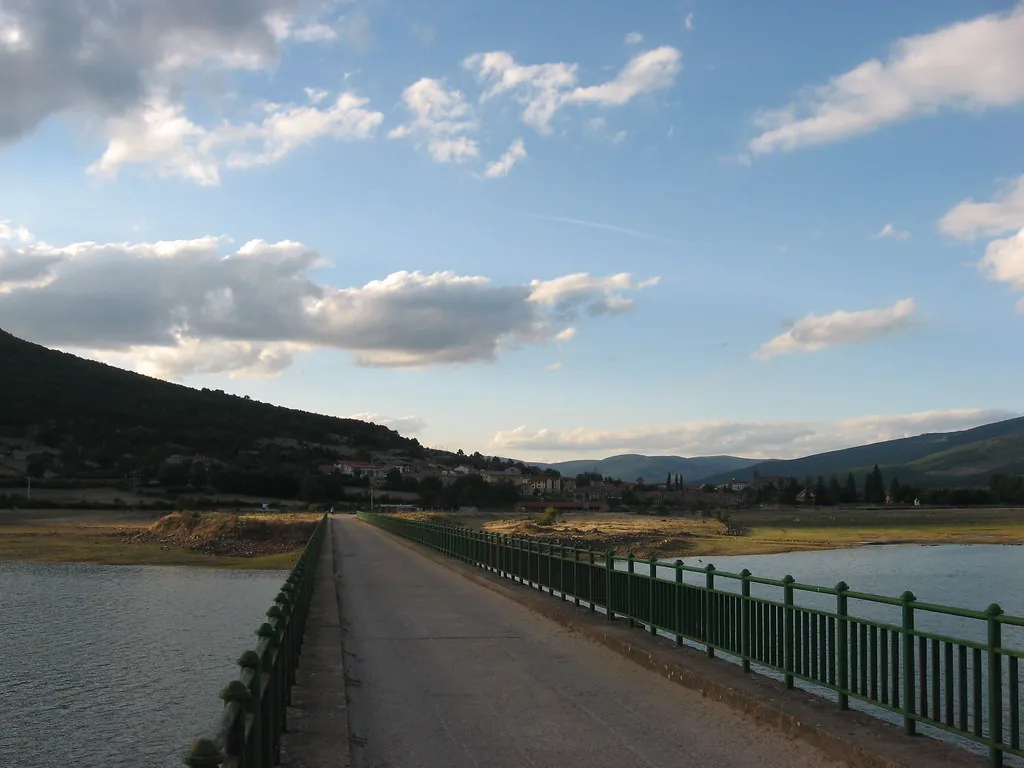
Early in the day, when sunlight barely touches the tops of the pines, Duruelo de la Sierra smells of damp wood and chimney smoke. Cold air drifts down from the Sierra de Neila. A car might pass slowly along the main street, and somewhere in the distance there is the sharp sound of a log hitting the ground. Here, the forest is not a backdrop. It is work and part of everyday routine.
The village sits at around 1,200 metres above sea level. That height defines both the climate and the rhythm of the year. Snow can linger for days on rooftops and along the roadside in winter. Summer brings longer days, yet evenings remain cool, and the scent of resin becomes stronger among the pines.
Life beneath the pine canopy
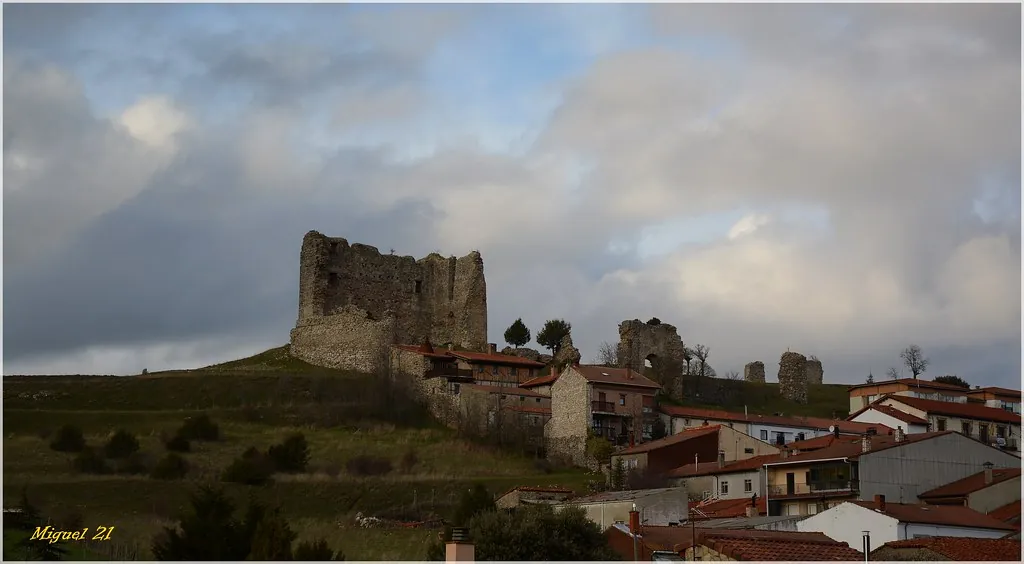
Duruelo does not try to present itself as a showpiece. Its stone and timber houses follow a practical logic: withstand long, cold seasons in the mountains. Walls are thick, windows tend to be small, and roofs are steep so snow does not settle for too long.
The parish church of San Miguel Arcángel rises with a solid tower and little decoration. Its origins date back to the 16th century. From the nearby square, the layout of the village becomes clear, built along a slope where streets climb and dip without strict order.
A walk along Calle Mayor shows how the place functions day to day. Older façades sit beside more recent renovations. Cars are parked in front of large gateways where timber trailers still fit. Nothing here suggests a place paused in time. It continues to move at its own pace.
Walking through pine forests
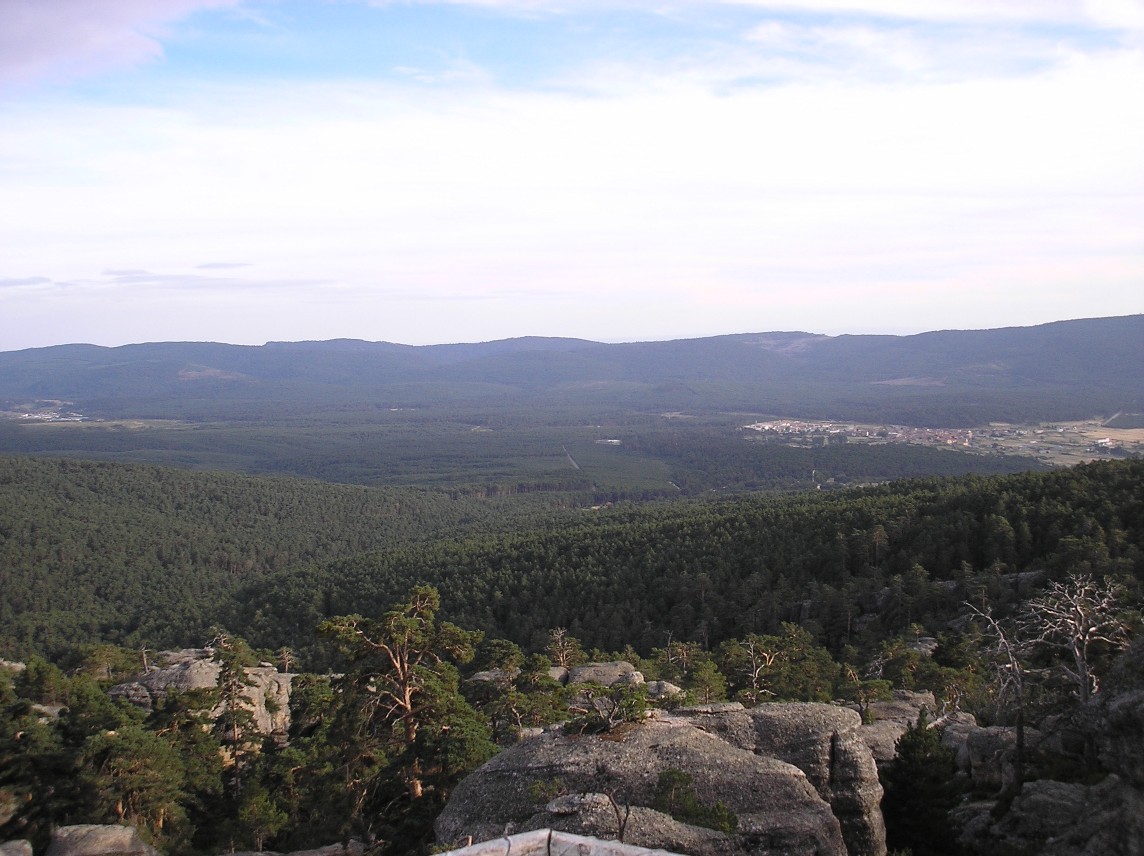
Leave the centre and the forest begins almost immediately. This region contains one of the largest expanses of Scots pine in the Iberian Peninsula. The trees grow tall and straight, spaced far enough apart for light to filter cleanly through. Underfoot, dry needles soften each step.
In many clearings there are neat stacks of freshly cut logs. Forestry remains a key part of the local economy. It is common to encounter lorries carrying timber along the forest tracks.
There are paths and wide tracks that run several kilometres into the woods. Not all of them are signposted, and some split without warning. It is wise to carry a map or have a clear idea of the route before setting out.
Laguna Negra and the surrounding heights
A short distance away lies the Laguna Negra. It sits enclosed by rock walls and dark pines. Even in summer, the water appears cold. Under cloudy skies, its surface takes on an almost black tone, which explains the name.
The place has inspired legends for centuries and appears in well-known literary texts. Beyond those associations, the quiet stands out. Wind moves through the pines, and the sound of water echoes against the rock.
From the surrounding area, paths lead upwards towards the heights of the Sierra de Neila or to peaks such as Peña Cervera. Higher ground opens views across the comarca of Pinares, a continuous stretch of forest that seems to extend without end.
Autumn and the search for mushrooms
With the first autumn rains, the forest floor begins to change. Among pine needles and fallen leaves, mushrooms start to appear: níscalos, boletus and other sought-after varieties.
Gathering is regulated throughout the area. Permits are usually required, and there are limits on how much can be collected. These rules reflect how seriously this resource is treated locally. Anyone arriving with a basket should check the regulations before heading into the woods.
During these weeks, movement along forest tracks increases, especially in the mornings.
Winter on the forest tracks
When colder weather sets in, the tracks around Duruelo are covered with compacted snow. There are no ski lifts or resort infrastructure, only long routes through the trees.
Some people head out with cross-country skis or snowshoes. Others simply walk. The soundscape changes. Snow crunches underfoot, and the forest becomes quieter than in summer.
Weather conditions can shift quickly. It is sensible to check forecasts and road conditions before travelling, as snowfall in this part of the sierra can be intense.
Seasons and practical notes
Each season reshapes the landscape. Autumn brings mushroom activity and a strong scent of damp earth. Winter can cover the village in snow for several days in a row. Spring opens small streams across the meadows. Summer afternoons stay mild thanks to the altitude.
Not all paths are signposted, and mobile coverage can fail in parts of the forest. Setting out with enough time, water and a clear route makes a difference.
Duruelo de la Sierra works in a simple way: dense woodland all around, and a village still tied closely to it. A short walk is enough to notice that the most constant sound here is not traffic, but wind moving through the tops of the pines.