Full Article
about Herrera de Soria
Tiny village in the setting of the Cañón del Río Lobos Natural Park
Hide article Read full article
A place that barely makes a mark on the map
Some villages give the impression that only a handful of people live there, yet someone still switches the lights on at night. Herrera de Soria fits that idea quite well. It is extremely small, with around a dozen residents, tucked away in the Pinares area, a few kilometres from El Burgo de Osma. On the map, the surroundings seem to take up far more space than the village itself.
Arrival is almost accidental. You park without much thought and within a couple of minutes you have already crossed the entire place. Even so, it does not feel abandoned or staged. There are clear signs of long-standing life here, and something of that momentum still lingers.
A handful of houses and a church at its heart
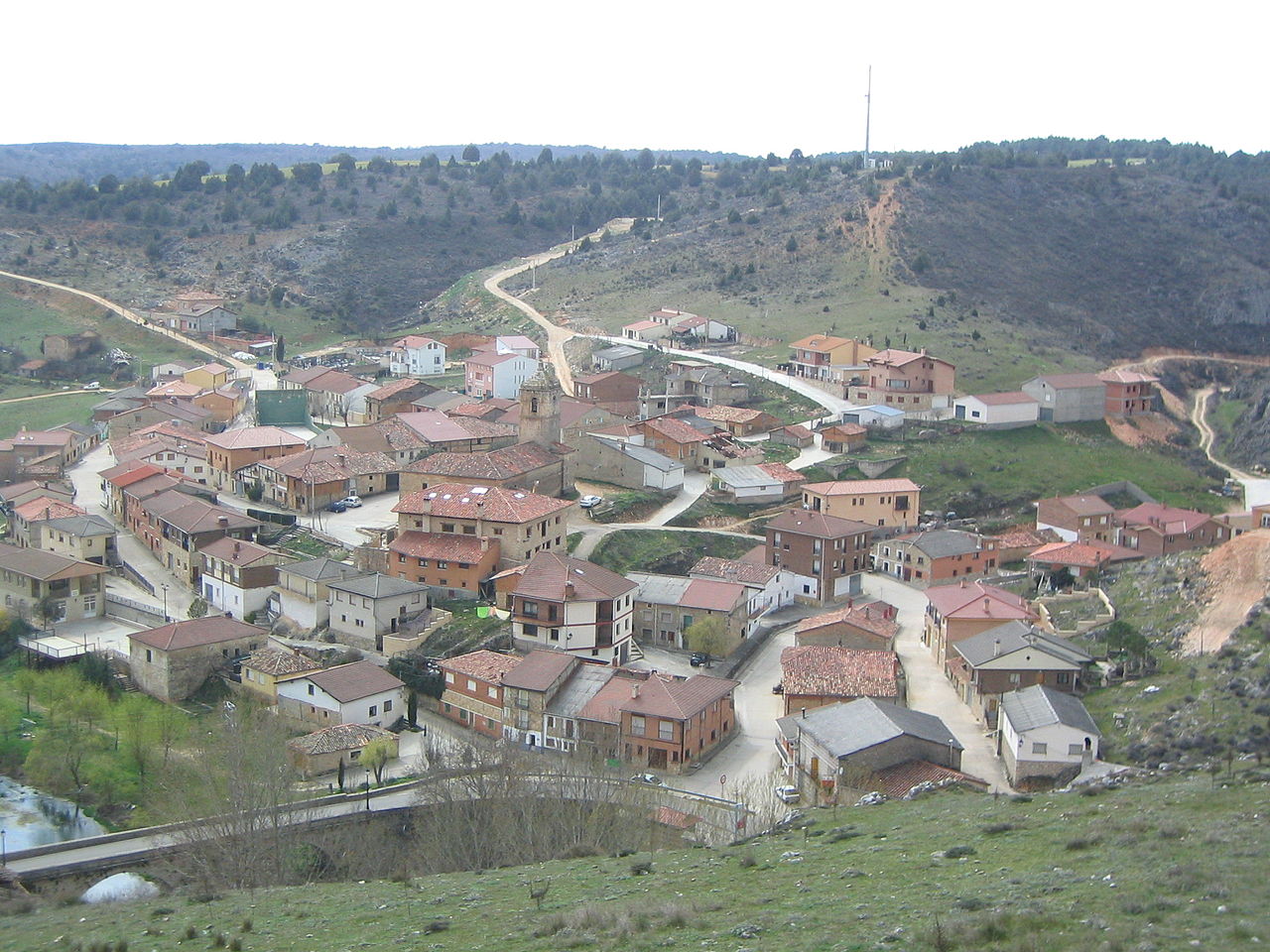
Herrera de Soria is small even by the standards of this part of the province. There are only a few streets, lined with stone and timber houses, along with the occasional larger building that hints at busier times in the past.
At the centre stands the church of San Juan Bautista. It is not monumental and does not try to be. It matches the tone of the village: sober, practical, built for the people who once lived here. Inside, a few altarpieces and simple features remain, quiet traces of when these villages were much more populated.
What stands out most is the silence. Not the artificial quiet of an empty tourist spot, but a deeper kind that comes from wide surroundings and very few inhabitants.
Pine forests stretching for miles
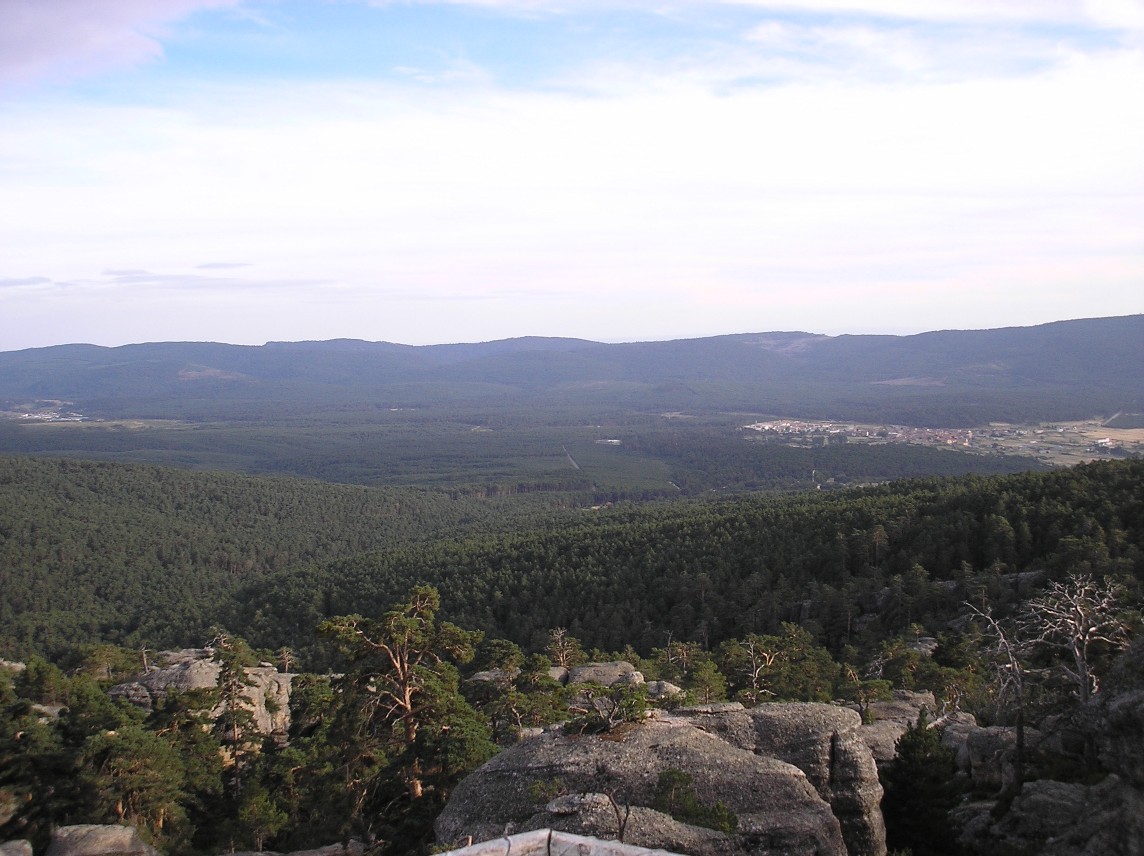
The landscape around Herrera de Soria is typical of this part of the province. Pine forests spread out for kilometres in every direction. Anyone familiar with the Pinares region will recognise the setting: tall pines, a relatively clear forest floor, and tracks that lead off into the distance with no obvious end.
From the village itself, simple paths head straight into the woods. There is no need for detailed planning or demanding routes. These are long, unhurried walks where the pace is set by the surroundings. Walk for a while, stop, listen, then carry on.
With a bit of luck, roe deer may appear, or the movement of wild boar can be heard in the undergrowth. And if nothing shows up, it hardly matters. The point here is simply to walk and be in the forest.
Mushrooms, woodland and working memory
Autumn brings a noticeable change in activity. The area becomes busier thanks to mushroom picking. Níscalos, boletus and other varieties draw people from across the province. This is taken seriously in the Pinares region, and collection is often regulated, so it is worth checking the rules before heading out with a basket.
The village’s connection to the forest runs deep. For decades, forestry shaped daily life in places like Herrera, alongside grazing and seasonal livestock movements between mountain areas. Those who still live here remember those times, when more houses were occupied and the streets carried more sound.
That past is not displayed in monuments or exhibitions. It survives in the stories and in the way the landscape is still understood by those who remain.
A brief stop rather than a full itinerary
It is best to arrive with the right expectations. Herrera de Soria is not a place to fill an entire day with activities.
A short walk through the streets, a look inside the church, and a wander into the pine forest are essentially the plan. That is all, and it does not need much more. The village works best as a quiet pause during a wider route through the area.
For food or a livelier atmosphere, most people head to nearby villages or to El Burgo de Osma, where there is more going on and places to sit down without rushing.
Small even by Soria’s standards
Soria is known for its small villages, yet Herrera belongs to an even more reduced group. With barely a dozen residents, it survives more through attachment than demographic logic.
Spending a little time here makes it easier to understand why some people keep coming back. The forest begins at the doorstep, noise is almost non-existent, and time seems to move at a different pace.
It is not a destination that seeks attention. Instead, it sits quietly among the pine forests. After several kilometres on the road through this region, that kind of stop can feel exactly right.