Full Article
about Molinos de Duero
One of the prettiest villages, with stone pine-grove architecture and stately homes.
Hide article Read full article
Morning by the River in Pinares
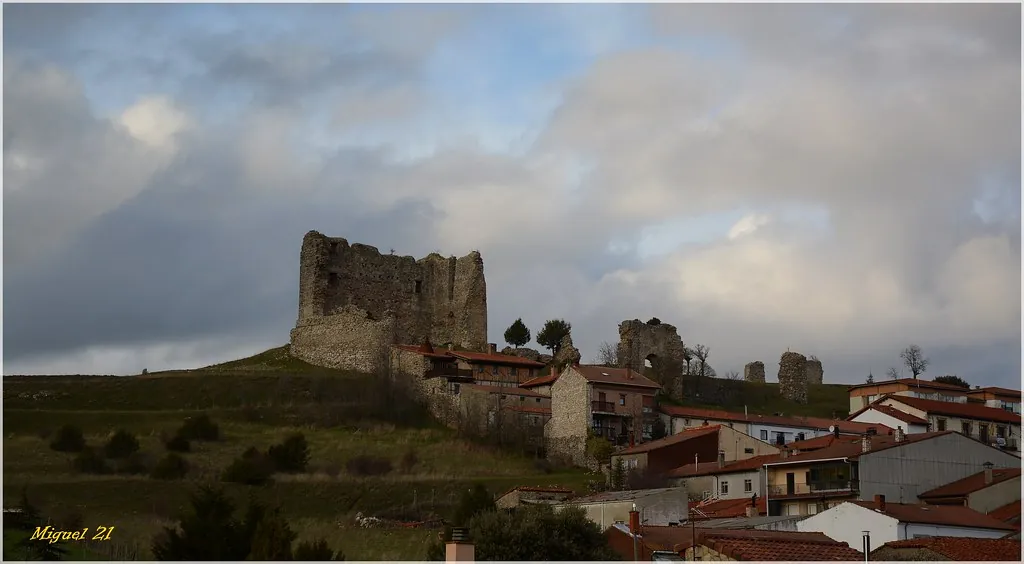
At seven in the morning, cold air drifts down from Urbión and carries the scent of damp resin. The river is heard before it is seen. In Molinos de Duero, with shutters only half raised, the day begins slowly. This small village in the province of Soria has around 160 residents and belongs to the comarca of Pinares, a region where the forest sets the tone and the calendar is marked more by the seasons than by the clock.
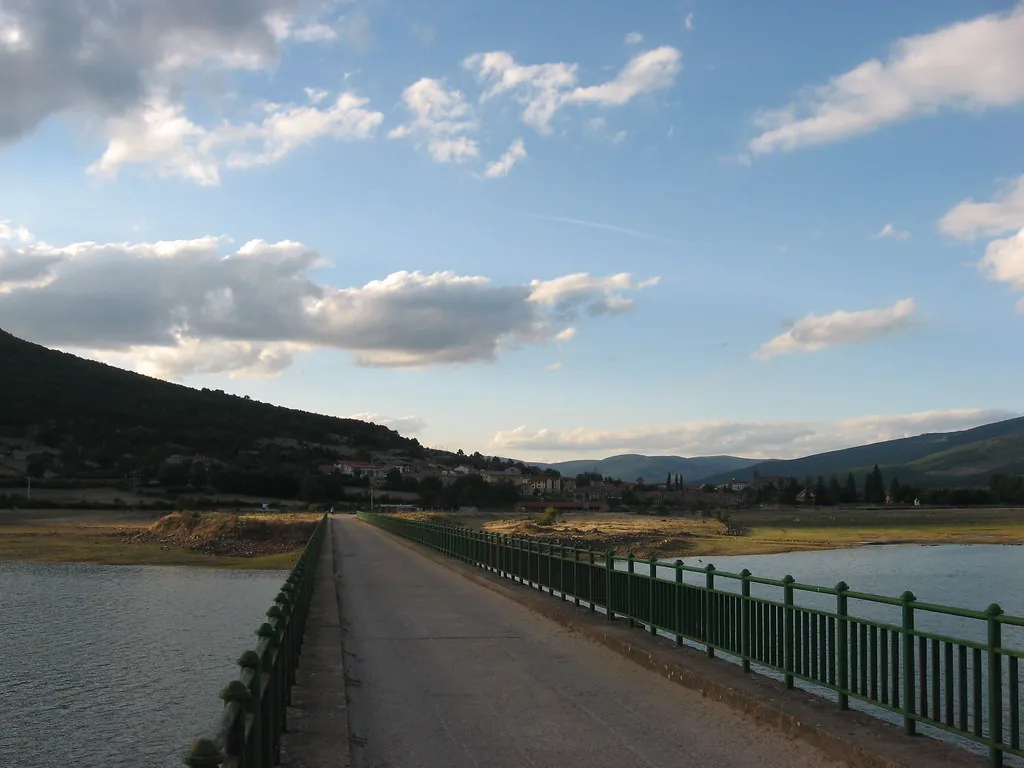
Stone and timber houses cluster close to the Duero, which here is still a young river. The water runs clear over dark stones and accompanies almost any walk. The village takes its name from the old mills that once made use of this steady current. Today, what remains is mostly memory and a few traces in walls near the riverbank.
The main streets can be covered quickly. Stacks of firewood are often piled against façades, tractors pass without urgency. In autumn, the ground is carpeted with pine needles and the air has that dry edge that signals cold nights ahead.
The Duero Through the Village
The Duero crosses the village with a constant sound, louder in winter when it descends heavily from the sierra. In summer, the flow eases and small banks appear where it is possible to sit for a while, with the murmur of water and the scent of pine all around.
This stretch of the river feels close and present. It shapes daily life as much as the landscape. Even without the old mills in operation, the relationship between water and village remains clear. The sound shifts with the seasons, from the fuller rush of colder months to a softer current in warmer weather.
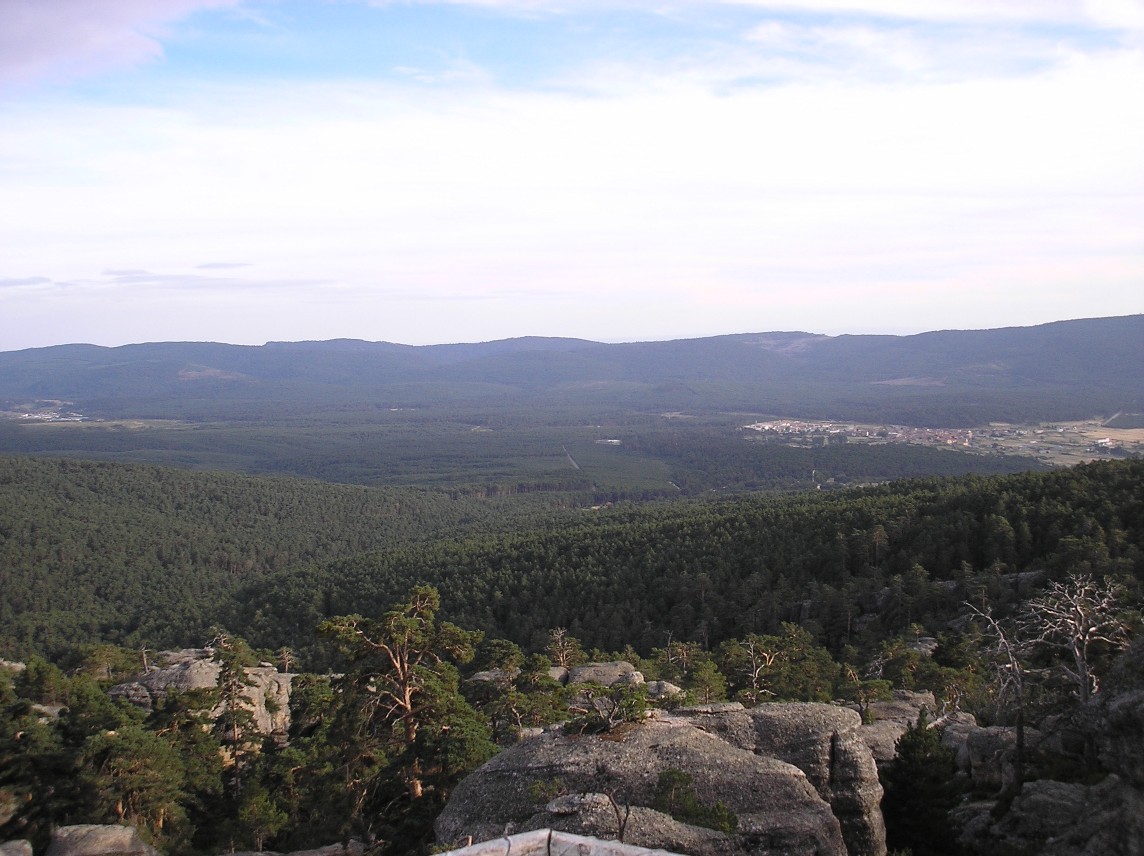
Beyond the houses, the wider comarca of Pinares unfolds as an expanse of forest that seems to roll on for kilometres. The village sits within this green mass rather than apart from it.
Towards the Laguna Negra
A few kilometres away lies the Laguna Negra, one of the best-known landscapes in Urbión. Access is usually organised from a car park on the road that climbs towards it. From there, a path gains height through pine woods until reaching the lagoon.
On cold mornings, a layer of mist sometimes hovers above the water. Rock walls encircle the lagoon and hold on to shade even when the sun has already entered the valley. The geological explanation is straightforward, an ancient glacial basin formed during the Ice Age. In the village, though, stories still circulate about its depth, adding a layer of local legend to the setting.
In summer it is wise to arrive early. By mid-morning the area fills with visitors and part of the silence that defines it begins to fade. At quieter times, the combination of dark water, rock faces and forest gives the place a heavy stillness that contrasts with the more open valley below.
The Laguna Negra is closely linked to the identity of this corner of Soria. Its image appears frequently when Urbión is mentioned, yet it remains tied to the everyday geography of nearby villages such as Molinos de Duero.
Forests and Paths Around Molinos
The comarca of Pinares is best understood on foot. The hills around Molinos de Duero are covered mainly with pino albar, or Scots pine, with some beech woods in the more humid areas. When wind moves through the treetops, the forest produces a long, rolling sound, like distant surf.
Several forest tracks and footpaths begin near the village. Some follow the course of the Duero; others climb towards low ridges from which the full sweep of green across the valley can be seen. In the distance rise the Picos de Urbión, their highest point above two thousand metres. Reaching those heights requires more experience and careful attention to the weather.
The sense of scale increases as soon as the last houses are left behind. Pines dominate the skyline, their trunks straight and pale against the darker undergrowth. The forest floor changes with the time of year, from dry needles in late summer to damp earth after autumn rain.
Here, walking is less about ticking off landmarks and more about moving through a landscape shaped by timber and climate. The economy and daily routines of the area have long been linked to the forest. That connection remains visible in stacked logs, in the tracks that cut through the trees, and in the knowledge locals carry about weather and terrain.
When Snow Falls
Winter alters the rhythm of Molinos de Duero. Snowfall covers paths and the silence becomes denser. In nearby pine woods, it is common to see people using cross-country skis or snowshoes when conditions allow.
After heavy storms, the road can become complicated, something to bear in mind when travelling during these months. In return, clear days leave a sharp, clean light over the sierra. The outlines of Urbión stand out against the sky, and the river’s sound seems crisper in the cold air.
The village itself feels more contained in winter. Activity shifts indoors, and the contrast between the warmth of houses and the frozen landscape outside grows stronger. Even so, the presence of the forest is constant, its dark forms visible beyond rooftops and along the valley sides.
Autumn Mushrooms and Village Life
When autumn rains arrive, the pine forests fill with mushroom hunters. Níscalos, boletus and other species appear among grass and pine needles. Collecting is usually regulated through permits to prevent the woods from being stripped within a few weeks.
Early in the morning, cars can be seen parked along forest tracks, and people head into the trees carrying wicker baskets. The smell of damp earth and resin is everywhere. It is a season that draws both locals and visitors, all scanning the ground beneath the pines.
In village kitchens, the season makes itself felt. Mushrooms end up in simple stews, often combined with pulses or local meats. The dishes are straightforward and closely tied to what the forest provides at that moment of the year.
August brings a different kind of change. The population swells as many residents who live elsewhere return for a few days. Streets become livelier, and celebrations tend to gather in the square and around the church. The romería of San Miguel is also maintained, linked to nearby fields. These are days of shared meals and long conversations that stretch into the night.
For the rest of the year, Molinos de Duero returns to its quieter pace. A cold river, pine forests extending for kilometres, and a handful of houses where life continues to revolve around the mountain and the climate of the sierra. Here, time does not race. It simply passes.