Full Article
about Muriel de la Fuente
Home to the La Fuentona Natural Monument, a karstic spring of the Abión River.
Hide article Read full article
A village shaped by height and water
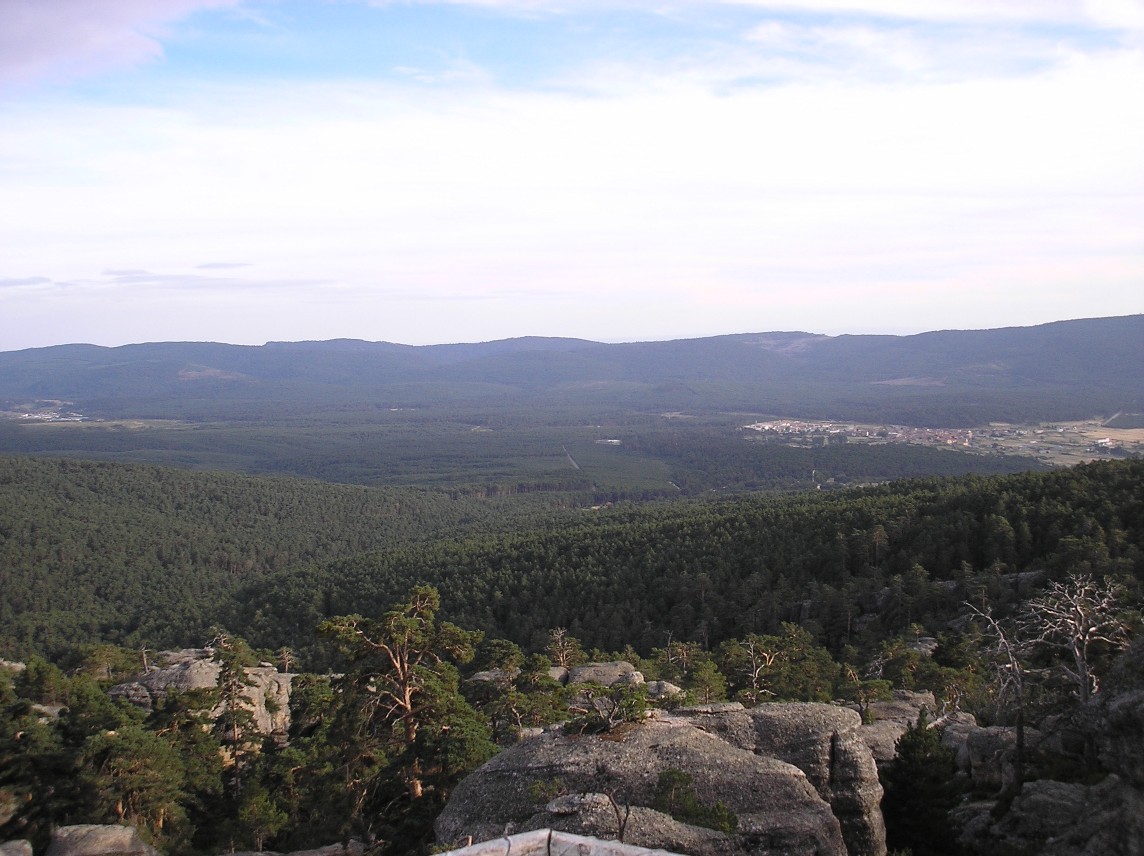
Muriel de la Fuente sits in the Pinares area of Soria, and it makes more sense on a map than at first glance in the square. The village lies at over 1,000 metres above sea level, surrounded by expanses of Scots pine and juniper that cover much of the southern part of the province. Today, just over fifty people live here. Its role becomes clearer when seen as part of an older system built around forestry, upland grazing and plentiful water. The name itself points in that direction, referring to the springs that rise within its boundaries.
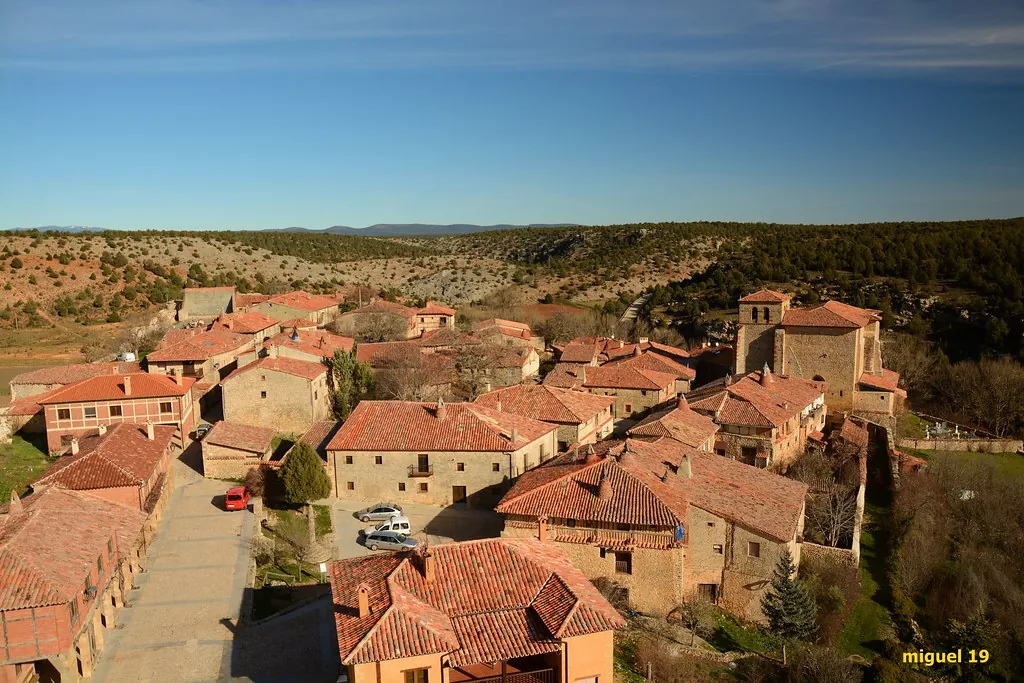
The landscape sets the tone. Winters are long and cold, and that shows in how buildings are constructed and arranged. Traditional houses use local stone, with thick walls and very little in the way of decoration. Wooden balconies appear on some façades, though more as a practical feature than a stylistic choice. Old animal pens and haylofts still stand in places, reminders of an economy once tied closely to livestock and the surrounding woodland.
Walking through Muriel de la Fuente is less about ticking off landmarks and more about noticing how a small mountain settlement was organised. Streets are short, buildings sit close together, and the overall layout has changed very little in recent decades. It is not a monumental centre. Its interest lies in the consistency of the whole.
Parish life and built form
The parish church occupies one of the central نقاط of the village. It is a modest structure, with a simple stone bell gable and restrained proportions, in line with many rural churches in the Soria highlands. Its importance comes less from architectural detail and more from its role as a meeting place and shared reference for local residents.
Elsewhere, the housing stock keeps clear features of the traditional architecture of the Pinares region. Masonry walls, tiled roofs and attached spaces for storing tools, firewood or animals are all part of the picture. In some courtyards, traces of former work areas linked to the forest can still be recognised. For centuries, the woodland provided the main source of livelihood here.
A short distance from the village lies one of the best-known natural features in the municipality: the spring known as la Fuentona, where the river Abión begins. The site has been protected for years. It combines a pool of very clear water with limestone rock walls and surrounding pine forest. Access is on foot, via a marked path that starts near the village.
Paths through pine forest
Several forest tracks leave Muriel de la Fuente and lead into the surrounding pinewoods. These are wide routes, originally used for forestry work, and they allow for walking without steep gradients. In clearings, it is common to come across small grazing areas or old stone enclosures.
This part of Soria also draws interest from those who watch forest birdlife. Woodpeckers and small passerines linked to pine habitats move among older trees, while birds of prey can sometimes be seen gliding above more open slopes. The environment rewards patience rather than quick observation.
Autumn changes the atmosphere of the forest quite noticeably. This is when many people head out to look for mushrooms, a practice with a long tradition across the Pinares region. Collection is regulated in these woods, and proper identification of species is essential.
Rhythms of tradition and daily life
The festive calendar remains tied to religious celebrations and gatherings among neighbours. In summer, when many people with family roots in the village return, the patron saint festivities take place and the mood shifts for a few days.
Outside those periods, life in Muriel de la Fuente follows the pace of a small settlement. The connection with the surrounding woodland continues to shape everyday routines, whether through walking, working with timber, gathering mushrooms or simply moving along the network of paths that extend out from the village.
A short walk to understand the place
Muriel de la Fuente is small and can be explored quickly. Many visitors come primarily to walk to la Fuentona and the source of the river Abión. The path is short and easy, and it offers a clear sense of how water and woodland have influenced the history of this part of the Pinares.