Full Article
about Muriel Viejo
Village certified as a Starlight Tourist Destination for its clear skies.
Hide article Read full article
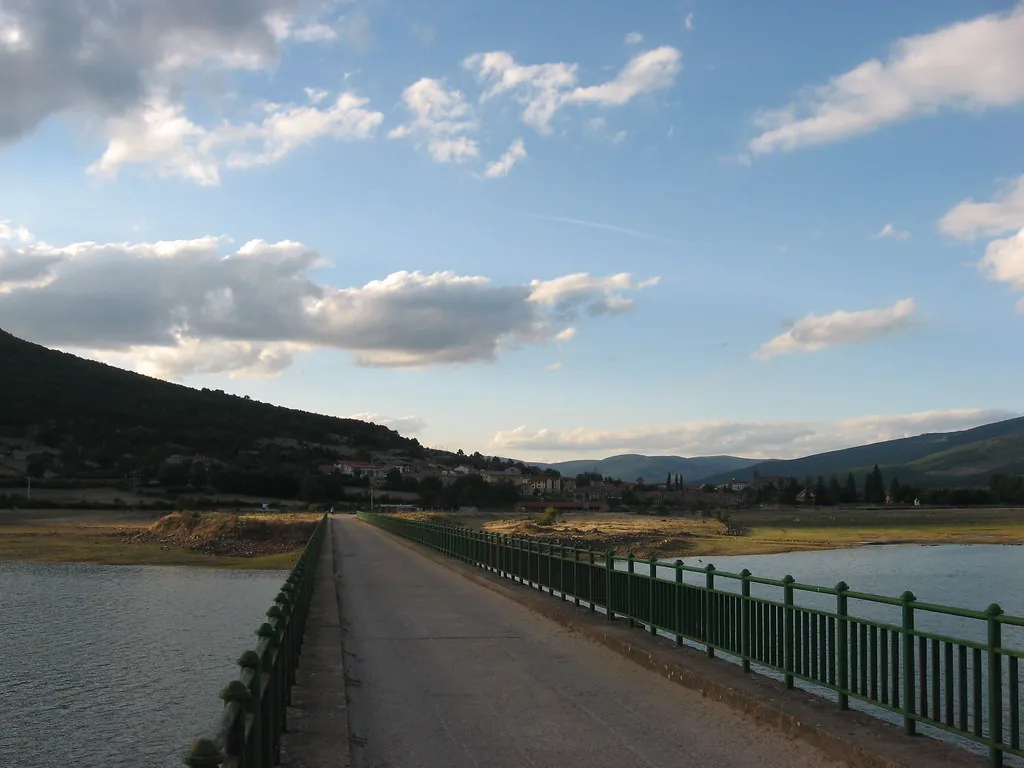
The resin in the pines begins to warm just after dawn, and the air carries the scent of damp wood and cold earth. Goats cross the main street while the sun is still low. In Muriel Viejo, a village of seventy-three people in the Pinares of Soria, tourism has little to do with organised plans. It is closer to walking slowly between stone houses and noticing how the forest surrounds everything.
Built small, shaped by winter
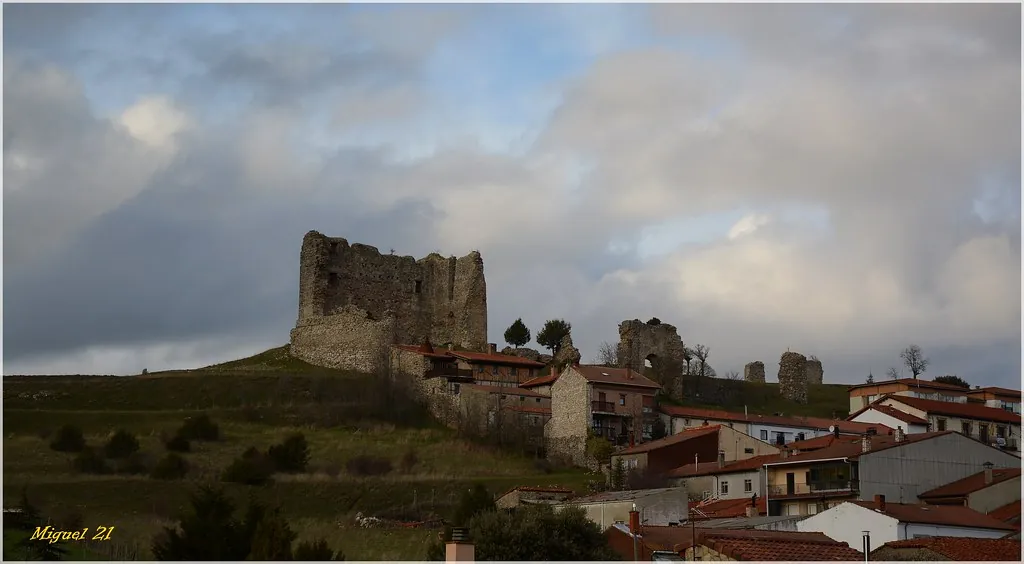
The settlement fits into a handful of straight streets. The houses are built from dark stone, some with timber framing, others coated in a pale mortar that has faded to the colour of old bone. There are no large squares.
At the centre stands the church of la Asunción. Its walls are thick, and a square tower rises high enough to be seen from any approach. At certain times of day, the only sounds are the metallic strike of the bells or the wind moving between the rooftops.
Walking through Muriel Viejo takes very little time. In ten minutes, you can cross it from one end to the other. Even so, it’s worth slowing down for the details: stacks of split firewood beside doorways, old carts resting against façades, dogs asleep in a patch of sun when midday arrives.
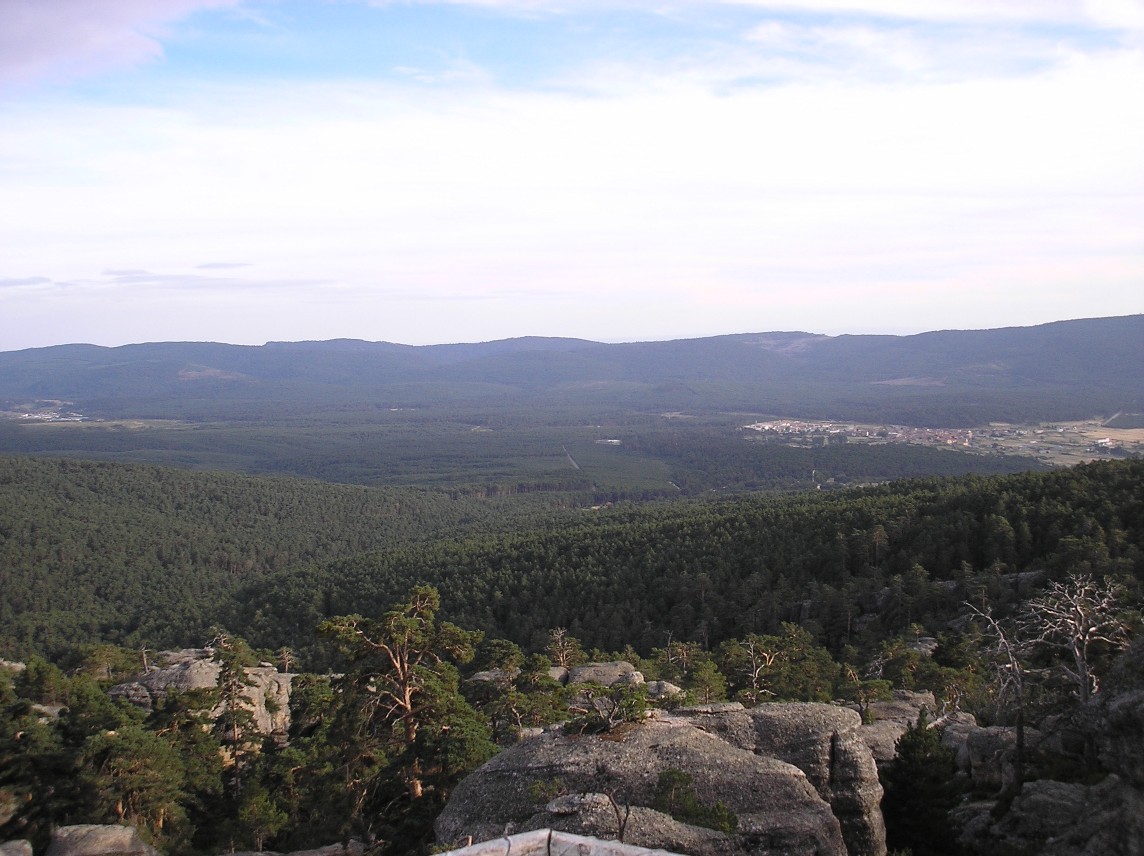
The pine sea beyond the houses
What defines this place lies outside the village itself. A few steps past the last house and you’re in the forest. The trunks are straight and tall, and the ground is usually covered with dry needles that soften every footstep.
In the afternoon, light filters through the canopy and the colour shifts every few minutes—deep greens, greys, and sometimes a soft golden tone as the sun lowers towards the west.
If the sky is clear, night falls quickly. Darkness here feels complete. Stars appear with a clarity that is difficult to find in more populated places, a sharp contrast to the deep black of the pine silhouettes.
Forest tracks and unmarked routes
You won’t find prepared walking routes with signposts. Instead, there are forest tracks, worn by decades of use for working the land. Some connect with other villages in the area, like Covaleda or Duruelo de la Sierra.
These tracks are straightforward for walking or cycling, though they can split without warning. If you plan to go far from the village, take a map. The forest is very uniform, and it’s easy to lose your bearing when every pine looks much the same.
In autumn, mushroom gatherers appear with their wicker baskets. The pinewoods often produce níscalos, although collecting is regulated in much of the comarca. The local residents know these rules by heart.
Wildlife, seasons and quiet rhythms
At the edges of the forest, you might see tracks of roe deer or wild boar pressed into the mud. At dawn, birds of prey can be heard flying overhead. When the wind moves through the treetops, the sound is constant, like a long murmur coming from all directions.
Winter changes everything. Snow can cover paths and rooftops for days. Visiting then means being prepared for ice on the roads; some secondary routes stay frozen for weeks.
In contrast, summer brings longer evenings, and you’ll notice more cars parked outside houses as families return for a few days. Local festivities usually take place then—simple gatherings, often centred on a procession and long tables where each household contributes food.
Planning a stay in a very small place
Muriel Viejo is a very small village. There are no bars or restaurants operating on a regular basis. You either bring your own food or drive to nearby towns where services are available.
This shapes the rhythm of any visit. People come here to walk through the pine forest, to spend a few quiet hours, or to use the village as a base for exploring this part of Soria.
For silence, arrive on a weekday or early in the day. By mid-morning, the sun warms the resin in the pines and that strong scent fills the air—one of those small details that tends to linger after you’ve left.