Full Article
about San Leonardo de Yagüe
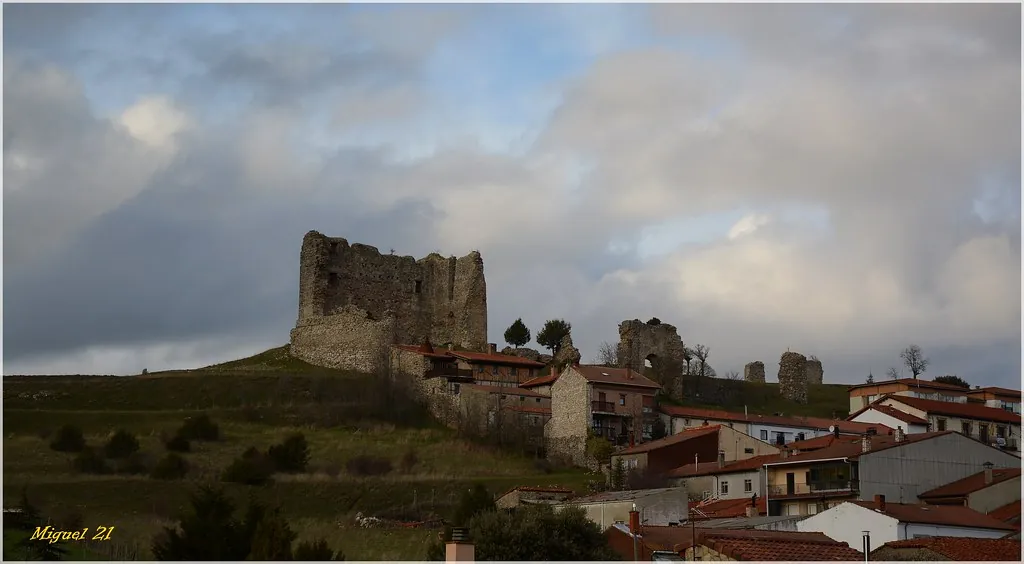
A key Pinares town with a bastioned castle and gateway to the Cañón.
Hide article Read full article
A village shaped by forest and river
At nine in the morning, San Leonardo de Yagüe still holds onto the dampness of the night. The pines murmur when the wind picks up, a steady background sound that defines the place as much as its streets do. The day begins slowly here. Shutters are only halfway open, and there is a faint smell of wood in the air, the kind that lingers in places where the forest remains part of everyday work.
The village sits in the Pinares region, at just over 1,000 metres above sea level, with a population of around two thousand. Its layout follows the course of the river Ucero, which crosses the town quietly, almost unnoticed at times. The buildings reflect the setting: stone façades in muted tones, dark wooden balconies, and roofs covered with curved tiles.
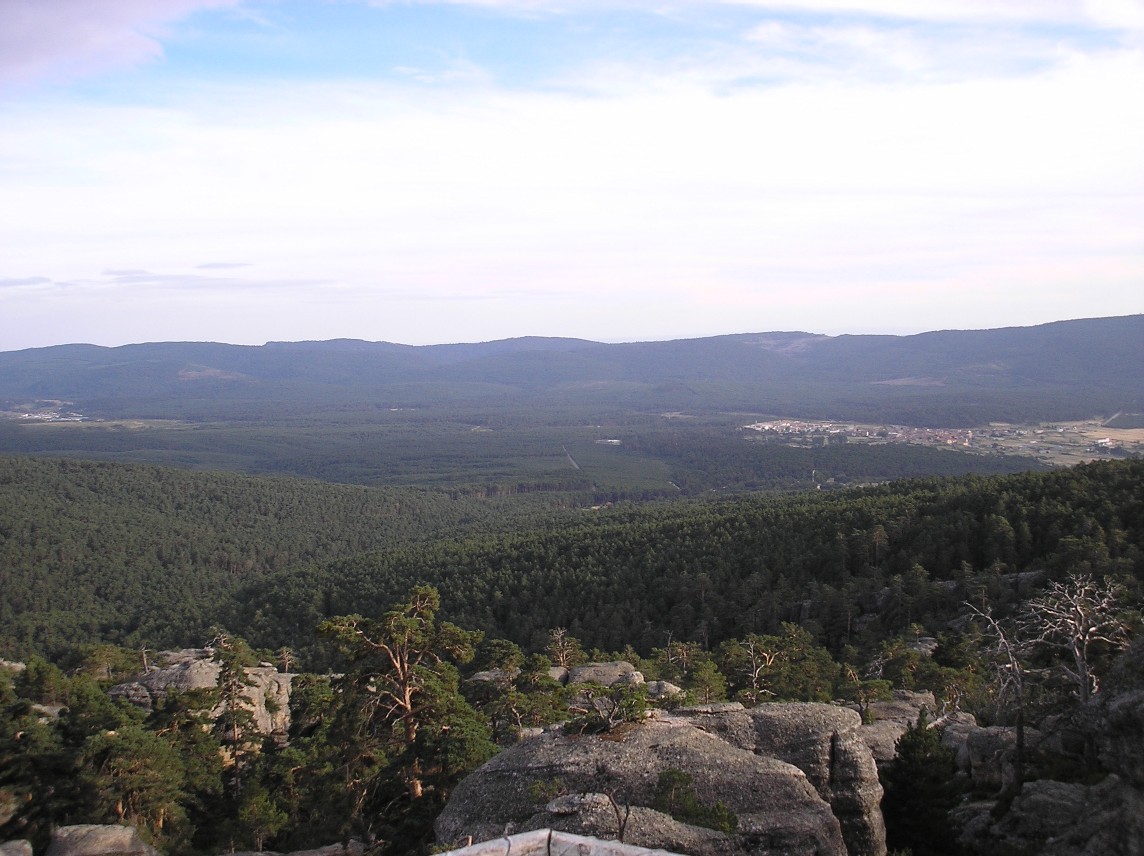
Landscape plays a constant role. Extensive pine forests surround San Leonardo on nearly every side, shaping both the view and the rhythm of life. In autumn, the ground is covered with dry needles and ochre tones, and the scent of resin becomes stronger on mild days. The tracks leading into the woods are usually wide, made of compacted earth and loose stone, many of them former forestry routes.
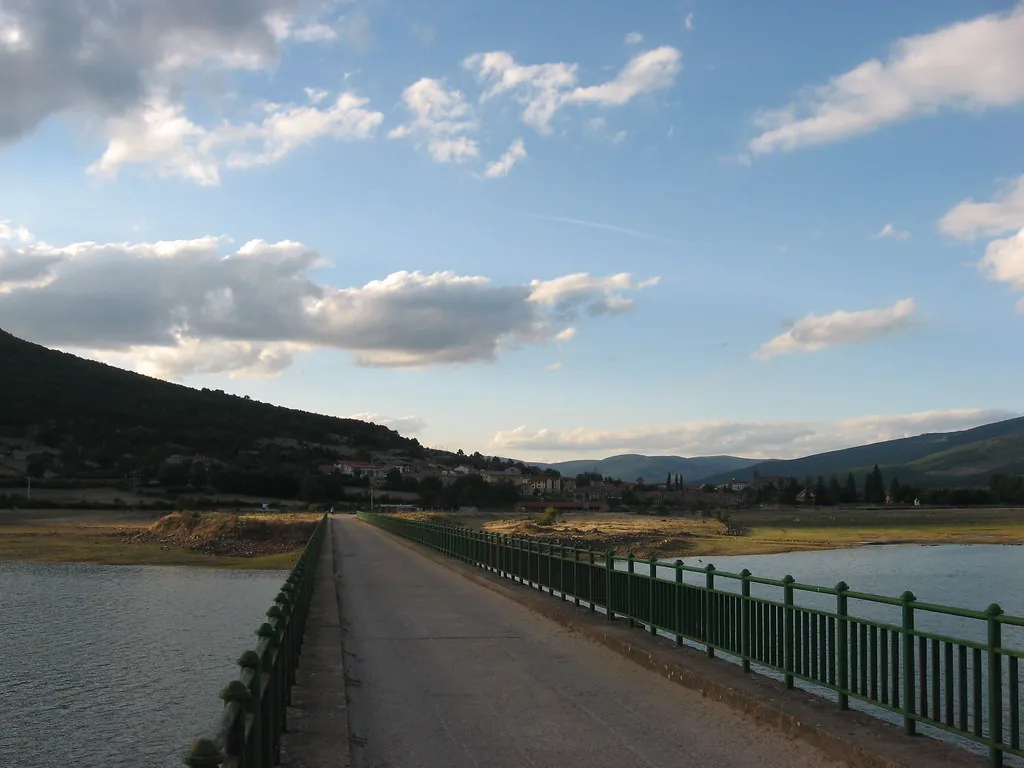
The Ucero brings a different atmosphere. In spring it carries more water, and even in summer the air feels cooler near its banks. It is common to see people walking along the river in the evening, when the light softens and the temperature drops.
A long connection to the pinewoods
San Leonardo grew around timber. For decades, the surrounding pine forests drove the local economy, and traces of that activity are still visible. On the edges of the village, old forestry facilities remain: large sheds, open yards where logs were once stored and processed.
That link to the forest continues in local habits. Autumn conversations often turn to mushrooms. Níscalos and boletus appear in nearby pinewoods after the first rains, along with other species. For many, gathering them is part of the season’s routine. Today, mushroom picking is regulated across much of the forest, so it is worth checking the rules before heading out with a basket.
The forest is not just a backdrop. It still defines how people move, what they talk about, and how the year unfolds.
Streets, houses and the village centre
The main streets, such as Calle Mayor and Calle del Río, bring together much of the traditional architecture. Houses are built in stone, with relatively small openings and solid structures designed for colder winters. Some still have large doorways that once allowed carts and tools to be brought inside.
At the centre stands the church of San Leonardo Abad. The current building has undergone several renovations during the twentieth century, so what is visible today reflects those changes. Its square bell tower rises above the surrounding rooftops and can be seen from many points in the village, acting as a clear reference point when walking through the streets.
As the morning progresses, the central square becomes more active. Neighbours run errands, cars move in and out at an unhurried pace, and the sound of the bells marks the passing hours. It is a steady, everyday rhythm rather than a busy one, tied to local routines rather than visitors.
Gateway to the Cañón del Río Lobos
A few kilometres from San Leonardo lies the Cañón del Río Lobos, one of the best-known natural areas in the province. The landscape changes abruptly there. A limestone gorge opens between high rock walls, creating a striking contrast with the surrounding pinewoods.
Griffon vultures are often seen gliding above the canyon, especially as the air begins to warm and currents lift them higher. Their presence adds movement to an otherwise still setting of rock and sky.
San Leonardo is a convenient base for reaching some of the usual access points to the park, which can be reached by car in a short time. During busier periods, it is advisable to arrive early, as parking near the canyon fills up quickly from mid-morning onwards.
Walking through the pine forests
Several marked paths start directly from the village and lead into the surrounding woods. These routes tend to be long but gentle, without steep climbs, and they are also popular with cyclists. Forest tracks connect San Leonardo with nearby villages such as Espejón, Ausejo and Utrero, creating a network of quiet routes through the pines.
In summer, the shade from the trees makes walking possible even on hot days. The experience shifts in winter. Frosts are frequent, and some stretches of path remain damp for much of the day, which changes both the pace and the feel of a walk.
Scattered through the forest are natural springs that have traditionally been used by shepherds and forestry workers. Some still flow, though not always consistently. Anyone planning a longer route should not rely entirely on them.
The appeal of these walks lies in their continuity. The paths extend through the same type of landscape for long distances, with only small variations in terrain and light.
Changing seasons, changing rhythms
San Leonardo de Yagüe shifts noticeably with the seasons. Summer brings more activity, including people returning for holidays, and the streets feel fuller. Autumn moves at a different pace. Mornings are colder, the smell of damp pine becomes more pronounced, and cars often line the tracks leading into the forest.
Those tracks lead to mushroom spots, and on autumn weekends, especially after rainfall, the nearby pinewoods fill with people carrying baskets and knives. It becomes one of the defining scenes of the season.
For quieter walks in the surrounding area, weekdays tend to be calmer. The difference is clear, not in dramatic changes but in the number of people moving through the same spaces.
San Leonardo does not transform itself for visitors. Its character remains tied to the forest, the river, and the routines that have developed around them. That consistency is what shapes the experience of being there, whether for a short visit or a longer stay.