Full Article
about Vadillo
Quiet pine village near the Cañón
Ocultar artículo Leer artículo completo
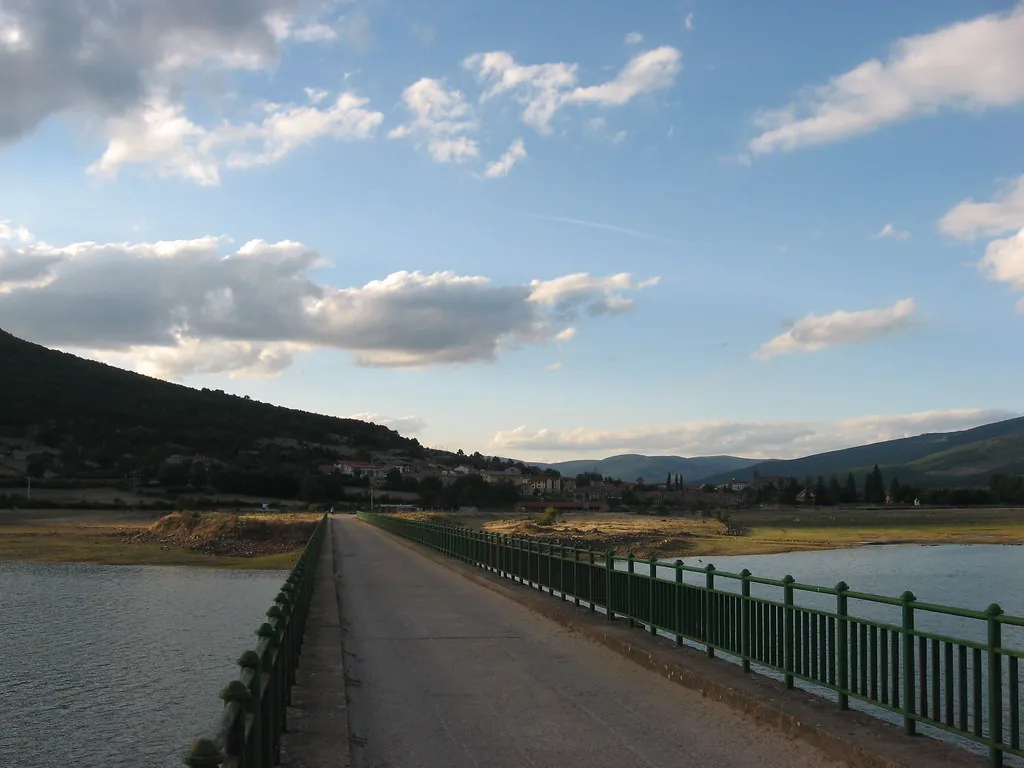
The church bell tolls midday and only eighty-two souls are officially here to hear it. Vadillo, parked at 1,105 m on the windy plateau of northern Soria, is smaller than most British secondary schools, yet its stone roofs and timber beams have survived every January since the Romans left. Around the houses, the pine forests stretch far enough to hide a cathedral, and the air smells of resin even before the first coffee of the day.
Stone, Snow and Silence
Houses are built for winter first, summer second. Granite walls a metre thick support upper storeys of adobe and pine beams; eaves jut generously so snow slides clear of the doorway. Many front doors still open straight into the former stable—now a woodshed or mushroom-sorting table—while external stone staircases climb to the living quarters above. Nothing is picturesque in the chocolate-box sense; the architecture is simply what works when the thermometer dips below –10 °C and the nearest supermarket is 38 km away in Soria city.
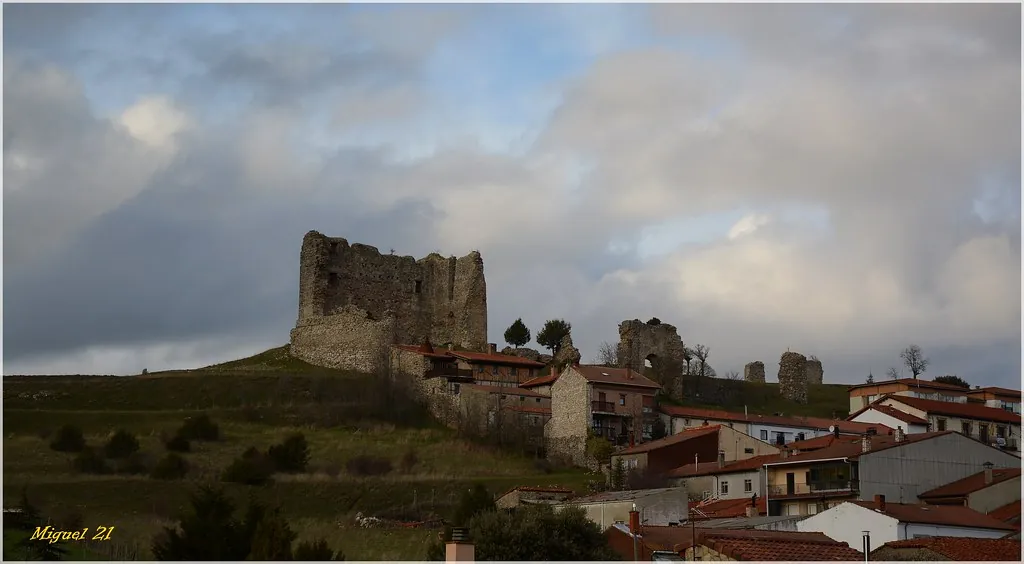
Walk the single main street at dusk and the only illumination comes from the church tower, its late-Romanesque loopholes glowing like warmed honey. The building is locked outside service times, but the porch gives shelter from the wind and a close-up view of masonry that has been patched after every major conflict from the Reconquista to Civil War scrapes. Step round the back and you’ll find the old resin-workers’ store, its doorway barely shoulder-wide; resin was tapped from living pines here until the 1970s, then freighted by mule to the paper mills on the Duero.
Forests that Pay the Bills
Vadillo does not live on Instagram likes. It lives on pine. The surrounding 3,000-odd hectares of Pinus sylvestris—Scots pine to British planters—supply timber to the sawmill at Navalperal, resin for the chemical plant at Ólvega, and, between September and November, mushrooms that fetch €30 a kilo in Madrid markets. Picking is regulated: you need a €7 daily permit from the Soria provincial website, a maximum basket of three kilos, and the ability to tell a níscalo (saffron milk-cap) from its poisonous look-alike. The village bar, open Thursday to Sunday only, will lend you a walking stick but not legal advice; mis-identification fines start at €300.
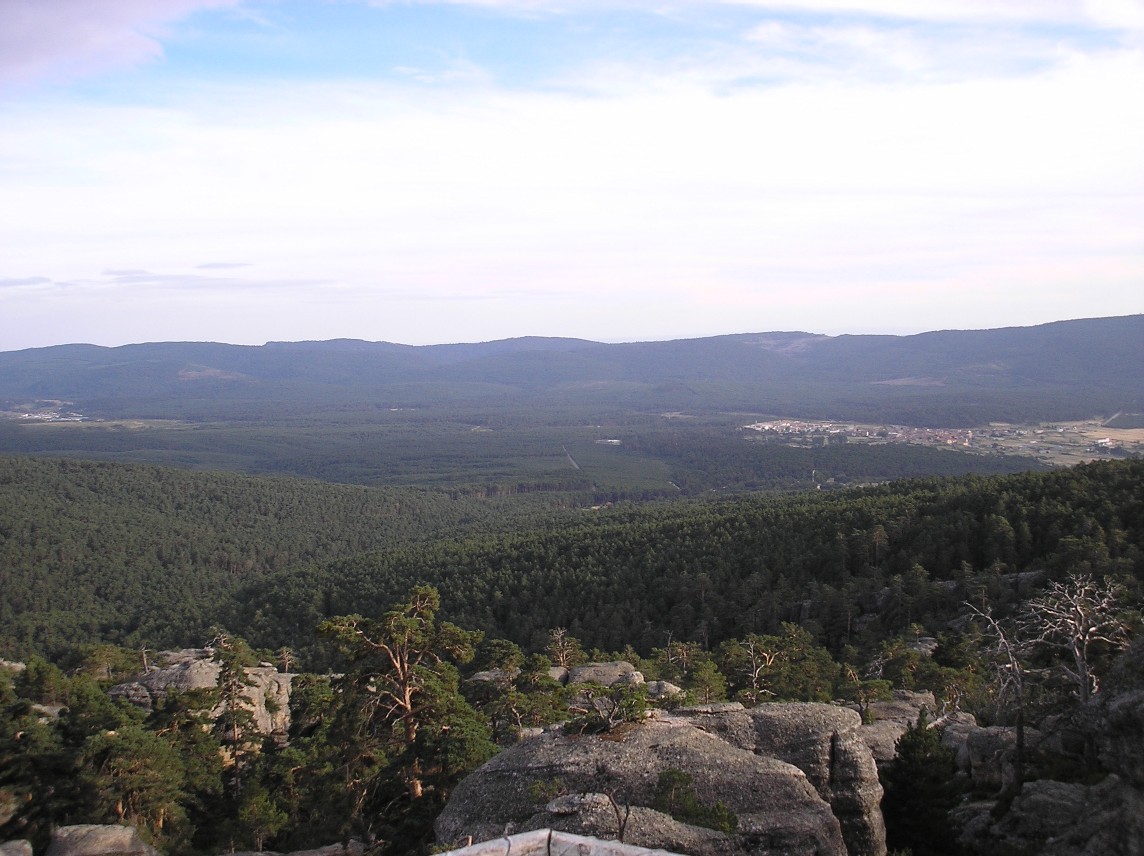
If you prefer your forests without a side order of bureaucracy, stick to the way-marked footpaths. The GR-86 long-distance route skirts the village, climbing 250 m to the Puerto de Vadillo where views open west towards the Sierra de Cabrejas and east across the pinelands that ripple all the way to the Rio Araviana. The ascent is gentle enough for anyone who can manage a Lake District catwalk, but carry water—cafés are non-existent once you leave the tarmac. Cyclists tour the same tracks; a mountain-bike rental outlet operates from the petrol station in Covaleda, 12 km south, €25 a day, helmet included.
What You’ll Actually Eat
There is no tasting menu. Thursday night is cuchara (spoon) night at the only bar: chickpea stew with morcilla and a slab of bread baked by the proprietor’s sister in Ágreda. Friday brings migas—fried breadcrumbs laced with pancetta and grapes—designed to use up week-old loaf and to line stomachs before the card session that follows. Weekenders sometimes arrive expecting tapas; they leave having learnt that rationing here is by ladle, not by plate. Vegetarians can be accommodated if they order in advance; vegans should pack a picnic. House wine comes from a plastic barrel and tastes better than it should, perhaps because the altitude has already dulled critical faculties.
Self-caterers should shop before arrival. The last proper supermarket is in El Burgo de Osma, 25 km north; it closes Sundays and weekday lunchtimes. The village sells tinned tuna, tinned tomatoes and not much else. Fresh lamb appears only when a local farmer slaughters; ask at the church porch after Mass and you may collect a shoulder for €8 a kilo, butchered while you wait.
Seasons and How to Reach Them
Spring is brief, brilliant and muddy. Snow patches linger on north-facing slopes until April, but by early May the forest floor is carpeted with wild daffodils and the temperature hits 18 °C by midday—perfect for walking without the summer flies. June turns dry; July and August bake. Come then for cloudless skies but expect 30 °C at noon and chilly 12 °C dawns; the altitude tempers the Iberian furnace, though sunburn is fiercer than on most Costas because the air is thinner. September brings the first fungi and the return of silent, cool mornings. October turns the oaks copper; November can deliver 20 cm of snow overnight, and the road from Soria is not always ploughed before ten. Winter is serious: beautiful, brutal, and occasionally cut off. Carry snow chains from December onwards; without them the Guardia Civil will wave you back down the hill.
There is no railway. From the UK, fly to Madrid, take the hourly ALSA coach to Soria (2 h 15 min, €17), then rent a car—essential, unless you fancy hitch-hiking the final 38 km on a road that averages four vehicles an hour. Petrol is cheaper than in Britain but fill up before the mountains; pumps close early and credit-card readers are temperamental. A taxi from Soria bus station to Vadillo costs a flat €55; book the day before because only two firms cover the district.
Accommodation totals three options. The village itself has four newly restored cottages sleeping four to six, booked through the regional tourism board from €70 a night (minimum two nights). Heating is by pellet stove; instructions are in Spanish, but pictures help. Two kilometres down the valley, the former schoolhouse at Taniñe has been turned into a five-room guesthouse with a communal kitchen and a honesty bar; doubles €65, breakfast €7. Campers are tolerated in the municipal picnic area—flat grass, tap, no showers—so long as they register at the ayuntamiento (town hall) and depart by 10 a.m. the next day. Wild camping in the forest is technically forbidden; rangers issue €100 on-the-spot fines if they catch you, and they patrol more often during mushroom season.
Why Bother?
Vadillo will not change your life. It offers no souvenir shops, no night-life, and mobile coverage that drops to one bar if a lorry passes. What it does provide is a gauge against which to measure louder, busier places. After a day when the loudest sound is pine needles hitting your hat and the widest vista is a 30-km sweep of unbroken forest, the M25 feels like a mistake someone else made. Come for two nights, walk one good trail, eat stew that has never seen a marketing consultant, and leave before the silence becomes unnerving. That is enough.