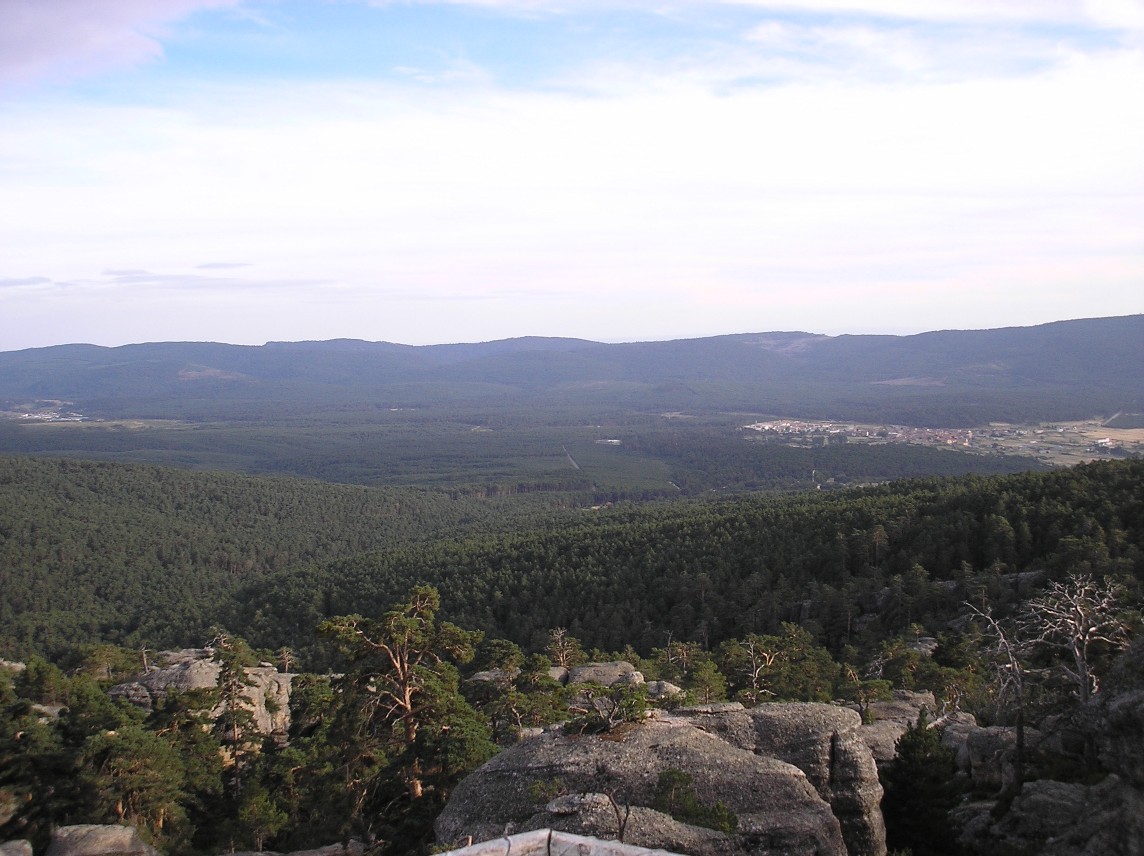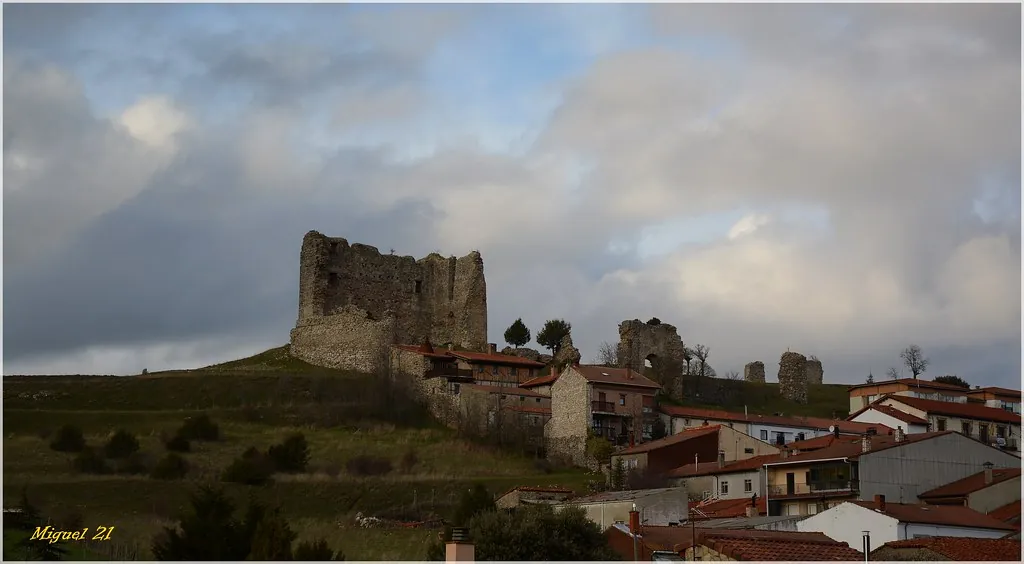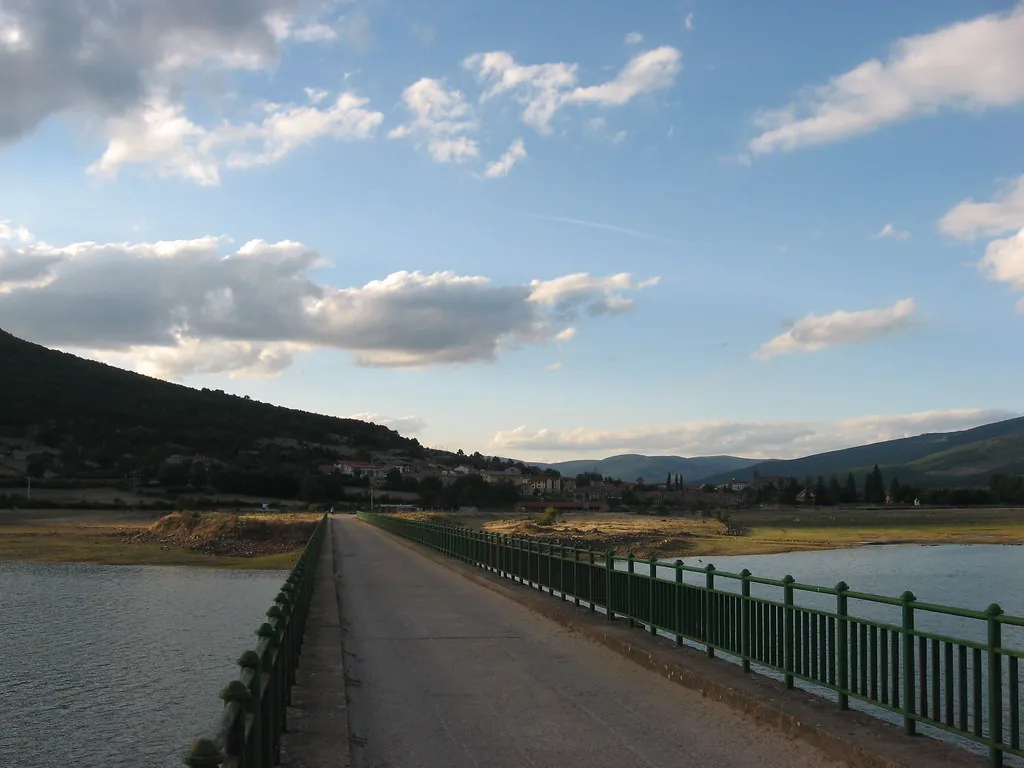
Vinuesa vista general.JPG
Gonzopowers · Flickr 4
Castilla y León · Cradle of Kingdoms

Vinuesa

The pine trunks are still black from yesterday’s rain when the church bell tolls seven. By Spanish standards, Vinuesa is already awake: bread vans ...

826 inhabitants · INE 2025
1107m Altitude

Why Visit

Mountain Church of Nuestra Señora del Pino Visit the Laguna Negra

Best Time to Visit

year-round

Virgen del Pino and La Pinochada (August) agosto

Things to See & Do
in Vinuesa

Heritage

  • Church of Nuestra Señora del Pino
  • Palacio de Don Pedro de Neyla
  • washhouse

Activities

  • Visit the Laguna Negra
  • Water sports

Festivals
& & Traditions

Fecha agosto

Virgen del Pino y La Pinochada (agosto)

Las fiestas locales son el momento perfecto para vivir la autenticidad de Vinuesa.

Full Article
about Vinuesa

The stately stone village of La Corte de los Pinares beside the reservoir

Ocultar artículo Leer artículo completo

The pine trunks are still black from yesterday’s rain when the church bell tolls seven. By Spanish standards, Vinuesa is already awake: bread vans idle in the stone lanes, wood smoke drifts above the timber balconies, and someone is hosing last night’s mud off the plaza. At 1,107 m the air is thin enough to make the first cigarette of the day catch in the throat, yet the village smells more of resin than tobacco. The forest starts at the last streetlamp.

A grid of alleys and a mountain that feeds a river

Most visitors race straight past the stone houses on their way to the Laguna Negra, 15 km up the SO-820. They return at dusk, tick the glacial lake off the list, and wonder why the guidebook called Vinuesa a “base”. Stay the night and the place rearranges itself. The central square, overlooked by half-timbered eaves and a 16th-century coat of arms, is barely two croquet lawns wide; it takes twenty minutes to circumnavigate slowly, less if the bar owner waves you in for a coffee that costs €1.20. Side alleys climb so steeply that locals call them escalas rather than calles; in winter they turn into toboggan runs for unwary hire cars.

The architecture is practical first, pretty second. Wooden balconies are deep enough to store a month’s firewood; slate roofs overhang the walls so melt-water doesn’t drip onto the granite. Prosperity arrived here on the backs of merino sheep bound for Extremadura, and the timber trade that followed left a scattering of manor houses whose escutcheons still show wolves and pine-cones. One of them, the Casa de la Madera, now explains how a single pine could pay a year’s wages: the display smells of sawdust and includes a two-man saw you are invited to lift. Children usually manage one stroke before admitting the 19th century must have been exhausting.

Walking tracks that start where the tarmac ends

Three waymarked trails leave from the top edge of the village. The easiest, a 45-minute loop through the Dehesa, is flat enough for trainers and ends at a picnic table where Spanish families unwrap bocadillos of chuletón leftovers. The proper mountains begin immediately afterwards. A gravel track climbs to the Puerto de Santa Inés; beyond the pass, the path turns into a staircase of granite slabs and the temperature drops five degrees in as many minutes. This is the approach to the Urbión massif, where the Duero River seeps out of a peat bog at 2,000 m. The summit itself (2,228 m) is only 8 km from the village square, but the difference feels Himalayan when the weather closes in. Cloud can roll up from the Douro valley so fast that hikers who left their rucksacks on the lower rocks spend an hour patting lichen to find them again.

The Laguna Negra is more forgiving, provided you accept two facts: you cannot walk there from Vinuesa, and between 10 a.m. and 5 p.m. in July-August you will queue for the shuttle bus (€3 return). Arrive before nine or after six and you may drive your own car to the upper car park, though spaces are fewer than mushrooms in a drought. From the barrier it is a 900-metre stroll to the cirque, black cliffs rising sheer above water so cold that even the ducks look surprised. A path continues to the smaller Laguna Helada, another 40 minutes across scree; beyond that, the yellow way-marks stop and the map simply says “paramo” – high moorland where the only sound is the wind in the juniper.

Seasons that change the rules of access

In May the meadows below the village are neon-green and empty except for shepherds on quad bikes. By mid-July the same fields hold a scattering of weekend houses whose occupants drive up from Madrid, plug in the sat-nav and still ask directions to “the beach”. There isn’t one; the nearest open water is the reservoir, where swimming is tolerated but not encouraged. October is the photographers’ month: beech woods on the north slopes catch fire, and pine-nuts drop onto rooftops with a sound like hail. Winter brings proper snow – enough for the modest ski station at Santa Inés to open six or seven weekends most years. Chains are compulsory on the last 4 km of road; without them, taxis from Soria charge an extra €40.

Calories you will have earned

Evening menus are written on chalkboards and almost never translated. Chuletón al estilo de Soria means a T-bone that hangs over the plate; half a kilo is considered a portion for two, though lone walkers have been known to finish it. Migas de pastor – fried breadcrumbs laced with pancetta and grapes – arrives in a clay dish the size of a satellite receiver. The local sheep cheese is mild enough to convert the most committed Cheddar nationalist; order it with a spoonful of honey and you will understand why shepherds here count calories in minus numbers. Pudding is usually a tarta de piñones, sticky with resinous pine-nuts that cost more per kilo than the beef. The house rosé from Duruelo is chilled to 8 °C and disappears at an alarming rate; at €9 a bottle, resistance is futile.

Where to sleep (and where not to)

There are no international chains, no boutique spa, and precisely one hotel with a lift. Most accommodation is in casas rurales: three-storey stone houses split into flats with names like “El Roble” and heating systems that roar like the Bilbao metro. Ask for a room facing the square if you want morning sun; back rooms overlook the lane where rubbish trucks converse at dawn. Weekends in August require forward booking – Spanish families reserve the same fortnight every year and treat it like a mortgage. Outside those peaks you can turn up on spec and bargain the price down to €70 for two, breakfast included. Light sleepers should note that the church bell is electronic, loud, and programmed for every quarter-hour.

Getting here, getting out

The simplest route from the UK is to fly to Madrid, collect a hire car, and head north on the A-2. After Almazán the traffic thins, the speed limit rises, and the first whiff of pine sneaks in through the air-conditioning. Total driving time from Barajas terminal is two hours fifteen, assuming you don’t stop in Soria for supplies – sensible, because Vinuesa’s two grocers shut on Monday afternoons and stock tinned asparagus as if it were a food group. There is no railway; the last ALSA coach from Madrid reaches Soria at 22:30, and a pre-booked taxi for the remaining 38 km costs €60. In short, you need wheels or deep pockets.

Parting shot

Vinuesa will not change your life. It will not furnish Instagram with turquoise seas or Moorish palaces. What it offers instead is a yardstick: a place where dinner is served when the chef is ready, where the forest is older than the nation, and where the night sky still looks accidentally spilled with salt. Bring walking boots, a Spanish phrase-book, and a tolerance for silence after half past ten. Leave before the first snow if you hate digging cars out of drifts; stay until the beech leaves fall if you want to remember what Europe smelled like before petrol.

Key Facts

Region
Castilla y León
District
Pinares
INE Code
42215
Coast
No
Mountain
Yes
Season
year-round

Livability & Services

Key data for living or remote work

2024
ConnectivityFiber + 5G
HealthcareHospital 29 km away
EducationElementary school
Housing~5€/m² rent · Affordable
CoastBeach nearby
Sources: INE, CNMC, Ministry of Health, AEMET

Official Data

Institutional records and open data (when available).

  • ROLLO DE JUSTICIA
    bic Rollos De Justicia ~0.7 km

Planning Your Visit?

Discover more villages in the Pinares.

View full region →

More villages in Pinares

Traveler Reviews