Full Article
about Fuentespina
Wine-growing town next to Aranda de Duero, known for its cellars and hermitages.
Hide article Read full article
A village shaped by the vine
Some villages in the Ribera del Duero come with a checklist of monuments. Fuentespina works differently. You arrive along a road lined with vines, and once you step out of the car the pace shifts. With just over 800 residents, quiet streets and houses built to last through hard winters, this is a place where daily life still follows long-established rhythms.
Fuentespina sits in the Burgos section of the Ribera del Duero, one of Spain’s best-known wine regions. For generations, life here has revolved around the vineyard. That connection is visible straight away: in the underground cellars dug into the earth, in the wide wooden gateways of the houses, and in the mix of stone and adobe typical of this part of Castilla y León. There are no grand landmarks competing for attention. Instead, the village offers something subtler, a clear sense of how people have lived and worked here for centuries.
A short walk through the centre
Fuentespina is compact. In less than an hour, it is possible to walk across the heart of the village at an easy pace, pausing to notice the details.
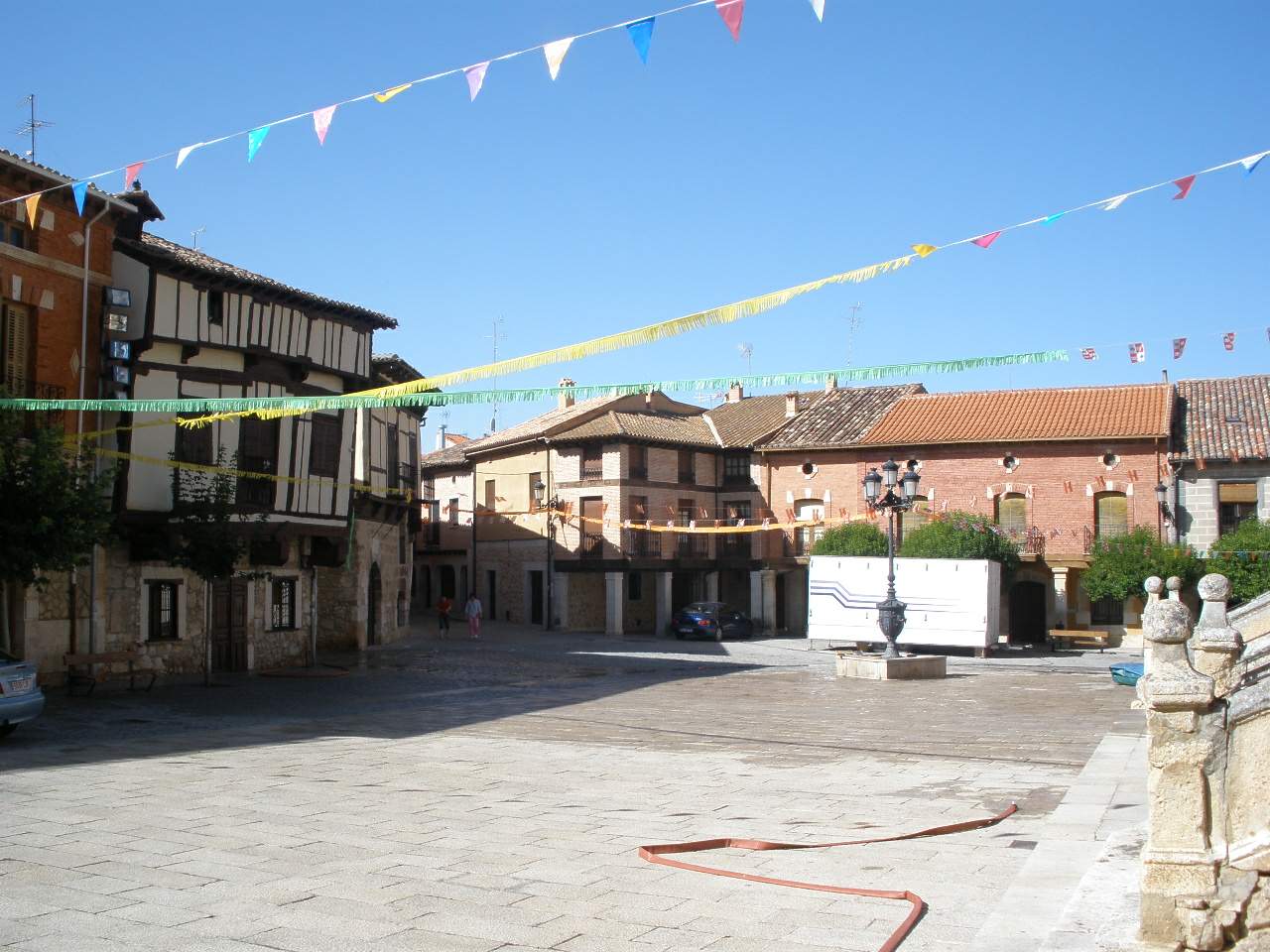
Many houses retain their traditional appearance. Rubble-stone walls, thick wooden doors and solid façades reflect a practical approach to architecture, designed to withstand cold winters rather than to impress in photographs. Small squares and open corners break up the streets, often around the church or older buildings where the village naturally gathers.
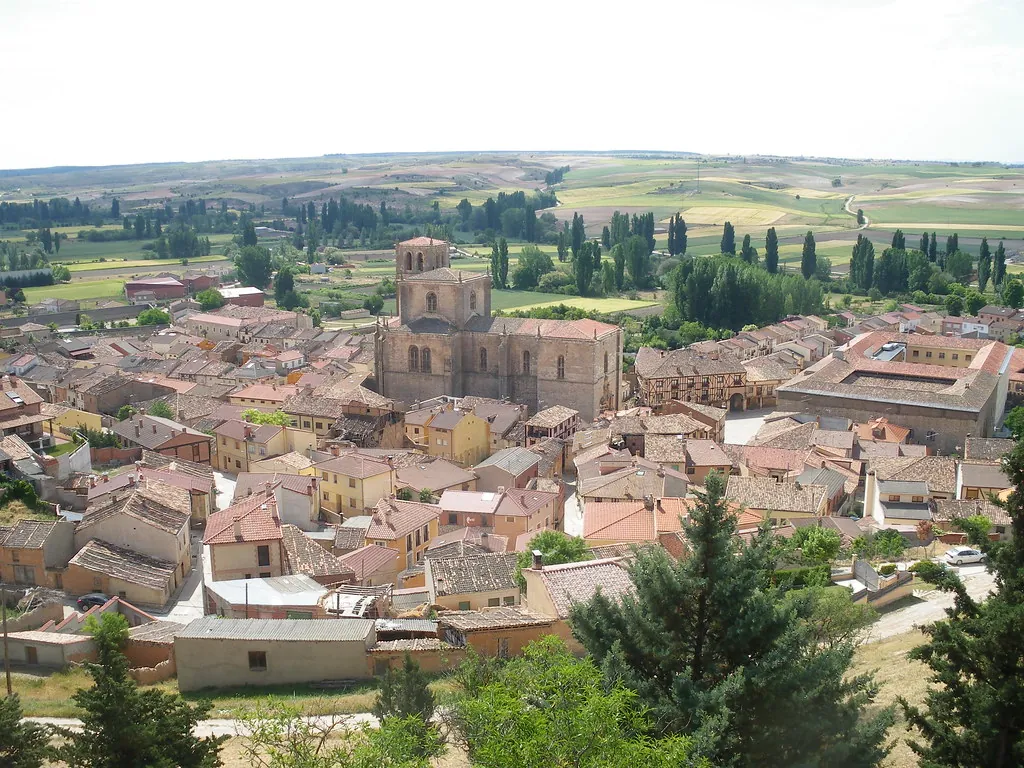
At the centre stands the parish church of San Miguel Arcángel. It is not a cathedral or an elaborate showpiece, but a typical rural Castilian church that has evolved over time. Inside, wood and stone sit alongside elements added in different periods, creating the layered feel of a parish church that has accompanied several generations. The building anchors the village, both physically and socially, in the understated way common across much of inland Spain.
Underground cellars and zarceras
If one feature tells the story of Fuentespina more clearly than any other, it is the underground cellars. In various parts of the village, particularly on small slopes, stone chimneys rise from the ground. These are zarceras, ventilation shafts that mark the presence of wine cellars below.
For many years, these family-owned cellars were the most practical way to keep wine at a stable temperature. Underground, conditions remain cool throughout the year, an essential factor long before modern technology became available. The earth itself acted as insulation, protecting the wine as it fermented and matured.
Some of these cellars are still private and used in the traditional way. Others open for organised visits at certain times. It is best to ask locally or contact a winery in the area in advance, as they are not always open on a regular basis. The experience, when available, connects directly to the older methods of winemaking that shaped the identity of the Ribera del Duero.
The zarceras scattered across the slopes are a reminder that much of the village’s history lies underground. From above, they appear almost modest. Below, they represent generations of work tied to the harvest.
Walking among the vineyards
Leave the built-up area and the vineyards begin almost immediately. The landscape shifts with the seasons. Spring brings intense green shoots, summer sees bunches of grapes forming on the vines, and autumn turns the fields shades of red and gold as harvest approaches.
There are no formal viewpoints or signposted trails like those in a natural park. Instead, the usual way to explore is via agricultural tracks. These dirt paths are used by tractors and by local residents heading out to their plots. For anyone who enjoys a gentle walk or a short cycle, it is enough to follow one of these tracks and see where it leads.
Even a slight rise in the terrain can open up views across the valley, with rows of vines stretching in every direction. The setting makes clear how deeply the vine shapes both the economy and the visual character of this stretch of the Duero basin.
Wine at the centre
In the Ribera del Duero, wine is never far from the conversation. Around Fuentespina, wineries work mainly with tempranillo, the dominant grape variety in the region, alongside others introduced over time.
Some wineries offer the chance to see how wine is made today and how it was produced in the past, from the old underground cellars to more modern facilities. Visits often include tastings, a useful way to understand the different styles found in this part of Castilla y León. As with the cellars in the village itself, it is advisable to check in advance, since not all wineries operate open visits every day.
The continuity between past and present is easy to trace. Traditional calados, the underground galleries used for storing wine, sit alongside contemporary production spaces. Together they show how the Ribera del Duero has adapted without losing its agricultural roots.
What to eat in Fuentespina
Food offers another clue to local identity. In this area of Burgos, lechazo asado remains one of the most typical dishes for a family meal or an important gathering. This roast suckling lamb, usually cooked in a wood-fired oven, is closely associated with Castilian cuisine.
Alongside it, cured embutidos appear regularly, as do hearty soups and slow-cooked pulses. The cooking reflects the inland climate and rural traditions of Castilla, with recipes designed to sustain rather than to surprise.
And almost everything is accompanied by wine from the area. In Fuentespina, that pairing feels natural rather than staged.
How long to spend in Fuentespina
Fuentespina is not a place for two full days of monument-hopping. It works better as a quiet stop on a wider route through the Ribera del Duero.
A half day is enough to walk through the village, notice the underground cellars and their zarceras, and head out along the vineyard tracks. With the opportunity to taste local wine, the experience becomes more complete. The appeal lies in taking it slowly and seeing how Fuentespina fits into the broader wine-growing landscape that defines this stretch of the Duero.
There may be no grand sights to tick off, but the village offers something equally valuable: a clear, unhurried glimpse of everyday life in one of Spain’s most important wine regions.