Full Article
about Peñaranda de Duero
A noble town with an imposing castle and a Renaissance palace on its main square.
Ocultar artículo Leer artículo completo
The stone coats of arms above the doorways still bear the dents of 500-year-old pikes. That’s the first thing you notice in Peñaranda de Duero after the initial climb from the car park: every other house is shouting about its former owners – the Zúñigas, the Avellanedas, the Mirandas – families who ran this corner of Castile when wool was more valuable than gold and the River Duero marked the edge of several tiny kingdoms. At 850 m above sea level the air is thinner than on the Costas and the light has the hard clarity photographers pay for elsewhere. You’ll have the place almost to yourself, provided you arrive before the lunch gong sounds at two o’clock sharp.
A Plaza Mayor That Outclasses Segovia’s
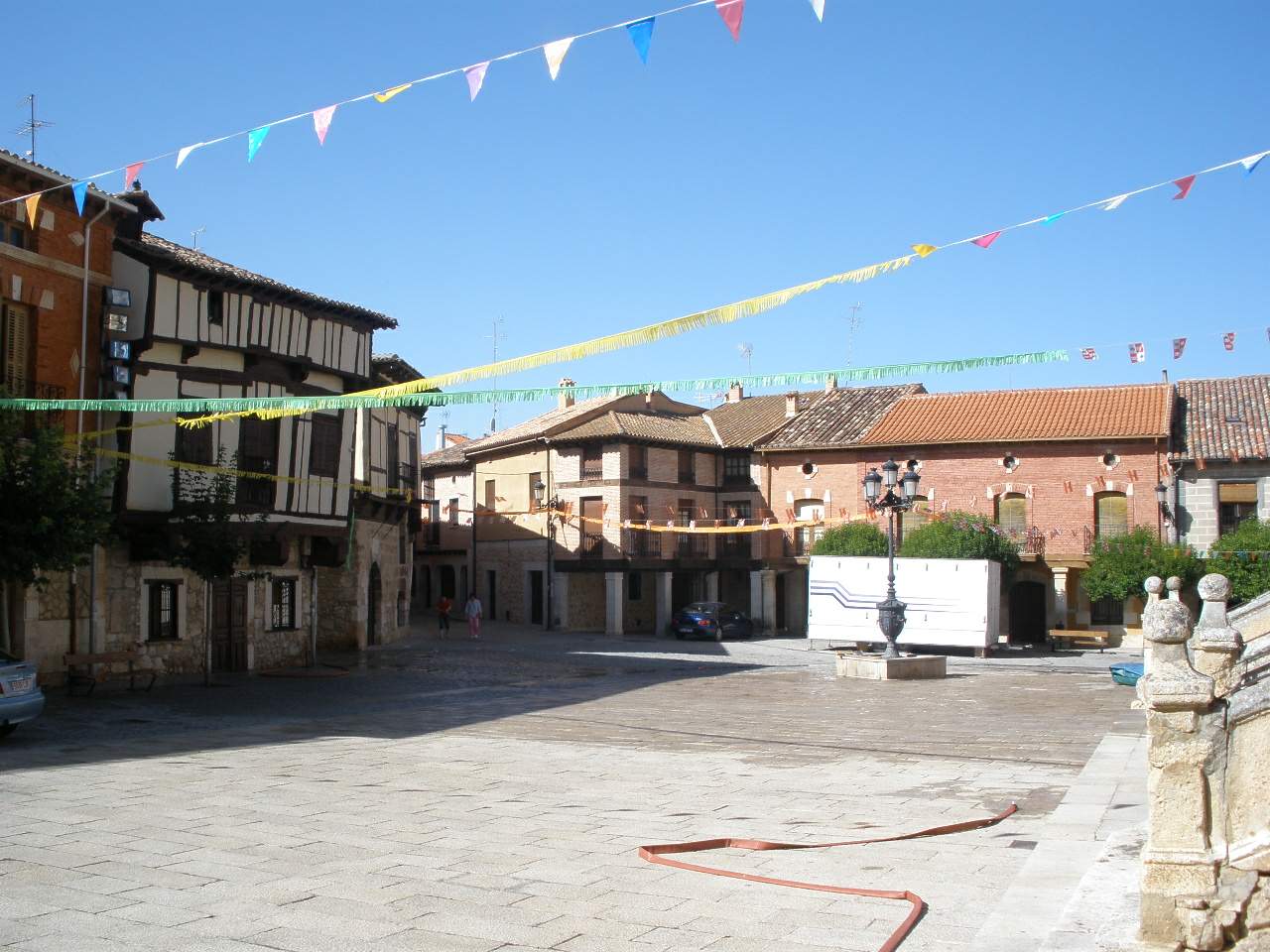
British visitors who tick off the blockbuster towns usually gasp when they duck under the stone arcades of the rectangular main square. The proportions are textbook Renaissance: double-height wooden balconies, perfectly regular arches, and a stone fountain that still sluices water brought down from the Sierra de la Demanda. The Palace of the Counts of Miranda closes off the east side; its Plateresque façade is covered in botanical carvings so crisp they might have been finished last week rather than in 1540. Inside, the museum is compact – four rooms round a colonnaded courtyard – but the English crib sheet handed out at reception explains how the family bankrolled Isabella of Castile and later tried, unsuccessfully, to stop Napoleon. Admission is €4 and the caretaker switches the lights off at the first hint of siesta.
Next door, the Colegiata de Santa Ana has a Mudéjar ceiling that would not look out of place in Andalucía. Look up as you enter the sacristy: the cedar panels are stitched together with star-shaped dowels, a technique Muslim craftsmen carried north after the Reconquest. The altarpiece is a riot of gold leaf and polychrome, but the real curiosity is a side chapel paid for by wool merchants whose contracts are carved into the floor tiles – 15th-century invoicing in Gothic script.
Ten-Minute Town, Two-Hour Castle
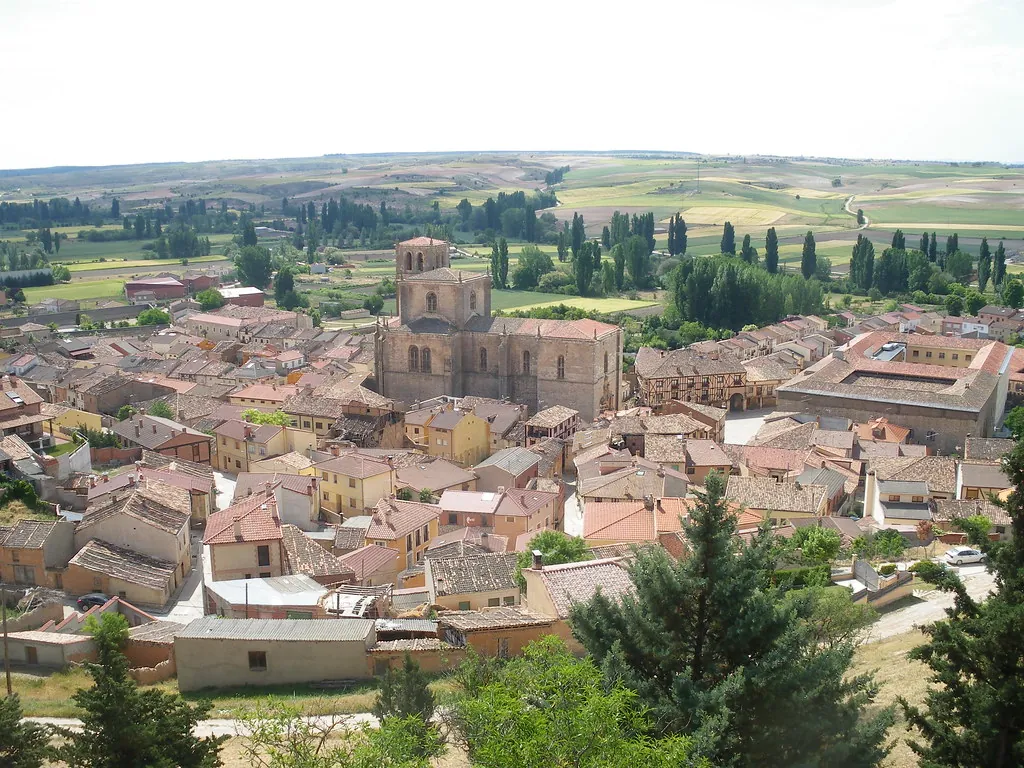
From the plaza every lane tilts uphill towards the castle keep. The gradient is short but vicious; wear trainers unless you fancy sliding backwards on the polished cobbles. At the top, the 40-metre tower of the Zúñigas rewards the effort: the Duero valley unrolls like a cereal-coloured quilt stitched with thin green lines of poplar. Swifts wheel at eye level and the only sound is the wind rattling the wire fence installed to stop visitors toppling off the battlements. Interpretation boards in English map out the 1492 siege when the Count of Miranda changed sides midway; local children still re-enact it every September with cardboard armour and considerable shouting.
The castle itself is more intact than many on the Meseta – you can walk half the curtain wall – but don’t expect café facilities. Bring water; summer temperatures touch 35 °C and there is no shade until the sun drops behind the pine ridge at seven. Winter visits deliver razor-sharp skies but the wind can knife through three layers. If the wooden gate is locked, the tourist office on the plaza keeps the key; ring the bell and someone will amble up the hill to let you in, a service that feels positively 19th-century.
What to Eat When the Bells Stop
Lunch is serious business. By 14:15 the butcher has pulled down his shutter, the bakery till is empty and even the dogs retreat into doorways. Book a table at one of the two mesones under the arcades or you will wait until eight. Half a roast suckling pig (cochinillo) feeds two adequately and costs around €24; the skin crackles like well-done pork belly while the meat beneath stays milky. Morcilla de Burgos arrives as fat black coins, the rice inside keeping the texture lighter than anything sold in British supermarkets. Ask for a “corte de queso” – a wedge of mature sheep cheese – and the waiter will bring a clay plate drizzled with local honey. The house Ribera del Duero is usually a crianza from Aranda ten minutes down the road; expect to pay €18 a bottle in a restaurant, half that in the village shop.
Vegetarians survive on tortilla and salads heavy with tinned asparagus – this is still inland Spain – but the baked cheesecake has achieved cult status among weekenders from Madrid. Order it warm; the centre should wobble like a minor seismic event.
Walking It Off Among Vineyards
A green lane leaves the castle moat and drops towards the river. In twenty minutes you are among bush-vine tempranillo planted on gravel benches above the water. The paths are farm tracks rather than signed trails; follow the yellow posts that mark the irrigation pipes and you will loop back to the southern gate after 5 km. Take a hat – there is no tree cover – and keep dogs on a lead: the fields are patrolled by mastiffs who regard strangers as potential sheep rustlers. If you want proper way-markers, drive 12 km to Fuentecén where a circular route skirts the remains of a Cistercian monastery and ends at a bar that opens at five, a rarity in these parts.
When Everything Shuts
Monday is the true dead day. The palace, church and pharmacy museum stay locked, the only cafeteria closes early and the village feels like a film set between takes. Tuesday to Saturday between 11:00 and 13:30 is the safe zone; arrive outside those hours and you will see fine architecture but no interiors. Entry tickets are sold from a tiny office that doubles as the public library – look for the photocopier behind the desk. Cash only; the nearest ATM is beside the modern health centre on the bypass, a ten-minute walk from the plaza and easy to miss if you arrive after dark.
Evenings can be eerily quiet. The young have migrated to Burgos or Valladolid, leaving 500 mostly retired inhabitants who prefer television to tapas. One bar stays open until midnight at weekends; order a gin-tonic and the owner will produce a balloon glass the size of a goldfish bowl, a habit imported from Bilbao. Mobile signal drops to one bar inside the stone houses; download an offline map before you leave the ring-road.
Worth the Detour?
Peñaranda will not keep you busy for a week. It will, however, deliver a concentrated shot of old Castile without the Segovia coach queues or the Salamanca stag parties. Base yourself here for two nights and you can sandwich the village between proper winery visits in Aranda de Duero and the frescoed Romanesque churches of the Silos loop. The best light for photographs is the hour before sunset when the stone turns honey-coloured and the swifts swoop between the balconies. Bring comfortable shoes, a Spanish phrasebook and enough cash for the lunch that finishes by two. The dukes have gone but their front doors are still open; just remember to arrive before the bells chime, or you will be staring at some very fine keyholes until evening.