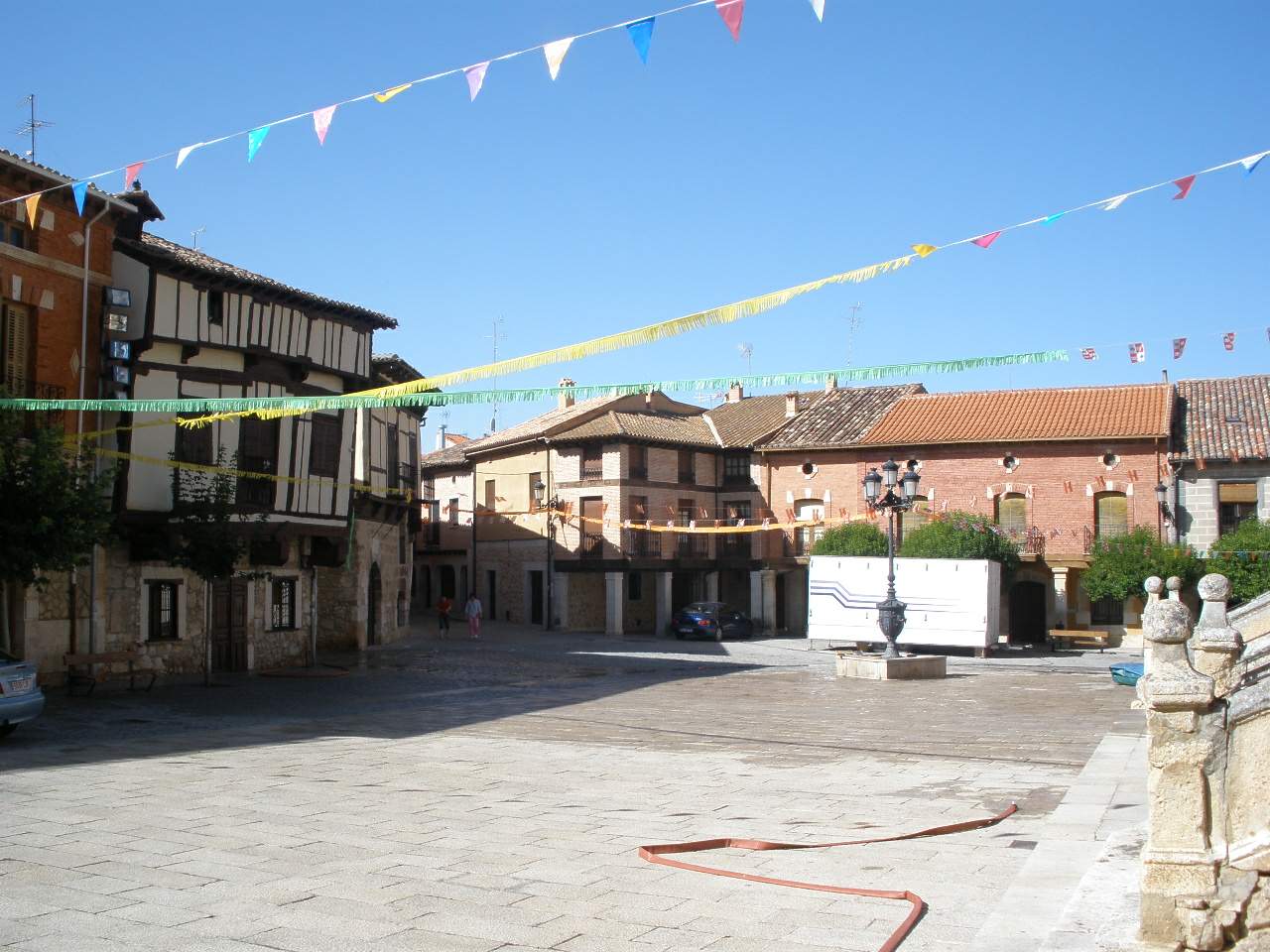
Ayuntamiento de La Cueva de Roa (Burgos, España).jpg
Adrian benedited · CC0
Castilla y León · Cradle of Kingdoms

Roa

The waiter at Asador Nazareno hoists a whole milk-fed lamb onto the counter at 14:05, splits it with shears, and slides the rack into a wood-fired ...

2,276 inhabitants · INE 2025
820m Altitude

Why Visit

Mountain Former Collegiate Church of Nuestra Señora de la Asunción Wine tourism

Best Time to Visit

year-round

San Roque and Nuestra Señora festivities (August) agosto

Things to See & Do
in Roa

Heritage

  • Former Collegiate Church of Nuestra Señora de la Asunción
  • Remains of the wall
  • Monument to El Empecinado

Activities

  • Wine tourism
  • Walks along the viewpoint
  • Local cuisine

Festivals
& & Traditions

Fecha agosto

Fiestas de San Roque y Nuestra Señora (agosto)

Las fiestas locales son el momento perfecto para vivir la autenticidad de Roa.

Full Article
about Roa

Headquarters of the Ribera del Duero Regulatory Council; historic town set on a rocky spur overlooking the river

Ocultar artículo Leer artículo completo

The waiter at Asador Nazareno hoists a whole milk-fed lamb onto the counter at 14:05, splits it with shears, and slides the rack into a wood-fired oven whose heat you can feel three tables away. Nobody photographs it; the room simply settles into the rhythm of a long Spanish lunch. This is Roa de Duero, halfway between Burgos and Valladolid, where the altitude keeps the grapes honest and the locals still outnumber visitors.

High-plateau living

Eight hundred and twenty metres above sea level feels different. Summer nights drop to 14 °C even after a 34 °C noon, so vines ripen slowly and reds keep their edge. In January the thermometer can flirt with –8 °C; frost whitens the terracotta roofs and wood-smoke drifts down Calle Mayor long after sunrise. The climate is continental Castile at its most uncompromising: dry air, big skies, and a wind that whistles across the meseta. Bring layers whatever the month; the terrace that felt idyllic at lunchtime becomes an ice-box once the sun slips behind the collegiate tower.

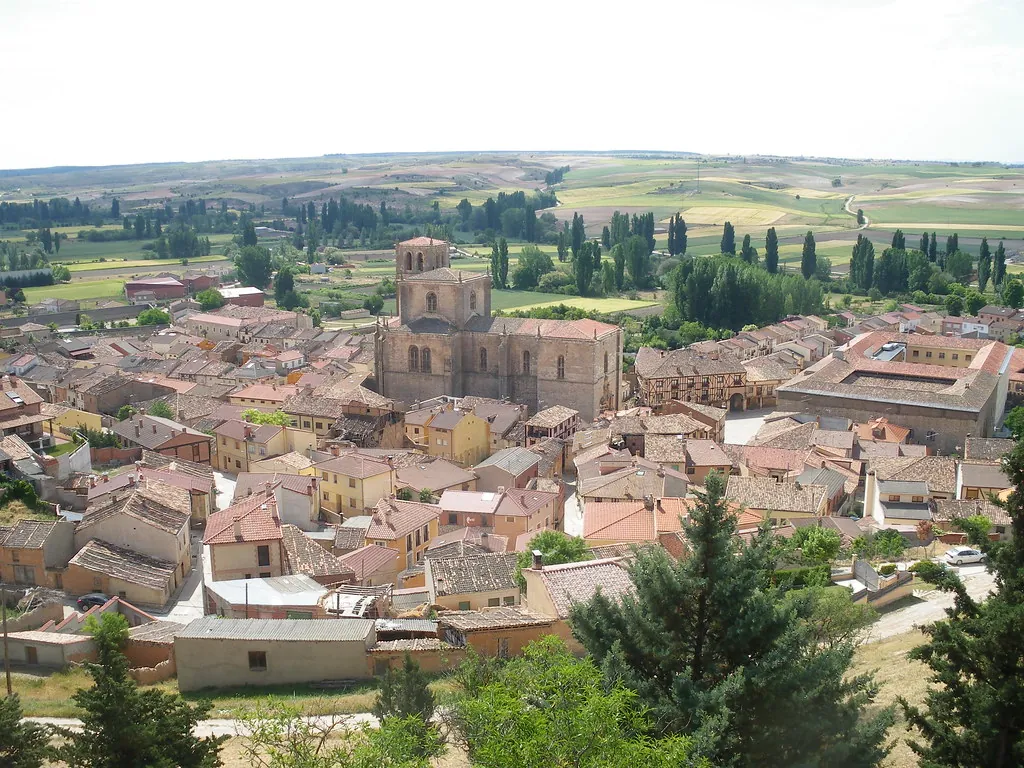
The town sits on a chalky ridge that drops sharply to the Duero, visible as a silver thread three kilometres south. From the remnant stretch of medieval wall you look over a chessboard of tempranillo blocks, leafless and sculptural in winter, then a haze of green by May. The river itself is reachable only by a stiff 45-minute footpath through almond terraces; the bridge on the N-122 is the sensible crossing, carrying traffic east to Peñafiel’s hilltop castle or west to the abbey at Valladolid.

Wine country without the coach park

Roa is the administrative capital of the Ribera del Duero D.O., a status that brings paperwork rather than glamour. Head-office staff occupy a discreet modern block on the edge of town; the real action happens in the surrounding bodegas. Protos, five minutes up the road in Peñafiel, offers cathedral-like cellars and English-language tours booked two weeks ahead. Closer still, the cooperative that bears the town’s name fills 3.5 million bottles a year and will let you taste straight from the tank for €5, provided you arrive before 11 a.m. when the bottling line starts. Vega Sicilia lies 25 km south-west; requests need to be submitted by e-mail a month in advance, and they reply with the same brisk courtesy Harrods reserves for overseas wine clubs.

What surprises British visitors is the absence of tour-bus infrastructure. There is no hop-on hop-off train, no fridge-magnet shop, no bilingual menu waving from the pavement. Parking on the ring-road is free and unlimited; from there everything is within a ten-minute shuffle on cobbles. The upside is authenticity, the downside is planning. Tastings on Sunday afternoons or Mondays are virtually impossible—everyone is either at mass or with family—so schedule winery visits Tuesday to Saturday morning and fill the gaps with food or footpaths.

A plate built for two

Roa’s restaurants assume you have driven a long way and intend to make the journey worthwhile. Lechazo asado—milk-fed lamb slow-roasted in oak-fired clay ovens—arrives as a quartet of pale chops with glass-crisp skin and meat that pulls away at the nudge of a fork. A media ración is listed for one person yet feeds two comfortably; a full ración could satisfy four, though the waiter will pretend otherwise. Asador Nazareno and Chuletón Balcones del Duero dominate TripAdvisor, but Casa Florencio on the main square is where local dentists take their wives on Saturday night, and the €28 menú del día includes a half-bottle of crianza. Order judiones de La Granja—giant butter beans stewed with morcilla—if you need a break from red meat; the beans absorb the paprika-stained broth like edible sponges.

Dessert is usually tarta de queso, a crustless baked cheesecake that has migrated north from the Basque Country and tastes of vanilla and barely set cream. Vegetarians should flag their status early; the kitchen’s idea of compromise is still cheese, just more of it.

Walk it off among the vines

Three signed circuits start from the Puerto del Arco, the best-preserved gate in the old wall. The shortest (4 km) drops to the Duero and back through riverside poplars, fine from March to November but muddy after rain. The 8-km “Vega-Roa” loop crosses the railway and threads between tempranillo plots whose owners post hand-painted signs inviting you to adopt a row for €90 a year—no fruit, just a name plaque and a newsletter. Both are essentially farm tracks; trainers suffice, boots are overkill. The third route climbs east to the abandoned Ermita de San Juan at 940 m, giving views west across the valley to Peñafiel’s cliff-top fortress. In July start before 09:00; by 11:30 the sun is punitive and there is no shade until the ruined chapel.

Winter walking is glorious but different: snow sometimes powders the vines, the mud freezes solid, and the silence is so complete you can hear your own pulse. Bring a lightweight fleece and a wind-proof; the same ridge that cools the grapes will cool you faster than expected.

When to come, when to stay away

Carnival in February is low-key—a children’s parade and doughnuts dipped in aniseed wine. Easter brings three evening processions; trumpets echo off stone and the smell of beeswax drifts through the arcades. Late August is San Agustín: brass bands, fairground rides wedged into the main square, and roast-lamb smoke hanging in a delicious fog. Accommodation doubles in price and the single hotel books out months ahead; if you dislike noise, avoid the last week of August altogether.

Spring and early autumn remain the sweet spots. In May the almond blossom has gone but the vines are neon-green, days reach 22 °C and the night air smells of wet earth. September means harvest: tractors towing gondolas of grapes clog the lanes at 08:00, and every doorway offers a glimpse of purple must sloshing into stainless steel. Hotel rates edge up, yet tastings are easier because wineries extend opening hours for the season.

Bed, breakfast and beyond

Hostal La Muralla has twelve rooms overlooking the collegiate tower; doubles are €65 mid-week, Wi-Fi reliable enough for Zoom, and breakfast is a no-nonsense affair of strong coffee and churros. There is no lift, so request a first-floor room when booking if stairs are an issue. An alternative is Posada del Conde in neighbouring Peñafiel—more rooms, a pool, and the castle’s parador next door for sundowners—but you lose the option of walking home after dinner.

Roa shuts early by British standards. Bars stop serving food by 17:00 and only the kebab van on the bypass operates after 23:30. Plan accordingly: buy water and painkillers before the minimarket closes at 21:00, and if you want a nightcap finish dinner with a final bottle of reserva on the restaurant terrace rather than hunting for a cocktail bar that does not exist.

Last glass

Roa will not hand you Instagram moments on a plate. Its pleasures are slower: the crackle of oak under a lamb rack, the way tempranillo tastes different when you have walked the soil it grew in, the hush that settles once the last tractor rumbles home. Arrive expecting polished tourism and you will leave early; arrive with an appetite and a pair of walking shoes and you may find yourself checking train timetables for a return visit. The town asks only that you match its rhythm—lunch at two, siesta at three, and the evening stretched out like the Duero plain below.

Key Facts

Region
Castilla y León
District
Ribera del Duero
INE Code
09321
Coast
No
Mountain
Yes
Season
year-round

Livability & Services

Key data for living or remote work

2024
ConnectivityFiber + 5G
HealthcareHealth center
EducationHigh school & elementary
Housing~5€/m² rent · Affordable
CoastBeach nearby
January Climate3.5°C avg
Sources: INE, CNMC, Ministry of Health, AEMET

Official Data

Institutional records and open data (when available).

  • COLEGIATA DE SANTA MARÍA
    bic Monumento ~0.2 km
  • CASTILLO DE HOYALES DE ROA
    bic Castillos ~6.7 km
  • COMPLEJO ARQUEOLOGICO
    bic Zona Arqueolã“Gica ~0.2 km
  • ROLLO DE JUSTICIA
    bic Rollos De Justicia ~5.9 km
  • MURALLAS
    bic Castillos ~0.3 km

Planning Your Visit?

Discover more villages in the Ribera del Duero.

View full region →

More villages in Ribera del Duero

Traveler Reviews