Full Article
about Torresandino
Riverside town with farming roots, set between irrigated plain and high moorland.
Ocultar artículo Leer artículo completo
The chimneys poke up through the pavement at odd angles—brick periscopes venting air from cellars sunk three metres below. Walk the single main street of Torresandino and you are, quite literally, stepping on top of another village: a warren of hand-hewn caves where families once pressed tempranillo grapes and left the juice to sleep through Castilian winters. Above ground the population is 583; below, the tally runs to several hundred ageing clay tinajas and a few dusty bottles of 1994 crianza that someone forgot to collect.
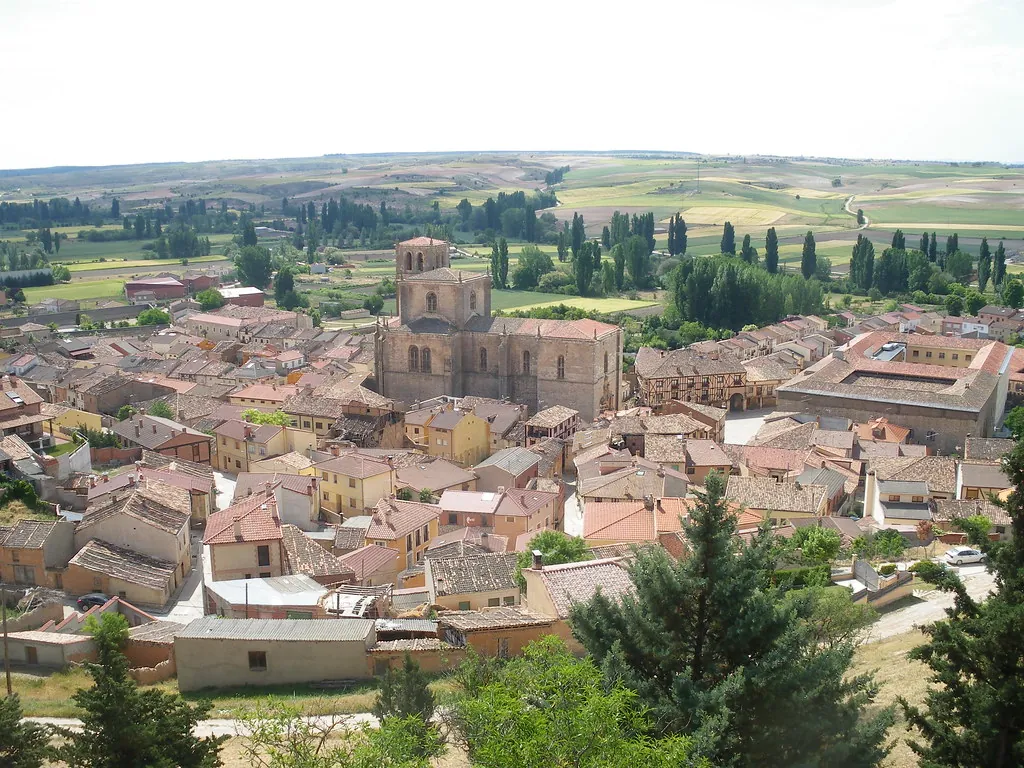
At 858 metres, the village sits high enough for the air to carry a snap of cold even in late May. Morning light races across cereal plains and catches the stone tower of San Pedro Apóstol, the only vertical punctuation between horizon and sky. This is the western edge of Ribera del Duero, a denomination that commands £40-plus in British wine shops yet starts here with smallholdings of barely two hectares owned by people who still prune by eye.
There is no tourist office, no gift shop, no medieval wall to photograph. Instead you get a single bar, Los Nogales, open from 07:00 for coffee and churros and again at 20:00 when the day’s work is done. The owner, Jesús, will pour you a glass of local tinto for €1.80 and point to the hill two kilometres south where Hotel Torremilanos has its own winery, 200 hectares of organic vines and, crucially, rooms with heating that works in April. British visitors tend to treat Torresandino as a sleeper base rather than a destination: arrive, check in, use the hire car to zig-zag between bodegas whose names—Cillar de Silos, Félix Callejo—appear on Ocado. It works, provided you accept that the village itself offers silence first, spectacle second.
What lies beneath
The underground cellars, called cavas, were dug in the late 1800s when phylloxera wiped out vineyards farther north and growers here needed somewhere cool, cheap and rodent-proof to store wine before rail reached Aranda de Duero. Families lowered barrels through trapdoors in kitchen floors; children were sent down with candles to check the ferment. Most entrances are now sealed, but if you knock politely at number 14 Calle Real, María Luisa may lift the iron lid and let you descend the spiral stairs. Temperature drops to 12 °C immediately; the walls weep softly and smell of damp clay and last year’s grapes. She will tell you, in measured Castilian, that her grandfather built the cave with a pick and a donkey, and that the 1921 vintage survived the Civil War hidden behind a false wall. There is no charge, though a €5 bottle purchase is expected.
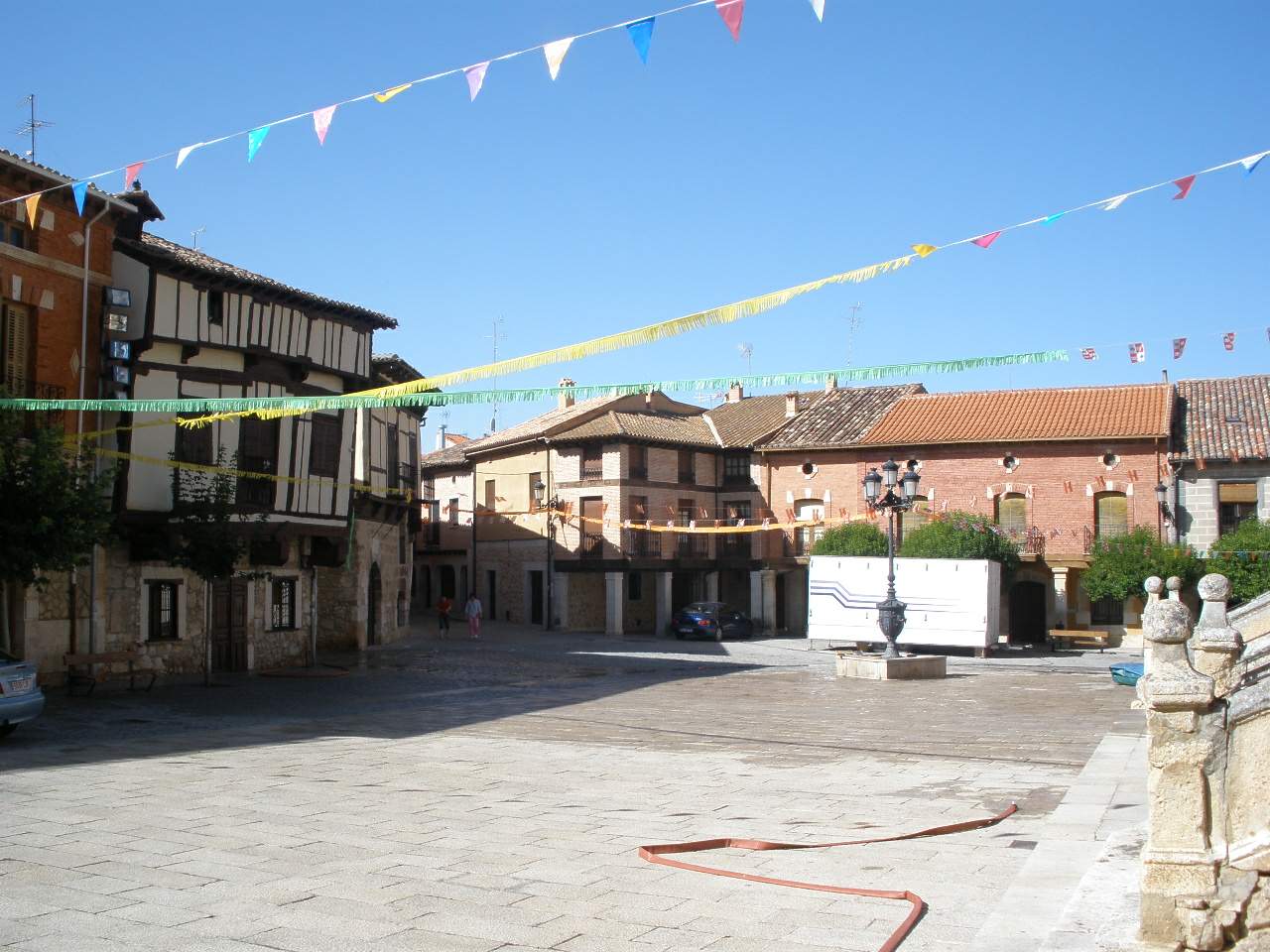
Above ground, architectural grandeur is modest. The church tower is 16th-century but was repaired in 1933 after lightning split the masonry; inside, a gilded retablo depicts San Pedro walking on water with the expression of someone who has just discovered the sea is actually tempranillo. Stone mansions with weather-beaten coats of arms line one short block—evidence that wool, then wine, once made a few families very rich. The rest of the village is low adobe houses whose rooves of curved terracotta tile glow rust-red at sunset. Photographers hoping for Gerbera-coloured geraniums will be disappointed; flowerpots here contain practical things: parsley, a single chilli plant, cuttings of grapevine rooting in water.
Walking, eating, driving
Footpaths strike out across the meseta in four directions, way-marked with wooden posts that list distances in kilometres but give no estimated time—Castilians assume you know how fast you can cross flat ground at altitude. The loop east to Baños de Valdearados is 11 km across wheat stubble and newly planted vines; skylarks rise overhead, and the only shade is provided by solitary holm oaks whose trunks have been nibbled smooth by generations of sheep. In April the soil smells of rain; in September it is dust and sun-hot graphite. Either way, carry water: the bar at the far end may be closed if the owner has gone to Burgos for the day.
Back in the village, lunch options are binary. Los Nogales serves a three-course menú del día for €12: soup or salad, lechazo asado (milk-fed lamb) or migas (fried breadcrumbs with chorizo), and a slab of cuajada, a sharp sheep-milk set yoghurt that tastes like distant cousin to Greek. The lamb arrives as four tiny ribs on a metal plate, the meat so tender it parts from the bone at the sight of a fork—comfort food for anyone raised on Sunday roast, though portion size may underwhelm those used to Toby Carvery. Vegetarians get egg and chips, no apology. Drink the house tinto: young, cherry-scented, better than many London wine-bar offerings at £7 a glass.
If that sounds spartan, drive two kilometres to Hotel Torremilanos where the dining room has linen napkins and an English-speaking sommelier. The same lamb costs €24 but arrives with parsnip purée and a glass of their own Peñamonte Gran Reserva 2012. Bedrooms overlook vines; sunrise paints rows of bare vine stock gold, and you remember why you left Britain in February. The hotel has bicycles to borrow, though the rear derailleur on the one I tried had only two working gears—sufficient for the flat, but check the brakes before descending.
Seasons and practicalities
Spring brings sharp nights and daytime temperatures that climb to 22 °C; wild tulips flower in roadside ditches, and the village smells of wet earth and woodsmoke from stoves still lit at dawn. Summer turns fierce—35 °C by 15:00—yet the altitude stops the sticky sleeplessness of Andalucía. August fiestas mean brass bands in the plaza until 03:00; book accommodation early or stay in Aranda where choice is wider. Autumn is harvest: tractors towing gondolas of grapes clog the road, and the air carries a faint yeasty perfume. In winter the meseta can hit –8 °C at night; some guesthouses close altogether, and the church heating struggles to lift the interior above 10 °C for Sunday mass.
Getting here without a car is possible but joyless. Burgos-Villafria airport, 90 km north, has two Ryanair routes from London in summer; Valladolid, 110 km west, adds a year-round Stansted link. Hire wheels at the airport: the drive crosses the Duero gorge at Peñafiel, worth a stop for the castle-turned-wine-museum. Trains reach Aranda de Duero every two hours from Madrid; a taxi from the station to Torresandino is €30 and must be booked by WhatsApp because the rank is empty after 20:00. Buses exist on Tuesdays and Thursdays, timed for pensioners, not planes.
The honest verdict
Torresandino will not change your life. You will not tick off a UNESCO site, nor post a selfie beside a tiled azulejo façade. What you get is a working Spanish village that happens to store its history under the pavement and its future in bottles priced far below UK retail. Come if you like wine without theatre, walks without way-markers, and the low murmur of a place that has never needed visitors to validate its story. Leave the car unlocked—no one will touch it—and remember to close the cellar door on your way out; the draught ruins the vintage.