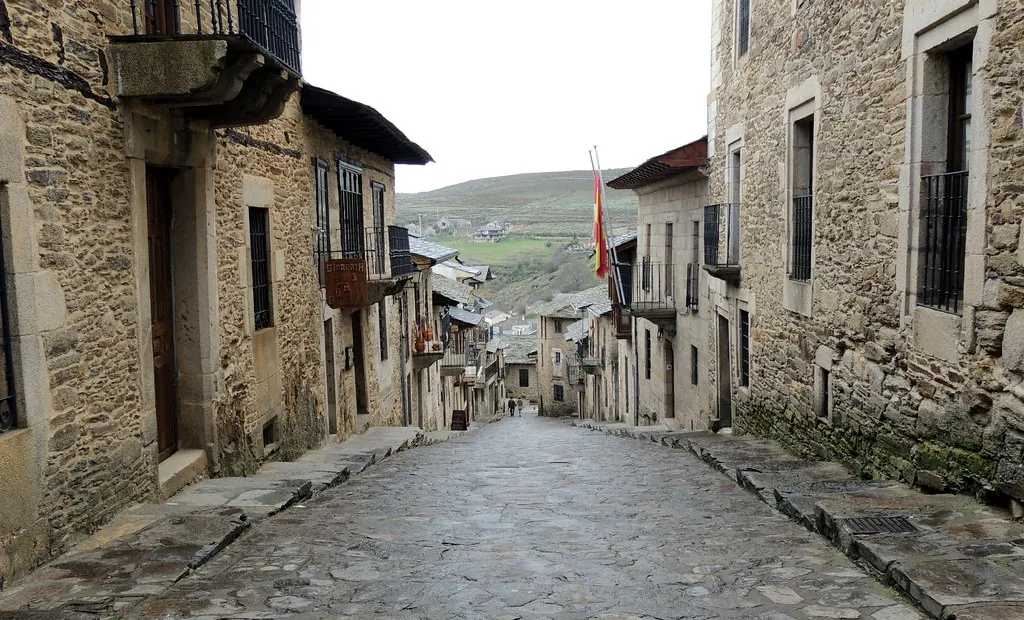
Asturianos - Flickr
caminanteK · Flickr 10
Castilla y León · Cradle of Kingdoms

Asturianos

The church bell strikes eleven and the only reply is a tractor grinding through second gear somewhere below the square. Asturianos sits at 968 m on...

252 inhabitants · INE 2025
968m Altitude

Why Visit

Mountain Church of the Assumption Mushroom picking

Best Time to Visit

summer

Our Lady of Carmen (July) julio

Things to See & Do
in Asturianos

Heritage

  • Church of the Assumption
  • Chapel of Carmen

Activities

  • Mushroom picking
  • Hiking the Camino Sanabrés

Festivals
& & Traditions

Fecha julio

Nuestra Señora del Carmen (julio)

Las fiestas locales son el momento perfecto para vivir la autenticidad de Asturianos.

Full Article
about Asturianos

Gateway to the Sanabria region, with a landscape shifting from valley to mountain; noted for its oak and chestnut woods and slate architecture.

Ocultar artículo Leer artículo completo

The church bell strikes eleven and the only reply is a tractor grinding through second gear somewhere below the square. Asturianos sits at 968 m on the southern shoulder of the Sanabria hills, high enough for the air to feel sharpened, thin enough for mobile reception to give up without apology. Two hundred and fifty-two souls, plus whatever livestock is grazing the communal plots that fan out from the last stone houses. Nobody is in a rush; the altitude makes haste feel wasteful.

Stone, slate and the smell of woodsmoke

Granite walls two feet thick shoulder the lanes together, their roofs a jigsaw of slate plates that rattle like crockery when the wind finds its way across the border from Portugal forty minutes away. Wooden balconies, once used for drying maize and gossip, now hold satellite dishes and the occasional bike. The style is strictly local: no Andalusian whitewash, no Catalan Modernisme, just the materials that could be dragged up the mountain by mule and patience. A few houses stand hollow-eyed, their beams sagging under winters of snow, but enough have been patched with new mortar to keep the village from museum status. Planning rules are pragmatic rather than pretty; if a corrugated sheet stops the rain, it stays until someone fancies a Sunday of diy.

The cold arrives overnight, even in May. Daytime may touch 22 °C in the sun, yet by ten o’clock the thermometer has usually fallen through 10 °C and the fireplaces are fed with oak off-cuts. Pack a fleece for July; pack two for October when the chestnut woods flare copper and the footpaths disappear under a carpet of leaves that smell of tannin and earth.

Walking tracks that remember traders

A lattice of old drove roads radiates from the village like veins in blue cheese. The shortest loop, marked with occasional yellow dashes, climbs 250 m to the abandoned hamlet of Villarín de Sanabria in ninety minutes. Stone walls still stand, but holly bushes have moved into the living rooms and the only roof is sky. Longer routes, best studied on the 1:25,000 Sanabria sheet sold in Puebla de Sanabria twenty-five minutes away, link to the GR-84 long-distance path that traces the Portuguese border ridge. Maps help, yet the best directions still come from the bar: “Follow the concrete track until the second cattle grid, bear left at the chestnut with the lightning scar, and don’t trust the stone pile – the shepherd’s dog moved it last week.”

Spring brings carpets of wild daffodils along the verges; autumn delivers boletus, níscalos and the legal headache of working out which meadow belongs to whom. The regional government publishes a free mushroom permit online; print it, fill in your basket limit (3 kg), and carry id. Rangers do spot-checks and fines start at €300 for wandering onto private pasture without the landowner’s signature.

Food that refuses to flirt with fashion

Lunch at La Roca, the only restaurant within walking distance, arrives without foam or basil oil. A cast-iron cazuela holds cocido sanabres – chickpeas, cabbage, morcilla and a hunk of beef shin that has spent three hours convincing the broth it was worth the effort. Bread is sliced thick enough to roof a shed; the house wine comes in a plain bottle with no label and enough tannin to stain the teeth of a badger. Expect to pay €12 for the menú del día, €14 if you add pudding, and don’t ask for gluten-free: the kitchen’s English stretches to “hello” and “thank you”. Evening meals run later; the cook will stay open if you phone before six, but the family likes to watch the nine-o’clock news in peace.

Shops are thinner on the ground. The mobile grocer parks outside the church every Thursday at eleven-thirty; his van carries onions that still smell of soil, vacuum-packed chorizo from a factory in Zamora, and UHT milk with three weeks left on the clock. Bread arrives the same way, frozen part-baked and finished in a portable oven that smells like a railway-station kiosk. For anything more exotic – lemons, fresh fish, a newspaper in English – drive to Puebla where the Aldi opens at nine and closes at nine, with a siesta break you will forget once and only once.

Winter isolation and summer breathing space

Road access is generally reliable, but the N-525 at the valley bottom climbs 450 m of switchbacks before reaching the village. Snow tyres are not compulsory, yet the Guardia Civil will turn lorries away when the surface turns white. The first winter storm can arrive in mid-November; the last April fool dumps wet snow that collapses power lines and closes school for the day. If you book for Christmas, keep a blanket, torch and packet of biscuits in the car – mobile coverage vanishes long before the tyres start spinning.

Summer brings the opposite problem: not heat, but visitors who assume any mountain road is a rally stage. Motorbike groups arrive on Sunday mornings, engines echoing off the gorge like chain-saws. Weekdays return to library silence; that is when walkers hear stonechats clicking from the gorse and the soft clap of cowbells moving across the ridge.

A bed with a view, if you book early

Accommodation totals three options. The easiest is A Corner in Asturias Small Village, a two-bedroom cottage listed on both Expedia and VRBO, perched above the cattle grid on the eastern exit. Floorboards creak authentically, the shower pumps water at farmhouse pressure, and the sitting-room window frames the valley like a landscape painting someone forgot to sign. Rates hover round £80 a night in May, dropping to £55 once schools reopen. The owner, London-born and married into a neighbouring village, leaves a loaf of bread, butter and a bottle of local wine as a welcome – sensible since the nearest shop is a twelve-minute drive and the track punishes low-clearance hire cars.

The only alternative is a pair of rooms above the bar, rented by word of mouth; ask for Concha and mention you are happy to eat what the family eats. Sheets are line-dried, the wi-fi password is written on the back of a raffle ticket, and checkout is whenever the bread van leaves.

When to come, and when to stay away

Late April and early May give green meadows, flowering hawthorn and daytime hiking temperatures of 15-18 °C without the July dust. October delivers mushroom permits and fire-coloured woods, but daylight shrinks to eleven hours and rain arrives without warning. August is warm enough for short sleeves at midday, yet the village doubles in population with returning grandchildren and rental cars that clog the single passing place. Christmas looks magical in photographs, but black ice on the access road can strand you for forty-eight hours while the council finds a gritter prepared to climb that high.

Asturianos will not change your life. It offers no zip-wires, no artisan gin, no boutique yoga. What it does provide is an honest gauge of altitude: thin air, thick walls, and the slow realisation that time is less urgent when the nearest traffic light is forty kilometres away. Bring boots, bring a fleece, and bring enough cash for the bar – the card machine works only when Jupiter aligns with the router. If the weather closes in, sit by the fire, listen to the slate roof ticking as it cools, and accept that the cows were right all along: hurry is overrated.

Key Facts

Region
Castilla y León
District
Sanabria
INE Code
49017
Coast
No
Mountain
Yes
Season
summer

Livability & Services

Key data for living or remote work

2024
Connectivity5G available
TransportTrain nearby
EducationElementary school
Housing~5€/m² rent · Affordable
CoastBeach nearby
January Climate3.3°C avg
Sources: INE, CNMC, Ministry of Health, AEMET

Planning Your Visit?

Discover more villages in the Sanabria.

View full region →

More villages in Sanabria

Traveler Reviews