Full Article
about Cobreros
High-mountain municipality in the Sanabria Lake Natural Park; includes several hamlets with traditional architecture and ancient oak and chestnut forests.
Hide article Read full article
Morning light in Sanabria
At eight in the morning, when the stones underfoot still hold the night’s damp, the silence feels heavier than usual. A blackbird breaks it, a door opens somewhere, and a single car passes through on its way to Puebla de Sanabria. Tourism in Cobreros tends to begin like this, with the village half asleep, light filtering through chestnut trees, and that cool mountain air that lingers even in summer.
Cobreros belongs to the Sanabria region and has around five hundred residents. It sits just over 1,000 metres above sea level, which shapes daily life. Winters are long, and cold mornings stretch well into the year. This is not a place for rushing from sight to sight. The pace follows the people who live here all year round.
Stone houses and a practical kind of beauty
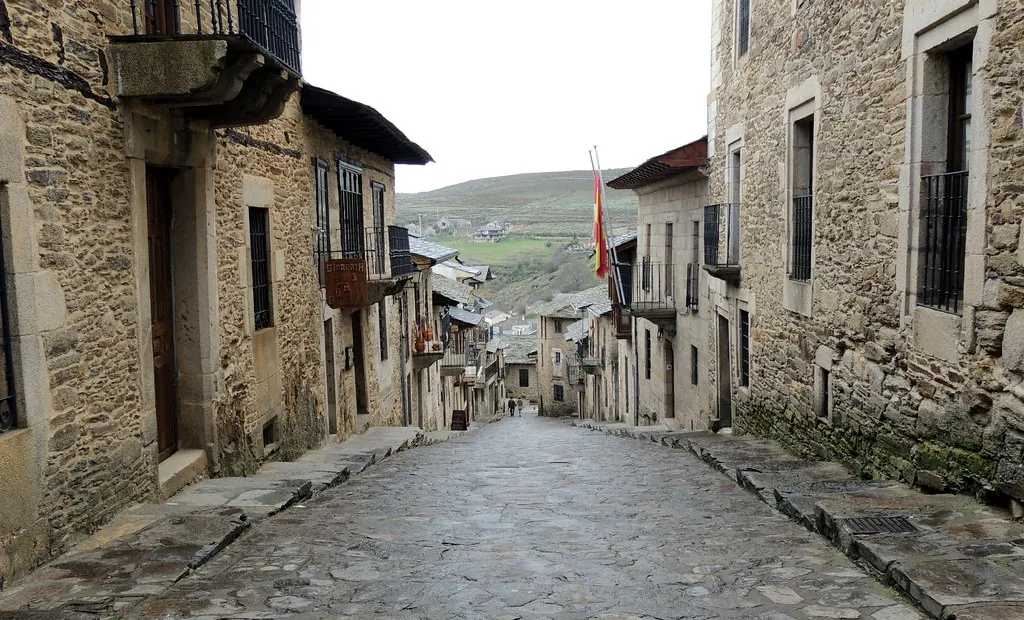
The parish church of Santa María marks the centre of the village. Built in stone and without ornament, it rises above the rooftops with a bell tower that acts as a clear point of reference when arriving by road. Around it stand many of the oldest houses.
Their façades combine irregular masonry with wooden balconies darkened by time. Some have enclosed upper galleries made from planks. These features were never decorative. They were used for drying clothes, storing tools, or keeping firewood sheltered through winter. Thick walls and small windows follow the same logic. In Sanabria, the cold sets in for months.
A slow walk reveals details that are easy to miss at first glance. An old bread oven built into a wall, wide doorways once used for carts, worn wooden floors shaped by generations. The architecture is built to last rather than to impress.
Paths that slip into the landscape
The routes around Cobreros begin almost without notice, slipping out between meadows and small cultivated plots. These are old paths, once used to reach grazing land or to enter the chestnut and oak woods that cover much of the area.
Not all of them are signposted. After several days of rain, which is common in this part of Sanabria, some stretches turn muddy. In autumn or winter, it helps to bring proper boots and ask locally about conditions. Residents usually know which paths are passable and which are not.
As the ground rises, the landscape opens out. There are grazing fields with livestock, patches of woodland, and streams that run cold even in August. On clear days, higher points offer views of the mountain ranges that surround the region.
Wildlife and the weight of silence
Early hours are the most active. It is not unusual to see a roe deer dart across scrubland, or to hear wild boar turning over the soil at dawn. Birds of prey circle above the meadows, carried by the air currents coming off the hills.
Seeing larger animals takes patience and quiet. Sometimes it is enough to sit near a stream or at the edge of a wooded area and wait. The countryside here still feels only lightly altered, with long stretches where human presence fades into the background.
Autumn mushrooms and winter food
When colder weather arrives, traditional dishes remain central in village homes. Cocido sanabrés is a regular presence during the hardest winter months, a substantial stew made with chickpeas, vegetables, and meat. In some houses, cured meats are still prepared, a practice that continues in parts of the region.
Autumn brings another well-established activity: mushroom gathering. After several days of rain, the surrounding woods fill with people carrying baskets. It is important to check local regulations and designated areas before heading out, as permits and restrictions are increasingly common in Sanabria.
Not every season is generous. Some years yield very little, and it is easy to return with muddy boots and a half-empty basket.
Summer gatherings and quieter months
Summer changes the atmosphere. Many families return to the village, and the streets become busier, especially in August. Traditional patron saint festivities take place, along with occasional romerías in the surrounding area. These include processions, shared meals, and open-air dances that continue late into the night.
The rest of the year is much calmer. In winter, there are days when hardly anyone passes through the streets for hours, apart from those heading out to collect firewood or tend to livestock.
When to come
Spring and autumn are often the most comfortable times to explore the surroundings, with milder temperatures and fewer people than in the height of summer. Winter presents a different side of Cobreros, colder and quieter, with frost and occasional snowfall.
Cobreros does not depend on attracting visitors. It is, above all, a place where everyday life continues at its own pace. Time spent here tends to shift attention towards small details: wind moving through chestnut trees, smoke rising from a chimney, and the sense of being in a part of Sanabria that still follows its own rhythm.