Vista aérea de Hermisende
Instituto Geográfico Nacional · CC-BY 4.0 scne.es
Castilla y León · Cradle of Kingdoms

Hermisende

The stone houses appear suddenly after twenty minutes of winding mountain roads, their slate roofs glinting like fish scales in the shifting light....

207 inhabitants · INE 2025
853m Altitude

Why Visit

Mountain Church of Santa María Cross-border hiking

Best Time to Visit

autumn

The Assumption (August) agosto

Things to See & Do
in Hermisende

Heritage

  • Church of Santa María
  • Chestnut forests

Activities

  • Cross-border hiking
  • mushroom foraging

Festivals
& & Traditions

Fecha agosto

La Asunción (agosto)

Las fiestas locales son el momento perfecto para vivir la autenticidad de Hermisende.

Full Article
about Hermisende

One of the westernmost villages bordering Galicia and Portugal; a green, damp mountain landscape with giant chestnuts.

Ocultar artículo Leer artículo completo

The stone houses appear suddenly after twenty minutes of winding mountain roads, their slate roofs glinting like fish scales in the shifting light. At 853 metres above sea level, Hermisende sits where Castilla y León nudges against both Galicia and Portugal—a triangular borderland where mobile signals flicker between countries and the evening air carries hints of three different languages.

This isn't a village that announces itself. There's no dramatic approach, no sweeping vista to photograph from the car window. Instead, the road simply narrows, the tarmac gives way to cobbles, and you find yourself in a place where the 21st century feels like an optional extra rather than an absolute necessity. Two hundred souls call this home, though that number swells during summer festivals when descendants return from Zamora, Madrid, even London, to reclaim family houses shuttered since September.

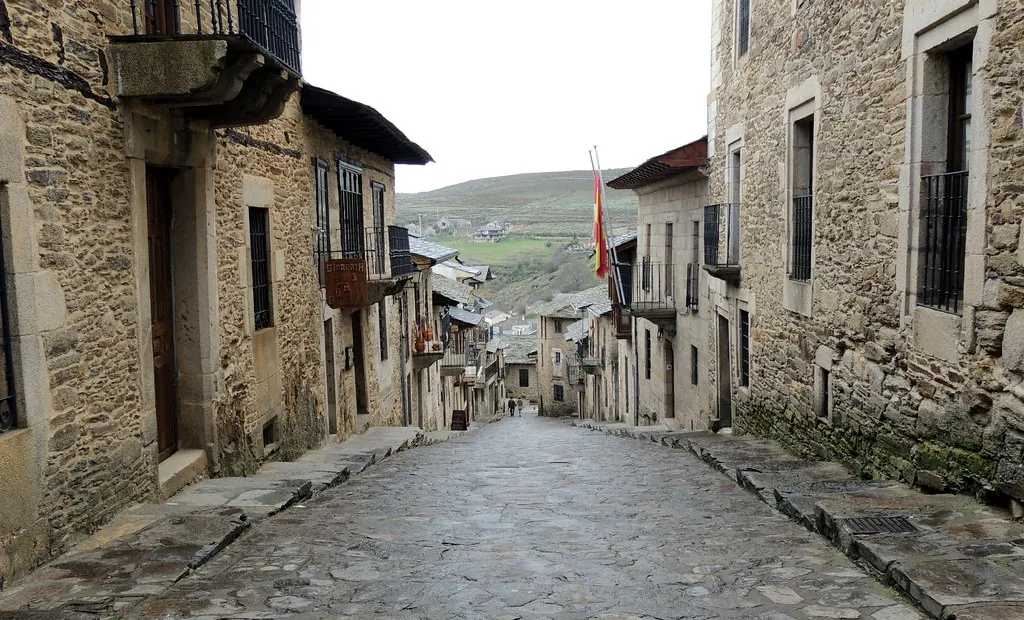
The architecture tells its own story. Granite walls two feet thick keep interiors cool during scorching August afternoons and retain heat when January snow blankets the surrounding oak forests. Traditional hórreos—granaries raised on stone stilts—still stand beside newer garages, their weathered wood contrasting with concrete blocks. Look closely at doorways and you'll spot carved symbols: crosses warding off evil, dates marking significant rebuilds, sometimes a Galician crest hinting at family origins from across the nearby border.

Walking the main street takes precisely eight minutes at a normal pace, though normal pace seems inappropriate here. Better to slow down, notice how the stone changes colour after rain, how neighbours lean from balconies to discuss the price of chestnuts, how the village cats claim sunny spots with the authority of medieval monarchs. The parish church anchors everything, its modest bell tower serving as both timekeeper and weather vane for agricultural life that still follows seasonal rhythms rather than Google Calendar notifications.

Speaking of seasons—they matter here enormously. Spring arrives late, sometimes not until May, when wildflowers transform roadside verges into impressionist paintings. Summer brings welcome warmth but also the annual exodus of young people who've discovered that rural life, however Instagrammable, rarely pays decent wages. Autumn proves most magical: chestnut trees drop their spiky green bounty, mushrooms push through forest floors, and the air carries that particular smell of decaying leaves mixed with woodsmoke from stoves that never quite go cold. Winter arrives properly, not the damp British variety but something more serious—snow that's measured in feet rather than inches, temperatures that make car batteries surrender, and a silence so complete you can hear your own heartbeat.

The surrounding landscape offers compensation for these hardships. Ancient paths connect Hermisende to neighbouring hamlets—routes that predate Roman occupation and now serve hikers rather than mule trains. One popular walk follows the Arroyo de Hermisende for three kilometres, ending at a natural pool where locals have cooled off for generations. Another trail climbs gently through chestnut groves to reveal views across three autonomous communities on clear days. But these aren't signposted National Trust routes with tea shops at convenient intervals. Download maps beforehand, pack water and proper footwear, and tell someone where you're going. Mountain rescue exists, sure, but they'll take an hour to reach you even with blue lights flashing.

Food reflects both altitude and isolation. This is cuisine designed for fuel rather than Instagram—hearty stews that simmer for hours on wood-burning ranges, sausages preserved from autumn slaughter, bread baked weekly rather than daily. Local restaurants (all two of them) serve cocido sanabres, a regional variation on the Spanish stew theme featuring chickpeas, cabbage, and various pork products. Expect to pay €12-15 for a menu del día featuring ingredients that probably lived within walking distance of your table. Vegetarian? Best mention this when booking—meat-free here traditionally means "only one type of sausage."

Getting here requires commitment rather than convenience. The nearest major airport sits 200 kilometres away in Porto, though Santiago de Compostela offers marginally closer international connections. From either, you'll need a rental car—public transport exists but involves multiple changes and patience-testing schedules. Driving from Madrid takes roughly three and a half hours via the A-6 and A-52, though the final forty kilometres demand full concentration as roads narrow and hairpin bends appear without warning. Winter visitors should check weather forecasts obsessively; snow chains become mandatory rather than advisory from November through March.

Accommodation options remain refreshingly limited. Two casa rurales offer rooms from €45-70 nightly, both converted from traditional stone houses with modern bathrooms and heating that actually works. The smarter choice might be renting an entire village house—several stand empty for most of the year, available through local agents for €400-600 weekly. These come with fully equipped kitchens, essential since the village's single shop operates on Spanish hours (closed siestas, Sunday afternoons, random Tuesdays) and stocks basics rather than Waitrose essentials.

The fiesta calendar provides cultural punctuation marks. Mid-August brings the main celebration—three days of processions, brass bands, and communal eating that transforms the village's sleepy atmosphere entirely. September's mushroom festival attracts foragers who've been hunting these hills since childhood. November's matanza sees traditional pig slaughter followed by sausage-making workshops that might disturb sensitive souls. These aren't tourist events but living traditions; visitors welcome, observers tolerated, participants embraced.

Hermisende won't suit everyone. Mobile coverage remains patchy, the nearest decent coffee requires a fifteen-minute drive, and evenings stretch long without Netflix's familiar glow. But for those seeking somewhere that Spain's rapid modernisation somehow missed, where neighbours still borrow sugar and time moves to agricultural rather than digital rhythms, this borderland village offers something increasingly rare: authenticity without the gift shop.

Key Facts

Region
Castilla y León
District
Sanabria
INE Code
49094
Coast
No
Mountain
Yes
Season
autumn

Livability & Services

Key data for living or remote work

2024
Connectivity5G available
TransportTrain nearby
Housing~5€/m² rent · Affordable
January Climate3.3°C avg
Sources: INE, CNMC, Ministry of Health, AEMET

Planning Your Visit?

Discover more villages in the Sanabria.

View full region →

More villages in Sanabria

Traveler Reviews