Vista aérea de Pedralba de la Pradería
Instituto Geográfico Nacional · CC-BY 4.0 scne.es
Castilla y León · Cradle of Kingdoms

Pedralba de la Pradería

The water tap in the motorhome bay wants €5 before it will budge, and it only speaks Spanish apps. That is the first surprise. The second is the si...

198 inhabitants · INE 2025
990m Altitude

Why Visit

Mountain Calabor Spa (closed/historic) Mountain hiking

Best Time to Visit

summer

The Assumption (August) agosto

Things to See & Do
in Pedralba de la Pradería

Heritage

  • Calabor Spa (closed/historic)
  • Forests

Activities

  • Mountain hiking
  • Health tourism (natural surroundings)

Festivals
& & Traditions

Fecha agosto

La Asunción (agosto)

Las fiestas locales son el momento perfecto para vivir la autenticidad de Pedralba de la Pradería.

Full Article
about Pedralba de la Pradería

Mountain municipality with several hamlets including Calabor (medicinal waters); a wild, borderland setting rich in nature.

Ocultar artículo Leer artículo completo

The water tap in the motorhome bay wants €5 before it will budge, and it only speaks Spanish apps. That is the first surprise. The second is the silence: no bar music, no passing traffic, just wind crossing a thousand-metre plateau that smells of broom and wet slate. Pedralba de la Pradería is not trying to impress anyone; it simply exists where the map turns beige and the road starts to corkscrew.

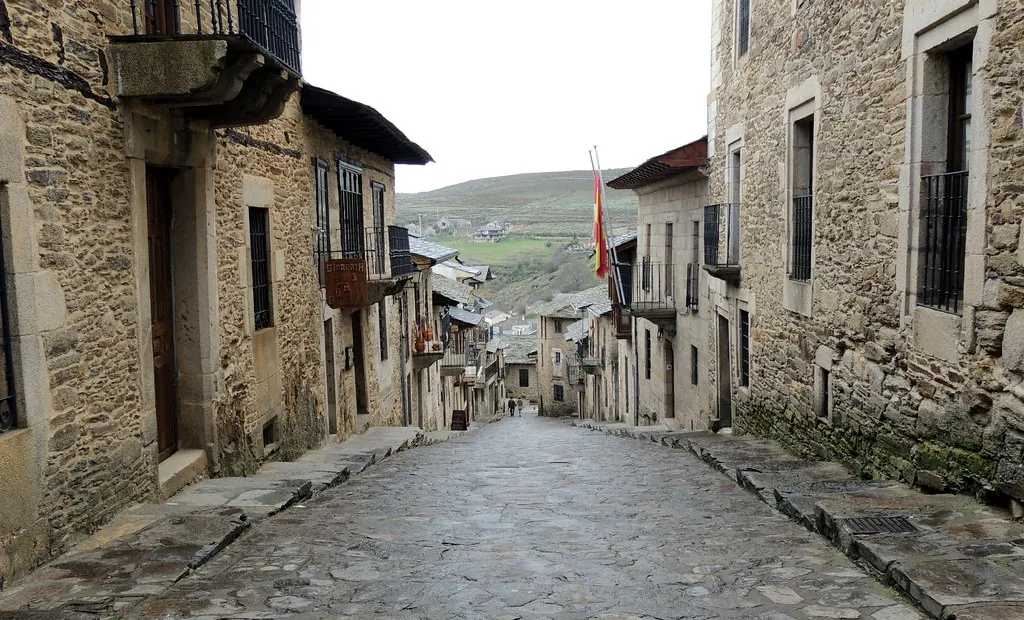
Rough stone houses, most shuttered until the weekend, cluster around a church whose bell tolls the hours five minutes late. A single paved lane passes through, narrow enough that you fold in the mirrors on a Transit. Above the roofs the Sierra de la Culebra keeps watch, its ridge marking the border with Portugal only ten kilometres away. Phone reception drifts across the frontier too, so British SIMs can wake up to a welcome text in Portuguese and a roaming bill if they are not careful.

The Village That Forgot to Sell Anything

Pedralba has no shop, no bakery, no petrol pump. The last place to buy milk is 25 kilometres back in Puebla de Sanabria, so visitors arrive with boots, food and a full tank or they do not arrive at all. What the village does offer is altitude: 993 metres according to the weather-worn panel beside the church. Nights stay cool even in July, and by October the wind carries enough bite to send campers back inside before ten. In winter the approach road is gritted but still collects snow from December onward; chains are sensible after dusk.

Motor-caravanners have adopted the small plateau above the houses because it is free, level and utterly dark after sunset. On a clear night the Milky Way shows in such detail that Orion looks over-exposed. British stargazers leave tripods set up for hours, confident that nothing noisier than a fox will disturb the shot. The only light comes from the church porch, a single bulb that flickers when the supply wavers.

Locals—barely two hundred on the roll—treat passing hikers with calm curiosity. Stop to read the stone fountain and someone will pause, explain that the water is safe, then add that the tractor is parked across the spring line every spring to clear the silt. Conversation drifts toward rainfall, wolf tracks, the price of diesel; nobody mentions property or pensions. After five minutes they remember an errand and leave you to the ford and the dragonflies.

Walking Without Waymarks

Maps show a spider web of footpaths radiating from the church, but only the route to Robleda is signed for tourists. The rest are farm tracks used to move sheep between oak groves. A morning loop eastward drops into the Rio Pedralba, climbs through sweet-chestnut coppice and emerges after ninety minutes on the road to Lubián. The gradient is gentle, yet the path is so narrow that brambles snatch at rucksack straps and the only sounds are woodpigeons and your own breathing. Add a map, water and a windproof; phone signal disappears within five minutes of leaving the tarmac.

Longer trails link to the GR-84 long-distance path along the Portuguese frontier, but they demand a car drop or an overnight bivvy. Day-trippers usually settle for the circuit that circles the meadows above the village, passing an oak whose trunk has split into three living columns. Spring brings cowslips and the first bee-eaters; October turns the bracken copper and fills the lanes with the smell of fermenting chestnuts. Mid-summer is less forgiving: the sun ricochets off pale limestone, shade is scarce and you will meet no one between eight and five.

Wildlife follows the same timetable. Dawn and dusk offer the best chance of roe deer on the meadow edge; wild boar dig overnight scrapes beside the stream. The Sierra de la Culebra to the south-west holds one of Iberia’s densest wolf populations, but they stay on the higher ridge and a glimpse is luck rather than planning. More reliable are the griffon vultures that tilt overhead most afternoons, riding thermals that rise from the Duero depression fifty kilometres away.

What to Eat and Where to Fail to Find It

There is no restaurant, no Saturday market, no mobile churro van. The village social life happens behind wooden doors: families roast kid in bread ovens carved into the gable walls, and neighbours still thresh chestnuts in the communal era. Visitors with good Spanish and better manners may be invited in after the second greeting; without the language, plan to self-cater. The nearest meals are down the mountain in Puebla de Sanabria: Casa Curro does excellent lechazo (milk-fed lamb) with proper chips, while Posada Real offers a three-course menú del día that includes trout grilled with ham for the cautious British palate. Both close on random Tuesdays, so ring ahead.

Buy supplies before you climb. Mercadona in Puebla opens 09:00–21:30, stocks Cathedral City cheddar in the international fridge, and sells cheap gas cylinders that screw straight onto a Campingaz stove. Bread from the same town stays fresh for two days if kept in the shade; after that it becomes adequate toast. Remember to fill the water canisters—Pedralba’s tap will only release 100 litres to anyone who has downloaded the Recasem app, created a Spanish tax profile and persuaded the transmitter on the pump to talk to a British card. Most travellers give up and ration what they brought.

When to Go and When to Turn Back

May and late September deliver 20 °C days, cool nights and a low chance of snow blocking the mountain road. June is hotter but the meadows stay green; July and August feel like an oven on the plateau and every track raises white dust. October colour repays the drive, yet daylight collapses by seven and the wind can cut through fleece. From December to March the village is half-empty; weekends see owners arrive to check roofs for storm damage, but mid-week you may share the entire place with one shepherd and two dogs. Snow chains are obligatory kit, and the single-track approach can ice over before sunrise.

Rain is the real hazard. Sudden Atlantic fronts sweep in from the west, turn the clay lanes to grease and swell the nameless stream until it washes over the ford. A hire car on summer tyres will skate; a motorhome will discover that the level gravel pitch becomes a shallow lake within minutes. Locals simply wait it out—nothing urgent requires them to descend—and visitors should adopt the same philosophy. Bring a paperback, zip the tent and watch the clouds tear themselves apart on the Portuguese ridge.

Leave early if you must be somewhere the same evening. The road down to the A-52 is only 35 kilometres, but logging lorries, wandering cattle and sharp bends hold average speeds to 40 km/h. Factor in a photo stop at the stone wolf silhouette above Rosinos; everyone pulls over for the first glimpse of the Sanabria valley glinting slate-blue in the distance. From there the motorway slides east to Valladolid in ninety minutes, west to Porto in two hours, and the high plain of Pedralba is already memory: a scatter of roofs where Europe tilts toward the Atlantic and even the water demands correct paperwork.

Key Facts

Region
Castilla y León
District
Sanabria
INE Code
49145
Coast
No
Mountain
Yes
Season
summer

Livability & Services

Key data for living or remote work

2024
Connectivity5G available
TransportTrain station
Housing~6€/m² rent · Affordable
CoastBeach nearby
January Climate3.3°C avg
Sources: INE, CNMC, Ministry of Health, AEMET

Planning Your Visit?

Discover more villages in the Sanabria.

View full region →

More villages in Sanabria

Traveler Reviews