Full Article
about Puebla de Sanabria
One of Spain’s prettiest villages, set in the mountains; it boasts a well-preserved medieval castle and lies near the famous glacial lake of Sanabria.
Hide article Read full article
A small town that draws you in
Puebla de Sanabria has a habit of stretching a quick visit into something longer. It often begins with the idea of a short walk through the old quarter, then turns into an hour or more of wandering without much sense of time passing. This town sits in the north-west of Zamora, close to Galicia and Portugal, and its appeal is easy to grasp: a well-preserved medieval centre paired with the nearby Lago de Sanabria.
Just over a thousand people live here, at nearly 1,000 metres above sea level. Life does not feel staged or frozen. Daily routines continue as usual, which is part of the charm.
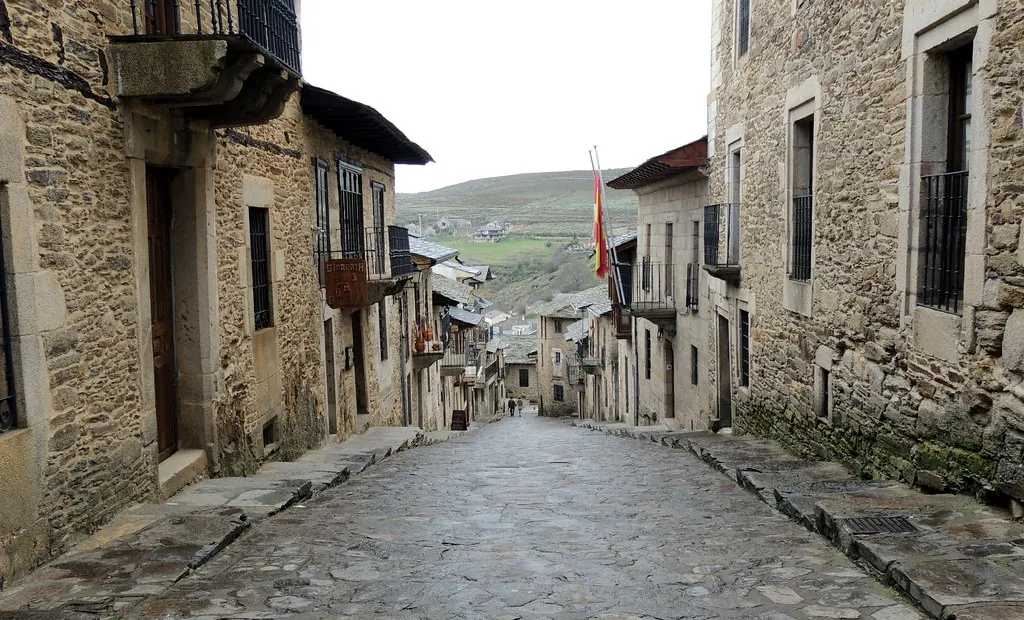
A walk through the historic centre quickly shows that this is not a place arranged for show. Stone houses with coats of arms are still lived in. Wooden balconies sometimes hold washing out to dry. Small squares serve as passages rather than set pieces. The overall impression is of a place that is cared for without turning into a medieval theme park.
Its setting adds to the appeal. Puebla stands right at the entrance to the Parque Natural del Lago de Sanabria, so many visitors use it as a base. A single day can combine time in the old town with time in nature, without long journeys in between.
Traces of history in plain sight
At the highest point stands the Castillo de los Condes de Benavente. Built in the 15th century, it was designed to control the routes crossing this part of Sanabria. The structure still carries the presence of a fortress overlooking the town. Today it hosts cultural uses and a library, yet a short walk around its walls is enough to picture its strategic importance over the centuries.
A few minutes away on foot is the Iglesia de Nuestra Señora del Azogue, one of the most recognisable Romanesque buildings in the province. It dates from the 12th century and reflects the restrained style typical of that period. Thick stone, clear lines and little decoration define the space. Inside, there is usually a quiet that naturally lowers voices.
The Plaza Mayor acts as the town’s central point. The Town Hall stands here, a Renaissance building with arcades that have witnessed generations of daily life, markets and long conversations. Spending a little time in the square makes it clear that Puebla is not simply a stop on the way to the lake. It functions at its own pace.
Then there is the simple pleasure of wandering. Streets such as the Rúa or the route that climbs towards the castle bring together several heraldic houses and corners that hint at the town’s importance during the Middle Ages. Parts of the old walls remain, along with gateways like the Arco de la Villa, which help to imagine how access to the town was once controlled.
Lago de Sanabria, just beyond the town
Around eight kilometres from Puebla lies the Lago de Sanabria, one of the best-known glacial lakes on the Iberian Peninsula. The landscape shifts noticeably compared to the old town. There is more forest, more water and a greater sense of open space.
In summer, inland beaches attract people who come to swim, although the water tends to stay cold even during hot weather. Outside the busiest season, the atmosphere changes. Walks along the shore feel quieter, and short routes through the natural park offer a slower way to explore. Some visitors simply stop and look out over the lake, which changes colour depending on the light.
Ways to explore the surroundings
The Parque Natural del Lago de Sanabria has a network of marked trails. Some circle the lake itself, while others climb into higher parts of the surrounding hills, where smaller glacial lagoons appear with fewer people around. These routes do not require advanced experience. Comfortable footwear is enough for many of the easier walks.
Water activities also have their place when conditions allow. Kayak and paddle surf are options that some visitors choose. Anyone thinking about swimming should keep one thing in mind: the water can be deceptively cold for most of the year.
Back in the town and the wider area, local food reflects nearby produce. Ternera sanabresa often features prominently, along with trout from the river Tera. When the season is right, mushrooms from the surrounding hills appear as well. The cooking is hearty and suits a day spent outdoors.
A simple way to enjoy it
Puebla de Sanabria is not large. Two or three hours are enough to explore the historic centre at an unhurried pace. Many people find it best to arrive in the morning or later in the afternoon, when there are fewer visitors heading up towards the castle and the town settles into its usual rhythm.
A typical visit might follow a simple pattern. Walk through the streets, make your way up to the highest point, look out over the valley from the walls, then return down towards the square. If there is still time and energy, the lake is close enough to extend the day without complication.
That combination of a compact historic centre and nearby nature shapes the experience here. Nothing feels forced or overly organised. The plan stays simple, and that is often what lingers most afterwards.


