Full Article
about Robleda-Cervantes
A Sanabrian municipality made up of several villages of great beauty; noted for its traditional architecture and mountain setting.
Hide article Read full article
Getting there and what to expect
Drive from Zamora on the N‑631, then onto local roads. You’ll know you’re close when the asphalt narrows and stone walls start appearing. Parking is straightforward; leave the car at the entrance of any village.
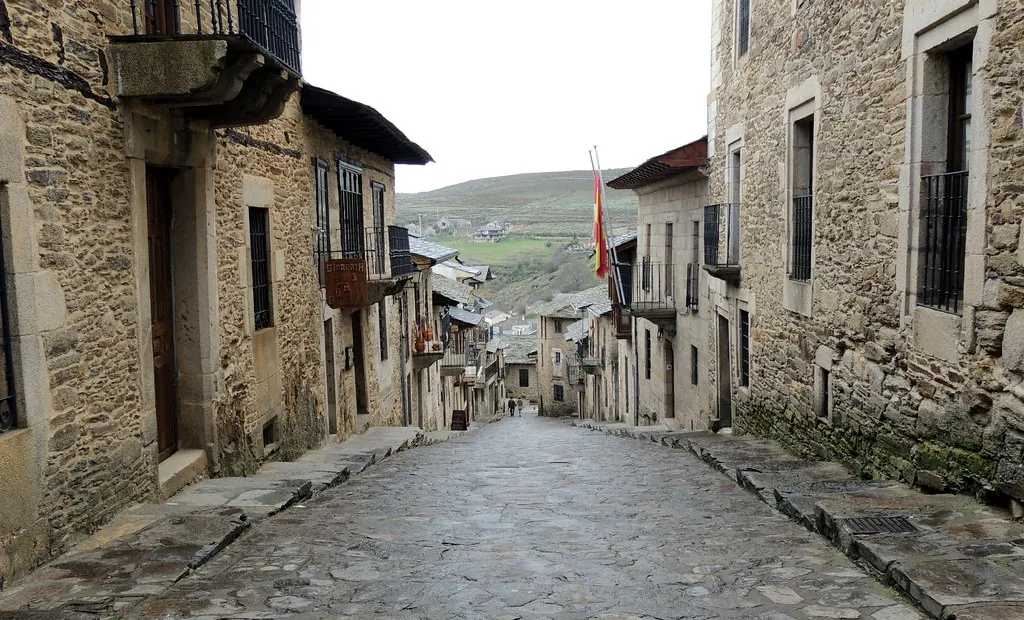
Robleda‑Cervantes is a municipality, not one town. It’s a group of small villages scattered across upper Sanabria. The architecture is uniform: thick stone, slate roofs, wooden balconies built for long winters. This isn’t a place designed for tourism.
You can walk through each settlement in under thirty minutes. If that sounds boring, you probably shouldn’t come.
The villages: a practical look
The churches are small and rural. Their condition depends entirely on whether someone in the village is around to care for them. Some are open, others are locked.
You’ll see restored houses next to ones that have been empty for years. It’s a common sight here—more people in summer, fewer the rest of the year.
Don’t look for shops or museums. Look at the vegetable gardens, the old animal pens, the quiet. The population is 375 spread across many hamlets. That silence is the main feature.
The Sierra de la Culebra
The real reason to visit lies outside the villages. Robleda‑Cervantes sits next to the Sierra de la Culebra.
Forest tracks and old paths crisscross these hills of oak, chestnut, and scrubland. They aren't signposted hiking trails—some are clear, others fade into undergrowth. A decent map or local knowledge helps.
Birds of prey are common if you stop and look up. Griffon vultures circle most days. This is also wolf country. Seeing one by chance is extremely rare. Most who try book a specialised guide, knowing sightings are never guaranteed.
Walking from one village to another
The best way to understand this landscape is on foot, using the old livestock paths that connect hamlets.
A typical route might take an hour over gentle hills through meadows and light woodland. In spring it's green; in autumn it turns gold and brown, with mushroom pickers appearing after rain. There's no grand finale viewpoint—just one village slowly giving way to another.
Food here
The food mirrors Sanabria: substantial and local. Beef from nearby valleys is on most menus when there's a menu. Expect stews, cured meats, river trout in season. In autumn wild mushrooms like níscalos are gathered if conditions allow. It's simple cooking for cold weather.
Festivals and timing your visit
Come in summer if you want to see any activity beyond farming. Patron saint festivals bring back families who moved away for work. These events involve music in a plaza and neighbours talking—nothing more elaborate. They're community gatherings without spectacle or tourist programming.
Final advice
Manage your expectations before arriving. Robleda‑Cervantes has no attractions in the traditional sense. You come for walks in silent hills or to see how depopulated rural Spain functions day-to-day. If that interests you, stay awhile. If you need entertainment or curated sights drive towards Puebla de Sanabria instead