Full Article
about Rosinos de la Requejada
Located in the Requejada sub-region with dense forests; known for the Iberian Wolf Centre in Robledo.
Hide article Read full article
A village shaped by land and altitude
Rosinos de la Requejada sits on the western side of the Sierra de Sanabria, at around one thousand metres above sea level. The setting is typical of this north-western corner of the province of Zamora: oak woods, open pasture and a landscape that feels closely tied to seasonal change.
The village developed around livestock farming and subsistence agriculture, activities that defined daily life for centuries. That origin is still visible today, both in how the settlement is laid out and in the way the surrounding land is used. Fields, grazing areas and paths all reflect a practical relationship with the terrain rather than any planned design.
Stone houses and a parish at the centre
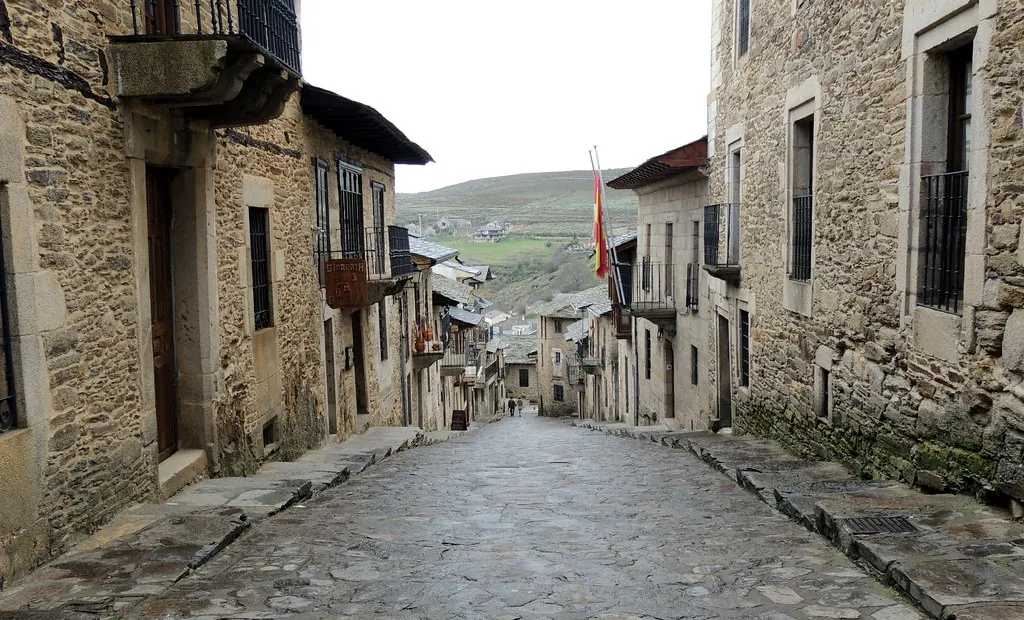
Early records describe Rosinos as a small rural settlement connected to the use of nearby woodland. Its layout follows that same logic. Streets adapt to the slope of the land, and many houses were built from locally available stone. Some still retain wooden balconies known as corredores, a common feature in traditional Sanabrian architecture, once used to dry produce or air stored grain.
At the centre stands the parish church of San Antolín. Its construction is usually dated to the 16th century, although it has undergone later alterations. The building is simple, much like other rural churches in the area, yet its bell tower continues to define the village skyline.
The importance of the church lies less in its size than in its role over time. For generations it functioned as a meeting point for the community, a place where religious life blended with everyday concerns and decisions affecting the village.
Walking through oak woods and pasture
The immediate surroundings of Rosinos de la Requejada invite unhurried walks. Traditional paths still link the village with nearby places such as Requejada and La Tablada. These routes pass through enclosed meadows bordered by stone walls and stretches of oak woodland that shift in character throughout the year.
Autumn brings a noticeable change. The oaks turn shades of ochre and the ground becomes layered with fallen leaves. In winter, snow often settles on the slate roofs, giving the village a more enclosed and subdued feel.
Not every route is signposted, yet the main paths are generally easy to follow with a bit of attention. Landmarks such as fountains, boundary walls and narrow passages between plots help guide the way. For longer walks, especially in wet or cold conditions, it is wise to ask a local resident about the route beforehand.
Wildlife and working countryside
Livestock farming remains very much present in the surrounding hills. Cows and sheep are a common sight in the communal meadows that spread out from the village, particularly in more open areas.
Birdlife includes several birds of prey typical of these mountain ranges. The common buzzard is regularly seen, and on occasion the golden eagle is also mentioned. As evening approaches and animals return to their shelters, activity in the fields becomes more noticeable. The scene reflects a landscape that is still actively worked, rather than one left behind.
Quiet roads and shifting weather
For those who prefer to explore on two wheels, Rosinos can be connected with nearby villages via secondary roads that carry very little traffic. The terrain is not flat. Short but steady climbs appear frequently, characteristic of mid-mountain landscapes.
Changes in altitude between valleys and nearby hills mean the weather can shift quickly. Even in summer, it is worth keeping this in mind before setting out, as conditions may vary over relatively short distances.
Food rooted in livestock traditions
Local cooking reflects the area’s long connection to livestock farming. Beef and cured meats are staples, often appearing in substantial dishes suited to colder weather.
In autumn, mushroom gathering becomes a common activity in the nearby woods. Varieties such as níscalos and boletus are collected and often end up in stews or scrambled dishes. Outside the busier periods of the year, places to eat within the village itself may be limited, so it helps to plan ahead.
Festivities and the rhythm of the year
The main celebrations take place around San Antolín, usually in August. At that time, many people who have moved away return, and the streets become livelier than usual. Religious events and gatherings among residents form the core of these festivities, maintaining the structure of traditional village celebrations.
For the rest of the year, Rosinos de la Requejada follows a quieter pace. Farming tasks, livestock care and the upkeep of fields continue to shape daily life, much as they have done for generations. The village moves in step with the land that surrounds it, keeping its routines closely tied to the seasons.