Full Article
about San Justo
Mountain municipality with a stunning baroque sanctuary; set in a landscape of great natural beauty.
Hide article Read full article
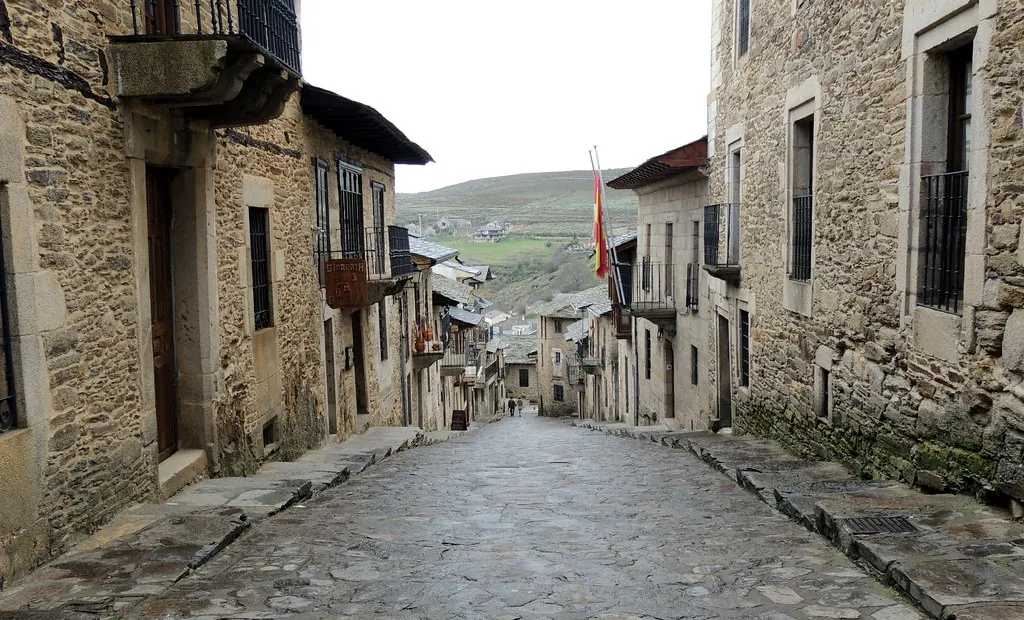
The scent of woodsmoke in San Justo has a particular weight on a winter morning, a dry, resinous smell that settles low in the street. It mixes with the colder, clearer air coming down from the hills. This is a village of granite and slate, where the wind doesn’t whistle so much as it flows, finding its way through gaps between stone barns and past stacks of neatly cut firewood.
Home to just over two hundred people, San Justo sits in a quiet fold of the Sanabria region. The stone here isn’t just a building material; it’s the ground you walk on, the wall you lean against, the constant grey and beige texture against the green of the distant oaks. Life has been shaped by livestock and small-scale farming, visible in the wide cart entrances now used for tractors, and in the stables built into the ground floors of houses.
Walking here slows you down. The streets are narrow, the granite cobbles worn smooth in the centre. You notice the practical details: a covered passageway offering a strip of shade, the deep grooves worn into a wooden gatepost by generations of ropes. Beyond the last house, the land opens into meadows divided by dry-stone walls, some still cut for hay, others slowly returning to scrub.
The church and its square
The parish church of San Justo and Pastor rises with a sober solidity from the same local stone. Its tower is a landmark against the skyline. Inside, the scale feels human—wooden beams overhead, thick walls that keep a cool silence. This isn’t a cathedral; it’s a village church, maintained by the people who live around its square. That square is the true centre, a space for conversation that falls quiet again by mid-afternoon.
Walking out from the village
Paths lead out from San Justo towards hamlets like Valdespino or La Tejera. These are old bridle paths, not designed for leisure but for moving animals and goods. They aren’t always well-signed, and in high summer some can be overgrown with bracken. It’s wise to ask locally about conditions before setting out. The walk rewards you with views north to the Sierra Segundera, its peaks often holding snow well into spring. The colours here change decisively: the intense green of May gives way to straw-yellow and burnt umber by September.
You share these paths with working land. You might hear cattle bells from a meadow or see an old stone pen, its roof long gone. These aren’t curated sights; they’re just there, part of the fabric.
A calendar marked by work and weather
The rhythm here is still tied to seasons and weather. In colder months, you might see smoke from a chimney where someone is burning oak logs for heat. The local sanabresa beef appears in stews, and trout from the Tera river is a staple. Rye bread, centeño, has a dense, dark crumb suited to this climate.
August changes the tempo. Families return, filling houses that stand empty much of the year. The fiesta for San Justo brings a procession and shared meals in the square. Later, when frosts begin to bite, some households still observe the matanza, a private family event that provisions kitchens for winter.
Getting there and when to go
The drive from Zamora takes you into a landscape where villages grow farther apart and the mountains begin to assert themselves. Come during the week if you visit in summer; weekends in August see a noticeable influx of cars. For solitude and that clear, cold light, try late autumn or early spring. Wear sturdy shoes—the granite streets are uneven.
San Justo doesn’t offer monuments or curated experiences. It offers texture: the sound of leaves scraping across stone, the feel of rough-hewn granite at a corner, the specific quiet of a place where life has been carved from the same materials for centuries. You understand it by standing still in its square and listening to what isn’t there.