Full Article
about Trefacio
Sanabrian village on the banks of the Trefacio River, known for its trout; traditional architecture and green mountain setting.
Hide article Read full article
First light in Trefacio
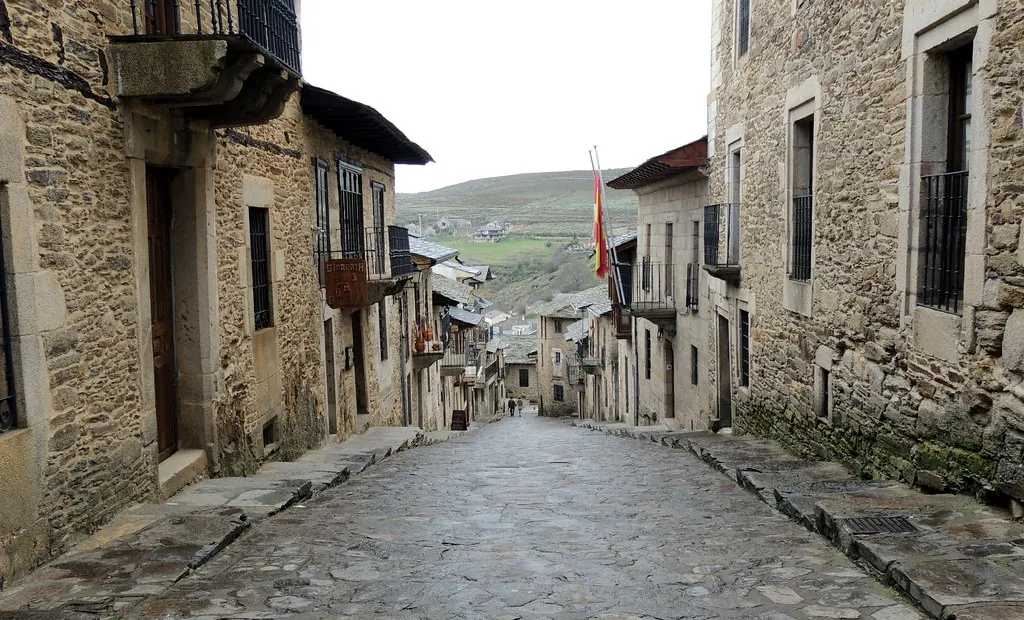
Early in the morning, when cool air still drifts down from the hills, Trefacio sounds like water and footsteps on stone. The nearby Sanabria River shapes the atmosphere, leaving a light dampness and that clean scent that lingers after the night. Crossing the bridge into the village, stone houses gather along narrow streets that rise and dip without much pattern. In the square stands the church of San Mamés, with its brick bell tower and a restrained façade that seems largely unchanged over time.
Trefacio has around 160 inhabitants and sits at roughly 970 metres above sea level, in the Sanabria region. Even in summer, the pace remains slow. The buildings reflect long-established ways of life in this part of Zamora: dark slate walls, weathered wooden balconies and sloping roofs designed for long winters. On the outskirts, there are enclosed meadows and small vegetable plots. It is common to hear cowbells in the morning or see a tractor passing slowly along the main street.
On rainy days, the village smells of wet earth and firewood. When the sun comes out, the stone lightens slightly and small details emerge that might otherwise go unnoticed: old doorways, worn steps, pots on windowsills.
Paths into the hills
Several footpaths lead out from Trefacio into forests of oak and chestnut. Many of these routes are old, once used by shepherds and local residents moving between meadows, high pastures known as brañas, and nearby villages.
In autumn, the ground is covered with ochre leaves and the forest grows quieter, more muted. This is also when people head out to gather mushrooms, usually after a few days of rain. It is important to be well informed before picking anything, as similar-looking species grow in these woods and not all are safe.
Distances are not always long, but the terrain can be deceptive. Some sections are steep, and there are few water sources in summer, so it is worth carrying water and allowing plenty of time. In spring, the meadows fill with flowers and water runs through almost every small stream.
Towards evening, anyone walking quietly may notice signs of roe deer or wild boar along the edges of the paths. Animals tend to move as the light fades.
A rural rhythm that remains
Although much has changed, certain traditions linked to the countryside are still present in Trefacio. Some families continue to raise livestock or work small plots of land. In winter, when the cold sets in and darkness comes early, daily life often retreats indoors.
Stories about flocks that once passed through the area in search of better grazing still surface in conversations among older residents. The traditional pig slaughter, once a widespread rural practice used to prepare preserved meats for the year, is less common today, yet it remains part of the village’s shared memory and many home recipes.
Nearby places to explore
A few kilometres away lies San Ciprián de Sanabria, reached by a road that winds through dense woodland. The area preserves traces of the distant past. Among them is a castro, an ancient hilltop settlement, located above the village, along with a stone bridge over the river. These elements offer a sense of how long people have lived in this part of Sanabria.
In the surrounding countryside, there are also ruined mills, old paved paths and rocks marked with engravings whose age is still debated by those who study the area.
Food in this part of Sanabria
The cooking here is straightforward and filling, shaped by long working days and a cold climate. In many homes, cured meats are prepared alongside hearty legume stews and mushroom soups when the season arrives. It is also common to find local beef and cheeses made within the region.
There is little in the way of decoration at the table: hot dishes, bread and unhurried conversation.
When to come
Summer brings a little more activity, especially at weekends, when relatives and people with houses in the village return. Even then, Trefacio rarely feels busy.
For walking in the surrounding hills, September and October are often the most rewarding months. The heat eases, the forest colours deepen and the paths are quieter. Winter has its own appeal, though it requires preparation for serious cold and short days.
Trefacio is not a place of large monuments or constant activity. What it offers is something else: quiet streets, smoke rising from a chimney and the sense that time moves differently as evening settles over the slate rooftops.