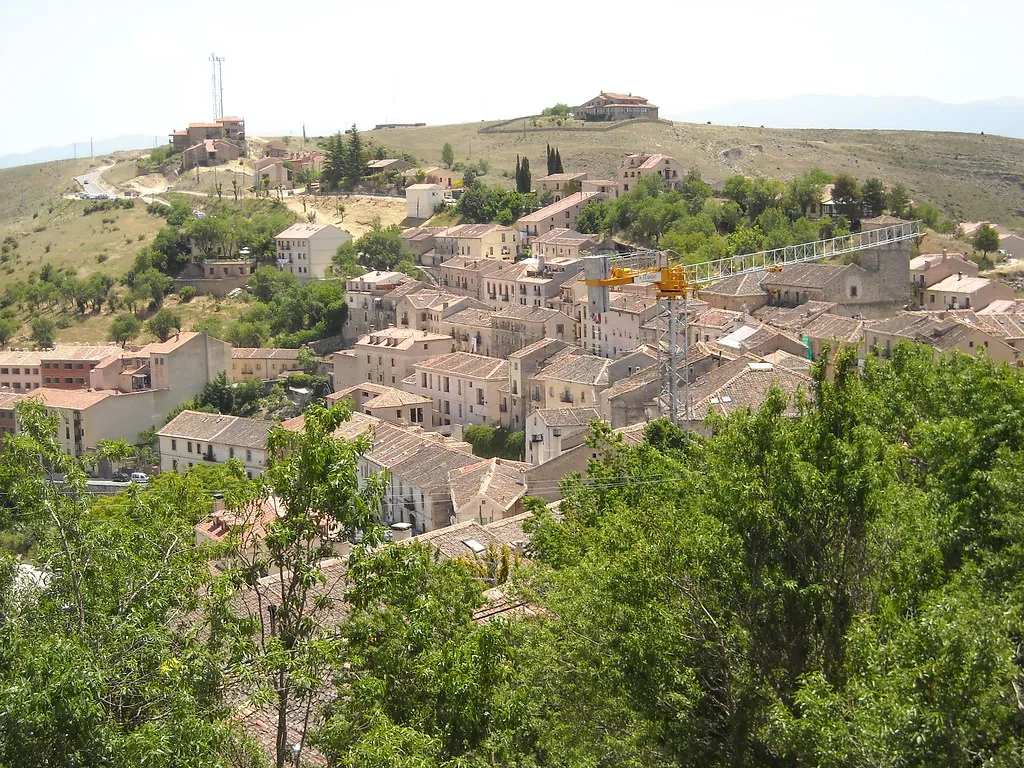
Vista aérea de Castrojimeno
Instituto Geográfico Nacional · CC-BY 4.0 scne.es
Castilla y León · Cradle of Kingdoms

Castrojimeno

The church bell of San Millán strikes noon, yet only thirty souls can hear it. At 1,076 metres above sea level, Castrojimeno's silence isn't absenc...

27 inhabitants · INE 2025
1076m Altitude

Why Visit

Mountain Church of the Asunción Geological trails

Best Time to Visit

summer

San Esteban Festival (August) agosto

Things to See & Do
in Castrojimeno

Heritage

  • Church of the Asunción
  • Fossil sites

Activities

  • Geological trails
  • wildlife watching

Festivals
& & Traditions

Fecha agosto

Fiestas de San Esteban (agosto)

Las fiestas locales son el momento perfecto para vivir la autenticidad de Castrojimeno.

Full Article
about Castrojimeno

Set on a high spot with fossil-reef remains; interesting geology and quiet.

Ocultar artículo Leer artículo completo

The church bell of San Millán strikes noon, yet only thirty souls can hear it. At 1,076 metres above sea level, Castrojimeno's silence isn't absence—it's the village's native tongue, spoken by stone walls, threshing floors and the constant north wind that polishes the limestone until it gleams like old pewter.

This is Spain's high plateau stripped to essentials: cereal fields the colour of dry sherry stretch to every horizon, interrupted only by holm oaks twisted into shapes that would make a bonsai master weep. The houses huddle together not for company but survival, their back walls forming a defensive line against winter that can stretch from October to May. Adobe bricks the colour of local earth merge with quarried stone; roofs pitch steeply enough to shed snow though that particular drama arrives only every few years.

What Passes for a High Street

A visitor arriving after the three-hour drive from Madrid finds no plaza mayor, no café terrace, indeed nowhere to buy even a packet of crisps. The village's single paved lane barely justifies two-way traffic; locals reverse into gateways when cars approach. Houses number perhaps sixty, many shuttered since their owners joined the steady exodus to Segovia or Valladolid. Those remaining include three farmers, a retired railwayman who breeds hunting dogs, and Doña Felisa who, at eighty-three, still climbs the hill daily to tend her vegetable plot.

Architecture buffs will note the church's Romanesque origins beneath eighteenth-century refurbishments, but the real interest lies in vernacular details: iron shoeing posts embedded in doorways, wine cellars hacked from bedrock, grain stores balanced on mushroom-shaped pillars to thwart rodents. These aren't museum pieces—they're tools that happen to be old, still used or at least maintained by families who know replacement costs money they haven't got.

The absence of commercial life shocks city dwellers expecting even basic services. No shop, no bar, no petrol station for twenty-five kilometres. Mobile phone signal drops in and out like a drunkard's conversation. What Castrojimeno offers instead is spatial luxury: stand anywhere and see nothing made by human hands except the village itself, a brown interruption in gold landscape that measures time by wheat growth and sheep cycles.

Walking Into the Void

Paths radiate from the village like cracks in porcelain, following drove roads older than any map. The GR-88 long-distance trail passes within two kilometres, but most routes are simply where villagers have always walked: to fields, to wells, to the cemetery that occupies the highest point because the dead, too, deserve the view. Spring brings carpets of wild tulips and the sharp yellow of Spanish broom; autumn turns everything the colour of a fox's coat. Summer walking requires strategy—start early, carry more water than seems reasonable, accept that shade arrives only when clouds permit.

A four-hour circuit south-east reaches the abandoned hamlet of Rehumanos, where a intact bread oven sits in ruins that once housed forty families. Eagles and kettleshaped vultures ride thermals overhead; wild boar root among the holm oaks. The landscape appears empty yet produces constant movement—wheat swaying like sea swell, hares racing across stubble, the mechanical march of centre-pivot irrigators on distant plains.

Night transforms everything. At this altitude, 2,000 stars becomes a conservative estimate. The Milky Way stretches overhead like spilled sugar while satellites cruise silently through the melee. No streetlights mean darkness that city dwellers rarely encounter; torch batteries drain quickly in cold that can drop to minus fifteen even in April. Bring layers, bring red filters to preserve night vision, bring patience for cloud banks that roll in unexpectedly from the Sierra de Guadarrama.

The Food That Finds You

Castrojimeno itself offers no restaurants, but accommodation can be arranged in village houses through Sepúlveda's tourist office (€60-80 per night for two, minimum two nights). This includes kitchen access—essential since the nearest eating options involve twenty minutes' drive. Local specialities arrive by acquaintance rather than menu: Segovia's roast suckling pig, lamb chops from flocks that graze these very hills, beans from Tierra de Campos that taste fundamentally different when simmered in local hard water.

The weekend asador in neighbouring Valdevacas serves lechazo to perfection, crispy skin giving way to meat so tender it surrenders at fork contact. Their wine list runs to Rioja and Ribera del Duero only, but prices hover around €18-22 for main courses that would cost £35 in London. Book ahead—word has spread among Madrilenians seeking proper Castilian cooking without Segovia's tourist mark-ups.

Self-catering rewards the resourceful. The Tuesday market in Sepúlveda sells locally made chorizo that actually tastes of paprika rather than orange food colouring. Cheese from goat herds grazing mountain pastures costs €8 per kilo—half supermarket prices and twice the flavour. Even simple ingredients gain character: tomatoes taste like tomatoes used to, bread keeps for days rather than weeks, eggs have yolks the colour of a Spanish flag.

When Silence Isn't Golden

Winter access demands respect. Snow falls horizontally here, driven by winds that have crossed five hundred kilometres of plateau unimpeded. The A-601 from Madrid closes several times each season; chains become essential rather than advisory. Heating in village houses runs to wood-burning stoves only—electricity bills at this altitude would bankrupt a Saudi prince. November through March suits only the hardy, though February brings carnival celebrations where the entire province seems to squeeze into Sepúlveda's medieval streets.

Spring arrives late and sudden. One week the landscape resembles the Somme; seven days later green shoots push through mud while skylarks perform their vertical opera. May delivers the area's secret weapon: wild asparagus grows along every path, free for the picking if you can spot the spears before they flower. Local women sell carrier bags full for €2—enough for three meals if you're prepared to peel the lower stems.

Summer brings the opposite problem. Temperatures touch forty degrees by eleven o'clock; the wind that cooled winter visitors now feels like a hairdryer on maximum setting. Afternoons become siesta by necessity—only mad dogs and English hikers venture out. But summer evenings stretch until ten-thirty, the air cooling rapidly once the sun drops behind the Sierra de la Paramera. Night walking becomes possible, even pleasant, under skies so clear that satellites become moving stars.

Castrojimeno offers no postcard moments, no Instagram frames that don't require explanation. What it provides is scale—the human variety measured against geological time, the realisation that thirty people maintaining life at over kilometre high represents a form of daily heroism. Come for the silence, stay for the sky, leave before the wind drives you mad. The village will still be here, getting on with centuries of the same, long after your footprints have blown away across the cereal sea.

Key Facts

Region
Castilla y León
District
Sepúlveda
INE Code
40048
Coast
No
Mountain
Yes
Season
summer

Livability & Services

Key data for living or remote work

2024
Housing~5€/m² rent · Affordable
CoastBeach nearby
Sources: INE, CNMC, Ministry of Health, AEMET

Planning Your Visit?

Discover more villages in the Sepúlveda.

View full region →

More villages in Sepúlveda

Traveler Reviews