Full Article
about Castroserna de Abajo
In the San Juan river valley; known for its green surroundings and remains of old fortifications
Hide article Read full article
Where the Landscape Begins to Change
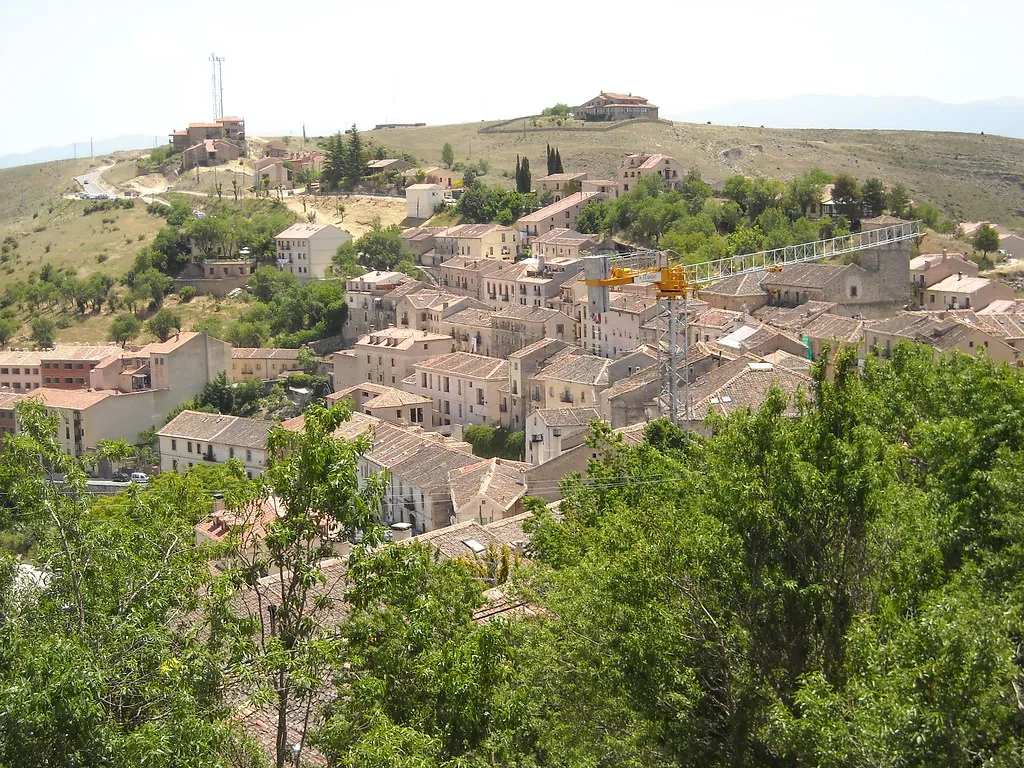
Tourism in Castroserna de Abajo starts with its setting. The village lies in the Sepúlveda area, at the north-eastern edge of the province of Segovia, in a transition zone between the mountains and the plateau. From the foothills of the Sierra de Guadarrama, the land gradually descends into open valleys where small livestock villages like this one took shape. Today, the population barely exceeds thirty residents.
The village preserves much of the traditional architecture of the region. Houses are built with limestone walls, topped with curved terracotta tiles, and often feature wide gates that hint at their agricultural past. Many homes still incorporate pens or former stables as part of the structure. The altitude is around 1,000 metres, which brings cold winters and milder summers than those found on the open plateau.
Access from the city of Segovia typically follows the N‑110 towards Soria, with a turn onto smaller roads that cross cereal fields along with patches of holm oak and juniper. The journey is steady and without dramatic changes, very much in keeping with this part of the province.
Streets, Stone and Parish History
The layout of Castroserna de Abajo reflects what is common in many mountain villages. Streets are short and often sloped, shaped by the terrain rather than any formal plan. Houses cluster around the parish church of San Pedro Apóstol, which occupies the most prominent spot in the village.
The church dates back to medieval times, though it has been altered over the centuries. Its simple stone bell gable is typical of this area of Segovia. Inside, modest Baroque altarpieces remain. They are less notable for their size or decoration and more for what they reveal about the parish life of the past.
Around the houses, traditional rural structures are still easy to recognise. Barns, animal enclosures and other livestock-related spaces are part of the village fabric. These are not decorative features but reminders of how people lived. For centuries, the local economy relied on a combination of cereal farming and livestock rearing. That way of life shaped both the buildings and the organisation of space.
Open Views and Wildlife
The immediate surroundings alternate between meadows, small cultivated plots and clusters of holm oak and juniper. It is an open landscape where views stretch far on clear days. From some nearby high points, the line of the mountains can be seen to the south.
In this part of the region, especially towards Sepúlveda, gorges and rocky outcrops provide habitat for griffon vultures and other birds of prey. These birds are often visible gliding on air currents. Storks are also a frequent sight, perched on rooftops and posts in nearby villages.
Several traditional paths connect Castroserna de Abajo with neighbouring settlements. These routes once served practical purposes, such as moving livestock or reaching farmland. Today, they offer straightforward options for walking or cycling through the area.
Quiet Walks and Small Details
Visitors usually come here in search of calm surroundings and wide landscapes. Paths leading out of the village allow for short walks nearby or longer routes linking nearby villages.
The rural architecture rewards close attention. Stone lintels, carefully shaped, can be seen above doorways. Dry stone walls trace old boundaries, and weathered wooden doors show years of use. In the evening, the light often falls across the slopes at an angle, bringing out the texture of these elements.
Autumn brings another activity common across north-eastern Segovia: mushroom foraging. Pinewoods and oak groves nearby attract many people during the season. It is important to check local regulations and to be certain about which species are being collected.
Festive Moments and Everyday Life
The feast of San Pedro, patron of the parish, is usually celebrated towards the end of June. Like in many small villages, it is a time when relatives return from elsewhere and the village becomes livelier.
August also tends to bring activity. Communal meals, simple games and modest open-air dances often take place during the summer holiday period. These celebrations are closely tied to the local community and to those who maintain family connections to the village.
Practical Notes for a Visit
The distance from Segovia is roughly seventy kilometres by road, following the N‑110 and then smaller regional routes. Travelling by car is the most practical option, as public transport in this area is very limited.
The village itself can be explored quickly. For accommodation or a wider range of services, visitors usually head to larger towns in the area such as Sepúlveda or Prádena. Castroserna de Abajo remains, above all, a quiet place that offers a clear sense of how these small settlements in the Segovian mountains are shaped by their landscape and history.