Full Article
about Encinas
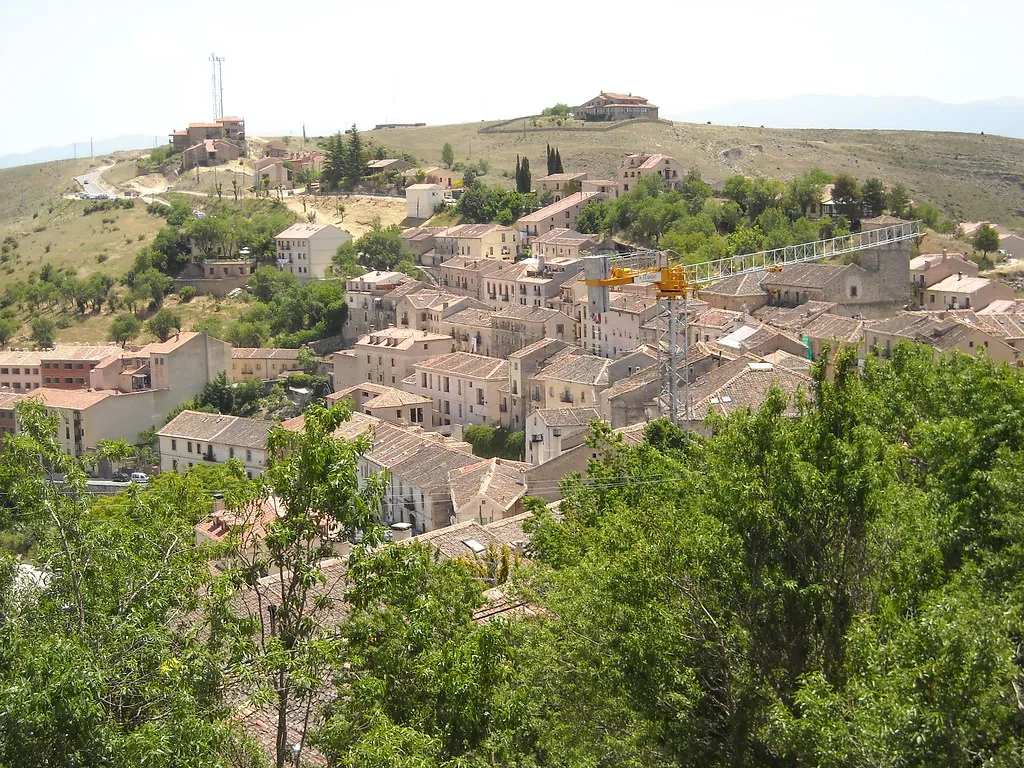
Quiet little village known for its traditional architecture and holm-oak groves.
Hide article Read full article
A village where the noise fades out
Encinas is a tiny village in the province of Segovia, with barely forty residents, and the first impression comes almost instantly. Arriving here feels like turning down the volume of the world. Step out of the car and the quiet stands out. It is not the kind of silence found in a city at three in the morning, but something broader and more open, shaped by wind moving through holm oaks and the occasional bird crossing the sky.
The village sits in the comarca of Sepúlveda, on a high plateau where the landscape barely shifts with the seasons. Holm oaks dot the terrain, farmland stretches out in every direction, and tracks drift off towards the horizon. Encinas is small even by local standards. Within ten minutes, the layout becomes clear and every street feels familiar.
The buildings follow the pattern seen across this part of Segovia. Limestone walls, touches of adobe, and thick construction designed to withstand long winters define the look of the village. Some houses still keep old wooden doors and small windows, more suited to keeping out the cold than letting in light.
Encinas is not set up for tourism. In many ways, that is precisely its appeal.
The church and the cluster of houses
The parish church of San Pedro defines the village skyline. The current structure is usually dated to the late sixteenth century, although there are indications that a smaller Romanesque church once stood on the same site. It is not especially large or richly decorated, yet in places like this the church has long been the centre around which daily life has revolved.
The houses gather around it, forming a compact settlement with a main street where most of the buildings stand. A short walk is enough to take in the essentials. Old animal enclosures appear here and there, along with agricultural buildings and some of the oldest homes, many still showing that familiar mix of stone and wood typical of the area.
Encinas suits those who appreciate very quiet places, the kind with no shop and little day-to-day movement. Life here does not revolve around visitors, and that shapes the atmosphere more than anything else.
The open landscape around Encinas
The interest of Encinas extends beyond the village itself. The surrounding parameras, high plains typical of inland Spain, give the area its character. The scenery is open and expansive, with scattered holm oaks, cereal fields and a network of farm tracks crossing the land.
The terrain makes walking straightforward. There are no steep slopes to contend with, so it is easy to follow a dirt path and let the landscape unfold gradually. On clear days, the view stretches a long way. To the north, the outlines of the Sierra de Ayllón can be made out in the distance.
The sky often becomes part of the experience. Griffon vultures are a common sight, circling on rising air currents. With a bit of luck, smaller birds of prey can also be seen moving among the holm oak groves. Nothing feels hurried here, and the pace of observation naturally slows.
Eating and getting around
Encinas has no bars or restaurants, so anyone looking for a meal will need to head to nearby villages. In this part of Segovia, the food tends to be hearty and traditional. Expect dishes built around legumes, substantial stews, and, when the season allows, recipes featuring locally gathered mushrooms.
Because of this, Encinas works best as a brief stop within a wider route through the comarca of Sepúlveda. It is the kind of place where you arrive, take a walk, spend some time with the landscape, and then continue on to other villages where there is more activity.
The approach here is simple: come without rushing and without a checklist of sights. Encinas is better understood as a pause than as a destination filled with attractions.
Summer and the return of neighbours
Like many small villages, Encinas changes slightly in August. This is when people who live elsewhere return, and the village takes on a different rhythm. Gatherings are organised around the patron saint, and the square becomes a meeting point.
These are not large-scale festivities. There are no big stages or elaborate programmes. Instead, the atmosphere centres on long outdoor meals, conversations that stretch late into the evening, and the easy familiarity of a place where everyone knows each other.
Encinas offers something increasingly rare: a setting where time moves slowly and there is no real urgency to change that. Arriving with that idea in mind makes it much easier to understand what the village is about.