Full Article
about Urueñas
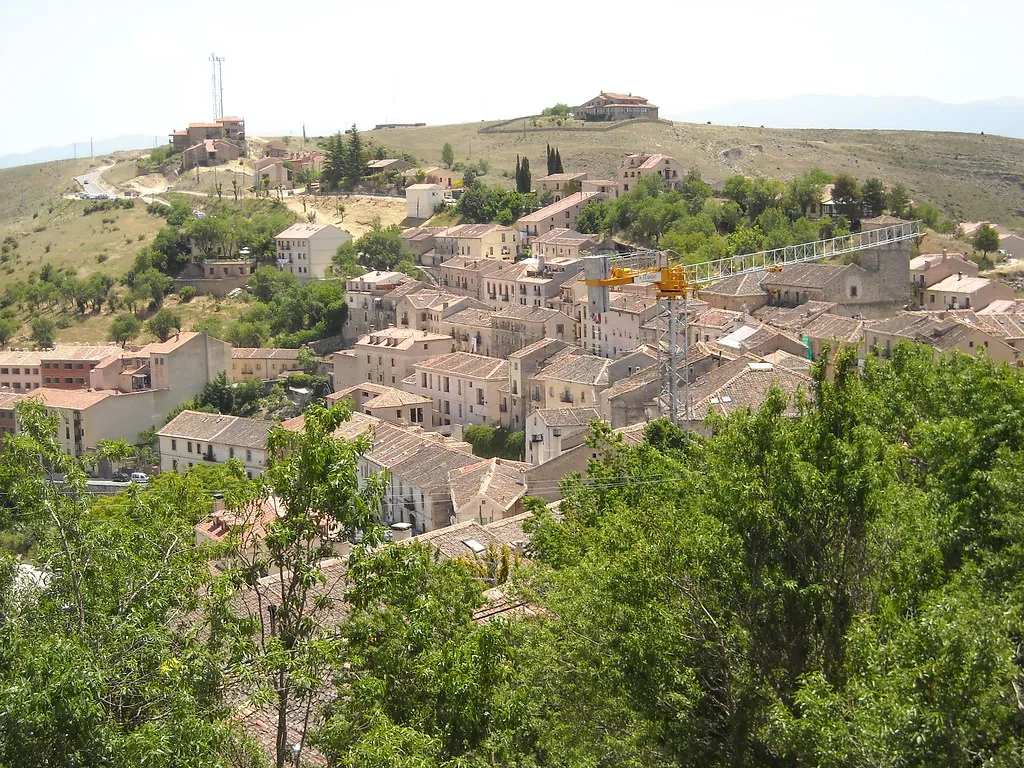
Quiet village with a tradition of dulzaineros; surrounded by scrubland.
Ocultar artículo Leer artículo completo
The medieval gate looms three storeys high, its weathered stone arch wide enough for ox-carts but not for Citroëns. This is where the asphalt ends. Beyond the portcullis slots, Urueña's cobbles echo only with footsteps and the occasional bleat of goats grazing the ramparts. Five thousand residents once sheltered within these walls; today, fewer than 200 remain, outnumbered considerably by volumes of poetry and philosophy.
A Fortress That Swapped Swords for Sentences
Climb the steep kilometre from the plain—your calves will announce the 880-metre altitude—and the reason for the village's survival becomes clear. The 12th-century walls form a complete oval, interrupted by just four gates, following the contours of a strategic hillock. From the battlements, the Castilian plateau spreads southwards like a tawny sea, broken only by the distant slate roofs of Sepúlveda. On clear winter days, when the air thins to crystal, you can spot the pylon lines 30 kilometres away.
Inside, the transformation is immediate. Where armourers once hammered out broadswords, a bookshop now displays first-edition Lorca beside local wine guides. The old grain storehouses contain a museum of string instruments; another cellar smells of musty parchment and medieval pigments. Since 2007, Urueña has flown under the banner of the International Organisation of Book Towns, joining Hay-on-Wye and Bredevoort in an experiment to reverse rural decline through literary tourism.
How to Spend Three Hours Without a Set Menu
Start at the Romanesque chapel of La Anunciada, just outside the walls. Its cracked apse frescoes give a taste of what the village churches looked like before 19th-century whitewash. Then enter via the Puerta del Sol, noting the grooves where the portcullis once dropped. The main street, barely two metres wide, climbs past half-timbered houses whose upper floors jut overhead like gossiping neighbours.
Halfway up, the Joaquín Díaz Ethnographic Centre occupies a 15th-century mansion. Entrance is free, though a donation box suggests three euros. Inside, glass cases hold bagpipes carved from ox-horns, portable communion kits for shepherds, and a frightening array of branding irons. Diaz himself, a folk-music collector, recorded over 10,000 Castilian ballads; headphones let you listen while you browse.
The summit delivers two rewards. First, the ruined castle keep: climb the spiral for 360-degree views across four provinces. Second, the bookshop-cum-wine-bar in the old priest's house. Here you can sip a glass of local tempranillo while thumbing through Spanish translations of Julian Barnes. The owner, Jesús, will explain—enthusiastically—why books and wine share terroir.
Seasonal Arithmetic: When to Come and When to Stay Away
May and October offer the kindest equations: daytime temperatures hover around 18 °C, the paths through the broom-scented hills are firm underfoot, and only a dozen cars occupy the gravel car park. In July and August, the mercury can touch 34 °C by noon; the stone walls radiate heat until dusk, and the smell of hot pine drifts up from the plain. Winter brings its own calculus. Night frosts are common from November to March, and the access road—never tackled by gritters—can glaze over. If snow falls, villagers simply walk down for supplies and wait it out.
Sunday complicates the timetable further. The bakery shuts, the ethnographic museum locks its doors, and the only certain lunch is at Mesón de la Villa, where roast suckling pig costs €22 a portion. Arrive mid-week and you stand a better chance of open tills; Tuesday seems to be the village's preferred day for commerce.
Getting There Without a Don Quixote Complex
From Madrid, take the A-1 north for 130 km, exit at junction 115 for N-110, then follow signs to Peñafiel and onwards to U rueña. Total drive: two hours if you resist the temptation to stop at Segovia for aqueduct photos. Valladolid airport, 70 km away, receives the occasional summer charter but no scheduled UK flights; most British visitors fly into Madrid-Barajas and hire a car.
Public transport demands patience. A weekday bus leaves Valladolid at 07:15, reaches U rueña at 09:00, and returns at 14:00. That's your lot. Miss it and you'll be thumbing lifts from sunflower-field labourers.
The Honest Ledger
What the brochures omit: the village can feel deserted. Many houses are weekend retreats; on a grey February Thursday you might share the streets only with a ginger cat and the loud tick of the church clock. Mobile reception drops to one bar inside the walls. And while the bookshop count approaches fifteen, several open only when their proprietor fancies a stroll.
Still, for readers who prefer marginalia to margins, U rueña offers something Britain lost centuries ago: a walled town whose defences now guard ideas rather than artillery. Just remember to park outside the gate—unless you fancy explaining to a stonemason why your Fiat is wedged under a 12th-century arch.