Full Article
about Valle de Tabladillo
Set in a valley with historic gypsum mines; distinctive landscape
Hide article Read full article
Getting There and First Impressions
Valle de Tabladillo sits in the province of Segovia, within Castilla León, and reaching it tends to involve a straightforward but slightly rural drive. The usual route leaves Segovia along the N‑110 towards Soria, followed by a turn onto smaller regional roads in the direction of Sepúlveda. A car is, for all practical purposes, essential. There is no regular public transport to rely on.
Arrival is low-key. The village is small and there are no clearly marked parking areas. Visitors generally leave the car at the entrance or in a wider stretch of road, then continue on foot. That short walk sets the tone straight away.
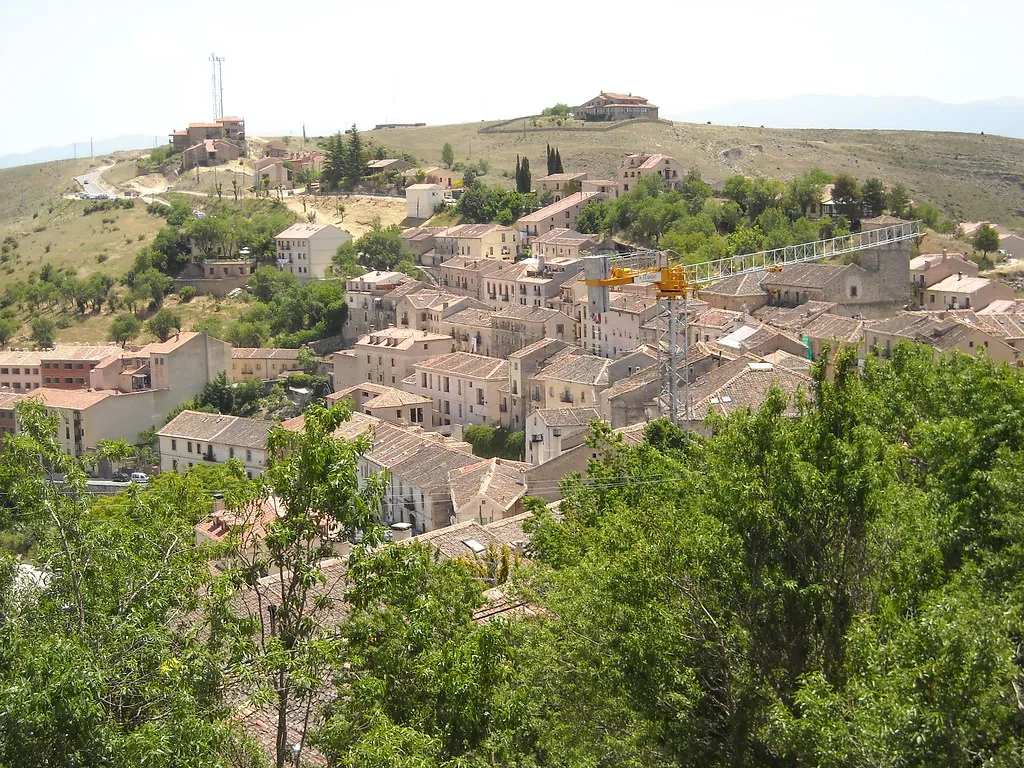
Valle de Tabladillo is a very small settlement. It has stone and adobe houses, narrow streets and little movement for most of the day. Many homes retain their traditional appearance, with thick walls, wooden gates and the occasional iron balcony. The place does not feel reworked for tourism. It simply carries on as it always has.
The Village at Its Centre
At the heart of the village stands the parish church of San Pedro. It is modest in size and presence, and it is usually closed outside moments of worship. Anyone curious to see inside may need to ask a local resident or check whether a service is taking place.
Beyond that, there is little in the way of formal sights. A slow walk through the streets reveals old doorways, worn stone walls and a calm, lived-in atmosphere. There is nothing monumental here, and that is part of the character. Valle de Tabladillo is not a place arranged around attractions. It is a place that continues to be inhabited, quietly and without display.
Many people pass through while exploring the nearby hoces del Duratón, a well-known natural area shaped by the Duratón river. The village itself can be seen quickly, especially for those who are on their way elsewhere or trying to avoid busier spots in the region.
Fields, Tracks and Wide Views
The surroundings open out as soon as you step beyond the last houses. Fields of cereal dominate the landscape, broken up by patches of holm oak and juniper. In cooler areas, there is also rebollo oak. The terrain is not dramatic but it has a broad, open quality that changes with the light.
From certain edges of the village, part of the Segovian mountain range comes into view on clear days. The scene gains depth towards the end of the day, particularly in autumn and winter when the light is lower and the colours soften.
Several agricultural tracks begin right from the village. These paths are suitable for walking or cycling without much difficulty. They are not signposted, so it is sensible to carry a map or GPS if planning to go further out. In essence, these are working tracks that cross farmland and small wooded patches, rather than formal hiking routes.
The sky often draws attention as much as the ground. Large birds are a common sight, and vultures can often be seen circling high when the weather is stable. Their presence is linked to the nearby gorges of the Duratón. For anyone interested in birdwatching, or simply in walking without the noise of traffic, the area delivers a quiet, open setting.
Everyday Life and Seasonal Gatherings
Life in Valle de Tabladillo moves at a very slow pace for most of the year. The calendar centres largely on religious observances connected to the parish. Outside those moments, daily activity remains minimal.
Summer brings a noticeable change. Festivals take place when family members and former residents return to the village. These are simple events rather than large-scale celebrations. Activities tend to revolve around the church, with shared meals and music in the evening. The atmosphere is closer to a neighbourhood gathering than a major festival.
At other times of year, there is little sense of organised activity. The village continues quietly, with few services and little movement.
Practical Notes for a Visit
A visit to Valle de Tabladillo requires a bit of independence. Arriving by car is the most realistic option, and there is no stable public transport to fall back on.
Anyone planning to walk in the surrounding countryside should bring water and wear suitable footwear for rural paths. The tracks are unpaved and include some gentle slopes, but they are generally manageable.
Food and dining options are not part of what the village offers. Travellers usually head to other nearby towns in the comarca for meals, as services here are very limited.
Time is the key factor. The village itself does not take long to explore. What makes the stop worthwhile lies beyond the streets: the open land, the quiet tracks and the wide sky. Coming without haste allows those elements to come into focus.