Full Article
about Valleruela de Sepúlveda
Small livestock village; it keeps the spirit of the mountain towns.
Hide article Read full article
Morning Light in the Sierra de Pradales
Early in the morning, when the air still carries a chill even in summer, Valleruela de Sepúlveda sits almost in silence beneath the clear sky of the Sierra de Pradales. At around 1,088 metres above sea level, the village wakes slowly. A door opens. Wheels crunch over gravel. Wind moves through the scrub at the edge of the track.
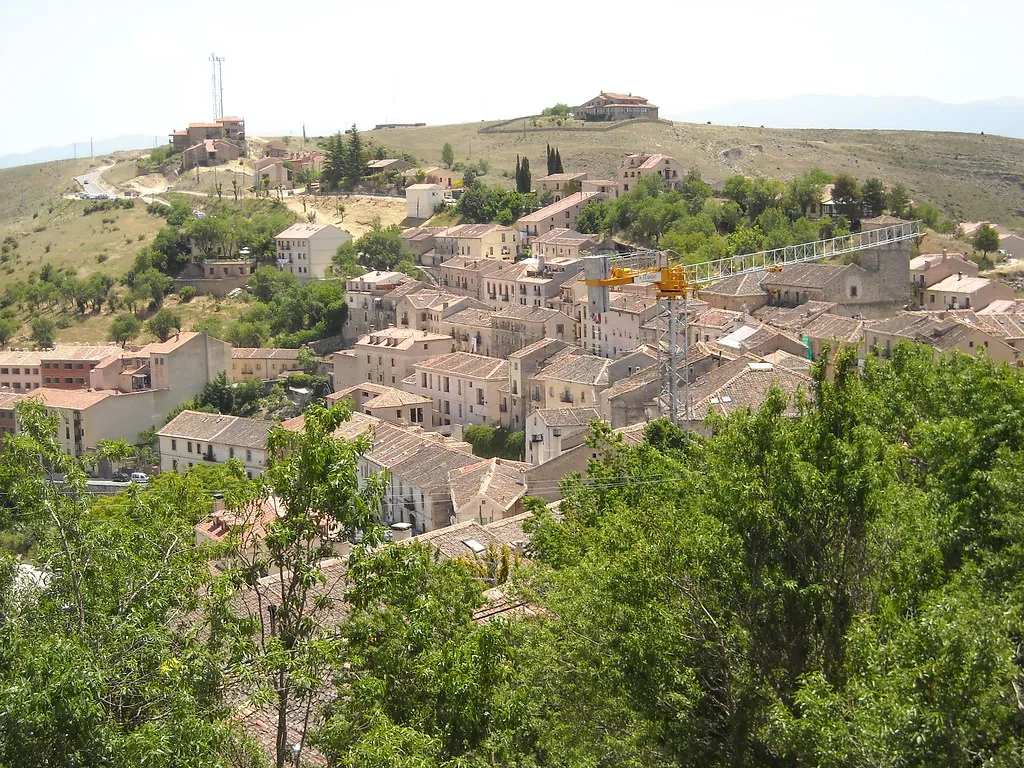
The houses, built from pale stone, form short and slightly irregular streets. There are no grand architectural gestures here, no buildings competing for attention. The feeling is different. This is a place that runs at its own pace, with houses designed to withstand long winters rather than to appear in photographs.
With barely fifty registered residents, Valleruela de Sepúlveda rests in a wide landscape of cereal fields. In spring everything turns a vivid green. By summer the colour shifts to a dry gold that crackles underfoot. Autumn brings ochre tones and a sharper wind. The village remains almost unchanged as the countryside transforms around it.
The Plaza and the Parish Church
The plaza is small and quiet, one of those spaces where a conversation can be heard clearly from the opposite corner. Here stands the parish church, a sober building with a simple bell tower that marks the centre of village life.
It is not always open. In many villages in this part of Castilla Leon, access depends on a neighbour or on happening to meet someone with a key. Even so, it is worth walking up to it. From the outside, the layout of the village becomes clear. The houses cluster around the church, as if over the years the settlement has slowly drawn in on itself.
There is no monumental scale, no ornate façade. Instead, the church and square reflect the same practical spirit as the rest of Valleruela de Sepúlveda. Everything feels proportionate to the size of the community.
Cereal Fields, Junipers and Wind
Beyond the last houses, the land opens out almost horizontally. Fields stretch towards the Sierra de Pradales, broken by patches of sabinas, juniper trees typical of this area, and by agricultural tracks that seem to fade into the horizon.
The sky occupies a vast portion of the view. Birds of prey can often be seen gliding calmly overhead. On quieter days, flocks move slowly across the pasture. When the wind blows, which is common on these high plains, the entire atmosphere shifts. The constant rush of air and the fast-moving clouds make the plateau feel even more expansive.
This is a landscape defined by exposure. There are few barriers to the elements, and that openness shapes the experience of being here. Light changes quickly. Sounds travel far. The sense of distance can be deceptive.
Walking Out from the Village
Valleruela de Sepúlveda works well as a starting point for walks in the surrounding countryside, though it is not a destination of neatly signposted trails. Many of the paths follow old drove roads once used for moving livestock, or agricultural tracks that link small neighbouring villages.
It is wise to carry a map or a GPS track if unfamiliar with the area. The terrain itself is straightforward for walking, largely flat and open, yet distances can be misleading. Under the summer sun the exposure is intense, with little shade once beyond the narrow village streets.
In winter, the challenge is different. The wind sweeping across these plains can be bitterly cold. Conditions shift quickly, and what feels manageable near the houses can become harsher a short distance out. Planning ahead is part of exploring this stretch of the province of Segovia.
Light and Space
For those interested in photography, the most rewarding moments tend to be at sunrise and late in the afternoon. The light arrives at a low angle, and the sabinas cast long shadows across the fields. From almost any path just a few metres beyond the village, the defining feature of this part of Segovia becomes clear: space.
The horizon feels distant. The fields form broad planes of colour that change with the seasons. Stone walls and façades catch the last light of day and turn briefly orange before the temperature drops.
In summer it makes sense to head out early. At midday the sun stands nearly vertical and there is scarcely any shade outside the streets. The intensity flattens colour and shortens shadows, reducing the subtle contrasts that appear at the edges of the day.
Food and Practicalities
Within Valleruela itself, options are very limited, which is typical for a settlement of this size. For a meal out or for a wider range of supplies, the most practical solution is to head to larger nearby towns.
Traditional cooking in this part of the comarca centres on roast lamb, legumes and products from the matanza, the annual pig slaughter that has long shaped rural cuisine in much of inland Spain. These are substantial dishes, designed for a climate of cold winters and hard work outdoors.
If visiting at a weekend or during the quieter months of the year, it is sensible to organise meals in advance. Services in small villages often depend on the season and the number of people around.
A Village That Remains Lived In
In summer the atmosphere changes. Families with roots in Valleruela de Sepúlveda return, and the streets fill with voices. As evening falls and the heat begins to ease, chairs appear outside front doors. Conversations stretch on until the air cools.
For the rest of the year, the village settles back into its unhurried rhythm. Stone streets, open skies and the constant presence of the wind define daily life. A walk without haste, the sound of air moving across the plateau, and the sight of late light turning the walls orange before night brings the cold: this is the essence of Valleruela de Sepúlveda.
It is a small place, shaped more by landscape and weather than by monuments or attractions. Yet in its steady routine and wide horizons, it offers a clear sense of how rural Castilla Leon continues to function, season after season, under the broad sky of the Sierra de Pradales.