Full Article
about Candelario
One of Spain’s prettiest villages; mountain architecture with gutters along the streets and a mountain setting.
Hide article Read full article
Water moves through the street before anyone else does. Early in the morning it can be heard clearly, slipping along a narrow channel cut between the stones. The façades are still in shadow, wooden shutters remain closed, and the air carries a cold stillness that smells of damp granite and old woodsmoke. In that quiet, the rhythm of this place starts to make sense: you walk slowly here, watching the ground as much as the buildings.
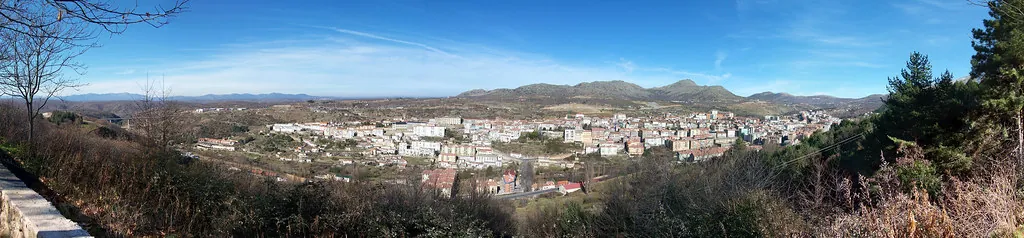
At 1,136 metres in the Sierra de Béjar, Candelario is shaped by the steep slope it clings to. The streets don’t follow straight lines. They rise and fall with uneven steps and short bends, worn smooth in the middle by generations. Stone is everywhere—in walls, in paving, around deep-set door frames. When the sky clears, light reflects off these grey surfaces and gives everything a faint, silvery tone, like the inside of an oyster shell.
The sound of the regaderas
One of the first things you notice is the water. The channels crossing the streets are called regaderas—narrow grooves cut into the stone, guiding runoff downhill.
They were built for work: to clean the streets and carry away waste from livestock and from the autumn slaughter. That past lingers in the village’s layout. Today, the regaderas are just part of things, a constant low murmur alongside your steps.
In winter, when the temperature plummets overnight, the water freezes into thin, treacherous sheets. Early in the day, you learn to step over them or tread carefully on the rough stone beside the channel. It’s a small, practical detail that reminds you how closely this place is tied to its environment.
Houses built for work
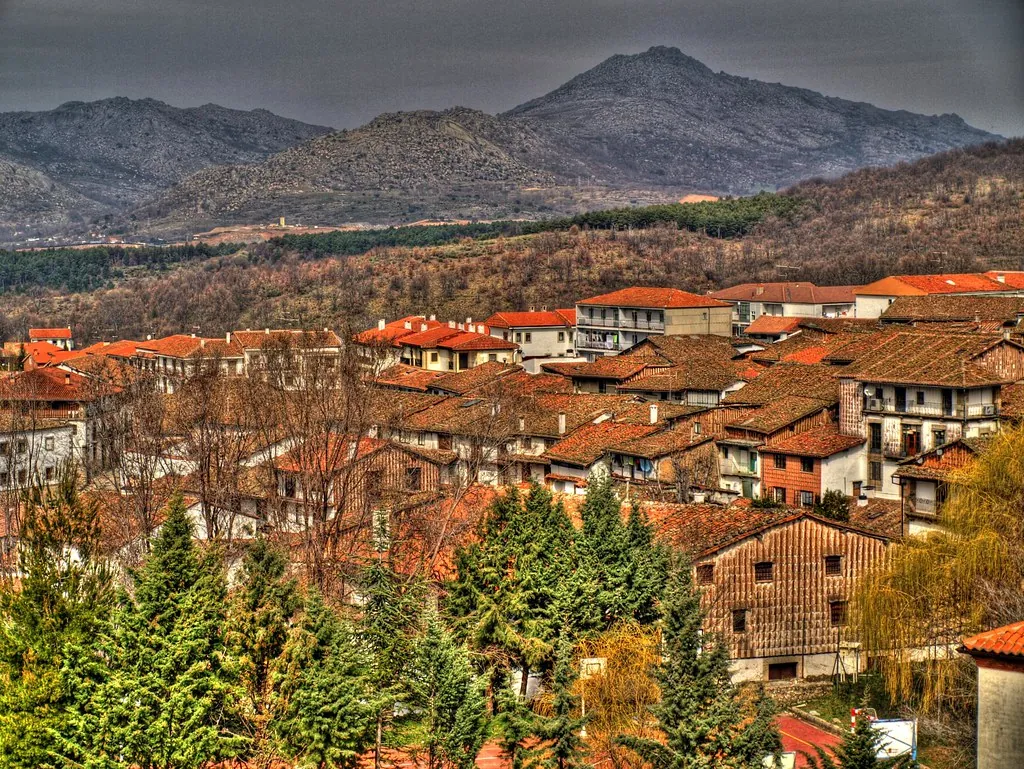
The houses are built with irregular masonry and steeply pitched roofs to shed heavy snow. Many have dark wooden balconies that jut out over the street. Look up beneath some eaves and you’ll see hooks and wooden poles, weathered smooth, once used for drying chorizos and salchichón.
Look for the matazana, too—a small, ventilated chamber built into the house where pork was cured after the annual matanza. This isn’t decorative; it’s structural. For generations, life here revolved around the pig and the production of embutidos. The architecture still shows it.
Doors are low and wide, for bringing things in and out. Beams are dark with age and smoke. Nothing feels restored for display; it feels used, which gives the streets their sense of continuity.
A sober church and a quiet square
The church of Nuestra Señora de la Asunción appears almost unexpectedly, squeezed between tighter lanes. Built from large blocks of grey stone, its exterior is sober, almost severe.
Inside, the atmosphere shifts. A Baroque altarpiece fills one end with unexpected colour and movement—a swirl of gold leaf and painted saints. The change is immediate but not overwhelming; it feels like stepping into a different room of the same house.
Out front is one of the few places where the village opens up. There are stone benches under arcades, their shadows long in the late afternoon. It’s a natural place to pause without breaking the overall calm.
A short walk away is a small museum dedicated to sausage-making. They’ve kept a house as it was decades ago, with tools and rooms arranged for salting, seasoning, and curing. It’s useful context; it connects those hooks under the eaves to the hands that worked them.
When the houses give way
It takes only a few minutes on foot for the last house to fall behind. Paths begin among chestnut and pine trees. In autumn, you walk on a carpet of yellow leaves and split chestnut husks.
Some routes climb towards higher peaks like Pico Calvitero. That’s a proper mountain walk—it requires good boots, decent fitness, and a clear forecast. Don’t improvise it.
For something gentler, follow the valley of the Río Cuerpo de Hombre. The sound of water is constant here too, a louder echo of the regaderas back in the village. The transition from built space to open landscape feels gradual, natural.
A note on timing
Candelario changes with the season. Winter brings serious cold; I’ve seen ice linger in shaded corners until noon. Summer days are milder than in Béjar down in the valley, but by late July even this altitude feels warm.
If you want the streets to yourself, come on a weekday morning before ten. By mid-morning on weekends, cars arrive from Béjar and Salamanca, filling up the parking area at the village entrance.
At day’s end, when the sun drops behind La Covatilla, everything settles back into quiet. The sound of water running through the channels returns to the foreground. A door closes somewhere up a side street. That’s all. It’s a simple moment that tells you more about Candelario than any brochure could