Full Article
about Cantagallo
Town on the N-630 with roadside food and green surroundings
Ocultar artículo Leer artículo completo
Dawn at 930 Metres
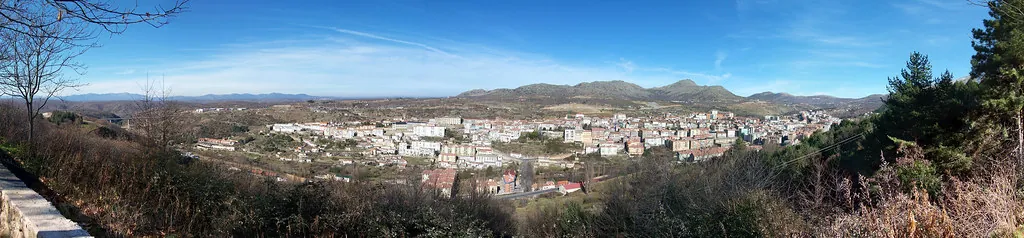
The church bell strikes seven and the village below is still in shadow. From the ridge road you can see the slate roofs glistening with dew—each one angled to shrug off the snow that lingers here long after it has melted on the Salamanca plain. Cantagallo wakes slowly: a tractor coughs, a dog barks once, and then the silence returns, deeper than any you’ll find on the Costas. At 930 m above sea level the air is thin enough to sharpen the scent of wood smoke and wet granite.
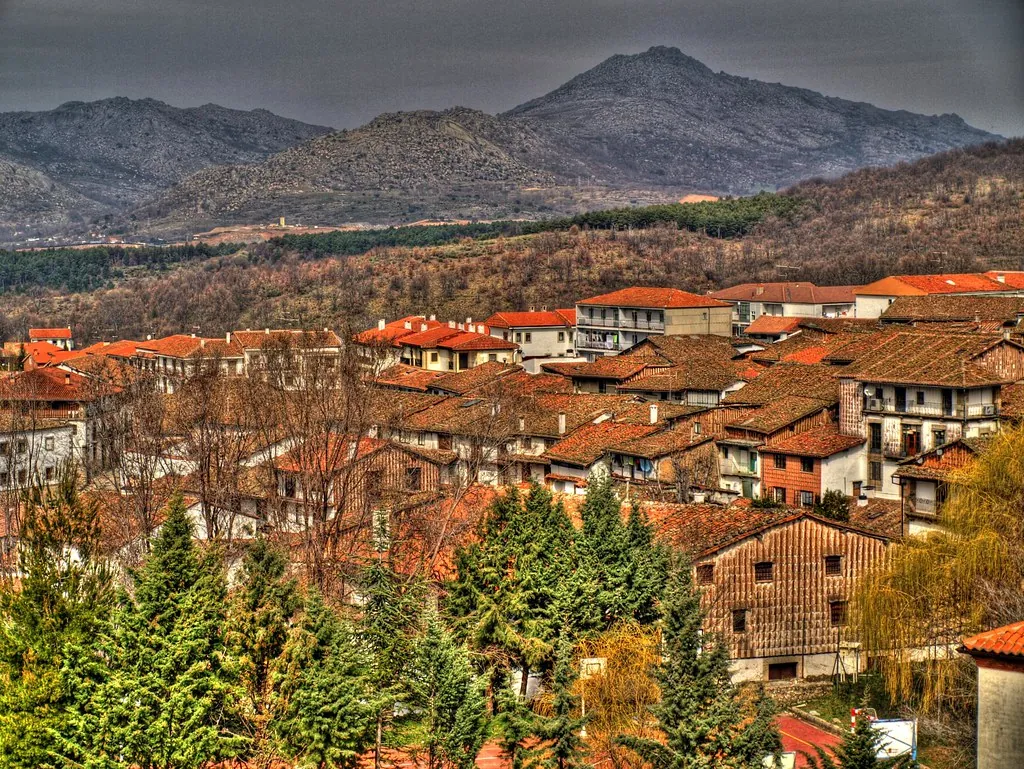
This is not Spain of the guide-book south. The houses are dressed in mottled stone, not whitewash, and the nearest palm tree is 400 km away. Instead, sweet-chestnut trunks twist above the lanes, their leaves turning the colour of burnt sugar by mid-October. The village name—literally “rooster song”—promises rural theatre, yet what you hear is subtler: the creak of stable doors, the soft clop of a horse being led to pasture behind the primary school.
Maps, Tracks and the Art of Not Getting Lost
Cantagallo sits on the northern lip of the Sierra de Béjar, the last ripple of the Central System before the land drops to the Duero basin. Walk south-east for ninety minutes along the stone-littered track signed “Puerto de Chía” and you reach the 1,350 m pass where León’s watershed begins. Keep going another two hours and you’ll drop into the valley of the Alagón, where the Roman road to Astorga still shows its ruts. The paths are old drove-ways—no wooden boardwalks, no QR code panels—so download the 1:25,000 sheet “Sierra de Béjar-El Cabezón” before you leave Wi-Fi behind. Locals are generous with directions but use antiquated landmarks: “turn left at the corral where the chestnut split in the ’17 storm”.
Spring brings the best walking window. By late April the snow has retreated to the highest corrie, yet the midday sun is still forgiving. Come August, the village offers respite from the Meseta’s furnace—temperatures hover five degrees below Salamanca city—but the trails are dusty and the cows linger in what shade the oak dehesas provide. Winter is a gamble. A 15 cm dump can cut road access for 36 hours; if you arrive then, bring chains and a full tank—the nearest petrol pump is 25 km away in Béjar and the Cajamar ATM runs out of €20 notes when the pass is closed.
Stone, Slate and the Occasional Splash of Crimson
There is no postcard plaza. The centre is a Y-shaped junction where the road to Candelario forks off from the lane to El Pedroso. On one corner stands the parish church, its tower patched with mismatched granite after lightning struck in 1978. Opposite, the old primary school—closed since 2009—has become an informal cultural centre; look through the railings and you’ll see murals painted by last year’s Erasmus volunteers, a sudden cobalt sun against the grey.
Houses are two-storey, timber-balustraded, many still entered by a stable door split in half. Renovations appear in waves: a bright green railing here, an aluminium garage door there, sometimes a glass balcony tacked on like a pair of mirrored sunglasses on a weather-worn face. Planning rules exist but are interpreted loosely; the result is organic, honest, alive. Photographers do better at first light when the stone warms to honey and the only scarlet is the village’s single phone box—an ex-BT K6 exported from Shropshire in 1998 and never wired up.
How to Eat Without Planning (and When You Must)
Cantagallo will not starve you, but it refuses to feed procrastinators. The Bar-Restaurante Cantagallo—unmarked save for a hand-written “Abierto” taped inside the window—serves lunch at 14:00 sharp. Ring before 13:00 or the grill stays cold. The owner, Manolo, buys beef every other Friday from a farmer in Valdefuentes; if it’s gone, the alternative is judiones—butter beans the size of a 50-pence piece stewed with tomato and mild pimentón. Vegetarians can ask for migas without panceta, though you’ll still get the fried egg on top. Pudding is hornazo, a sweet bread bun tasting like the love-child of hot-cross loaf and lardy cake; eat it while it’s hot because the solitary café will close at 18:00 and not reopen until the following morning.
For self-caterers, the tiny Ultramarinos Laura stocks UHT milk, tinned tuna and local honey labelled only “dehesa”. It shuts at 14:00 on Saturday and stays shut all Sunday; if you arrive late, drive to Béjar’s Carrefour Express, 25 minutes down the SA-526. A smarter option is to book half-board at El Tirol, the only guest-house with UK reviews—expect stone walls, under-floor heating and a breakfast strong enough to fuel a 20 km ridge walk.
What Passes for Entertainment After Dark
Night-life is the sky. At 930 m and 60 km from Salamanca’s orange dome, the Milky Way is a visible river. August brings the Perseids; locals drag mattresses onto roof terraces and count shooting stars until the dew forces them indoors. The village fiesta, held the third weekend of July, is strictly home-grown: Saturday morning mass followed by a paella cooked in a pan two metres wide, Sunday’s costume parade featuring children dressed as chestnut sellers and the inevitable foam machine in the plaza at midnight. Tourists are welcome but not announced; if you want a souvenir, ask for a sprig of dried lavender from the church porch—no one will charge you.
Winter fiestas are quieter. On 24 December villagers carry a carved nativity scene from house to house, singing coplas that pre-date the Civil War. Visitors may join, but conversation reverts to Spanish the moment sentiment ends. English is rarely spoken; download the offline Spanish dictionary and prepare to mime “I’m lost” with comic effect.
The Catch in the Idyll
Authenticity has a price. Mobile reception is patchy—Vodafone works on the upper cemetery terrace, nowhere else. The council has installed a defibrillator outside the town hall but no chemist; the nearest pharmacy is in Candelario, 12 km away, and it closes for siesta 14:00–17:00. If the SA-526 is blocked by snow, the diversion via Navacarros adds 45 minutes of switchbacks where stone walls leave no margin for error.
Crowds are unlikely, yet solitude is not guaranteed either. Spanish families descend at Easter and the entire month of August; they arrive in 4x4s, know every track, and fill the bar’s eight tables by 14:05. Reserve a room or be prepared to drive back to Béjar for the night. And remember the rooster that gives the village its name still crows at dawn—earplugs are advised if your window faces the poultry co-op behind the church.
Heading Home with Granite Dust on Your Boots
Leave early enough and you’ll meet the baker delivering yesterday’s bread to the farm at Los Villares—he’ll swap a still-warm loaf for directions to the Roman bridge you hadn’t noticed on the map. By nine the sun has burned off the valley mist and the thermometer in the car reads 18 °C, five degrees cooler than Salamanca will manage by noon. The Sierra shrinks in the rear-view mirror, but the granite dust on your boots and the faint taste of chestnut smoke in your hair argue otherwise. Cantagallo offers no souvenir shops, no audio guides, no sunset viewpoint with a metal cut-out for selfies. What it does offer is the Spain that guidebooks forgot—quiet, weather-worn, and stubbornly alive.