Full Article
about Lagunilla
Municipality on the hillside with a microclimate and production of oil and cherries
Hide article Read full article
A Quiet Start in the Sierra
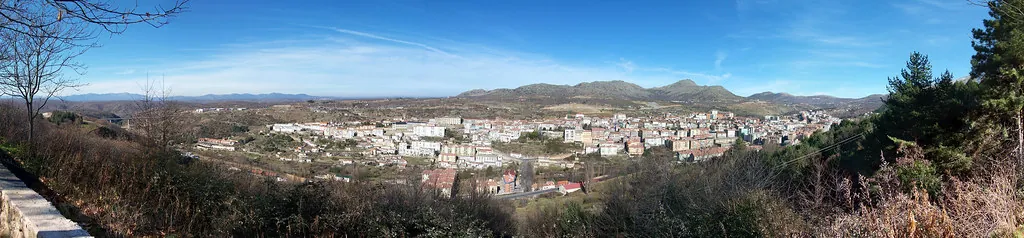
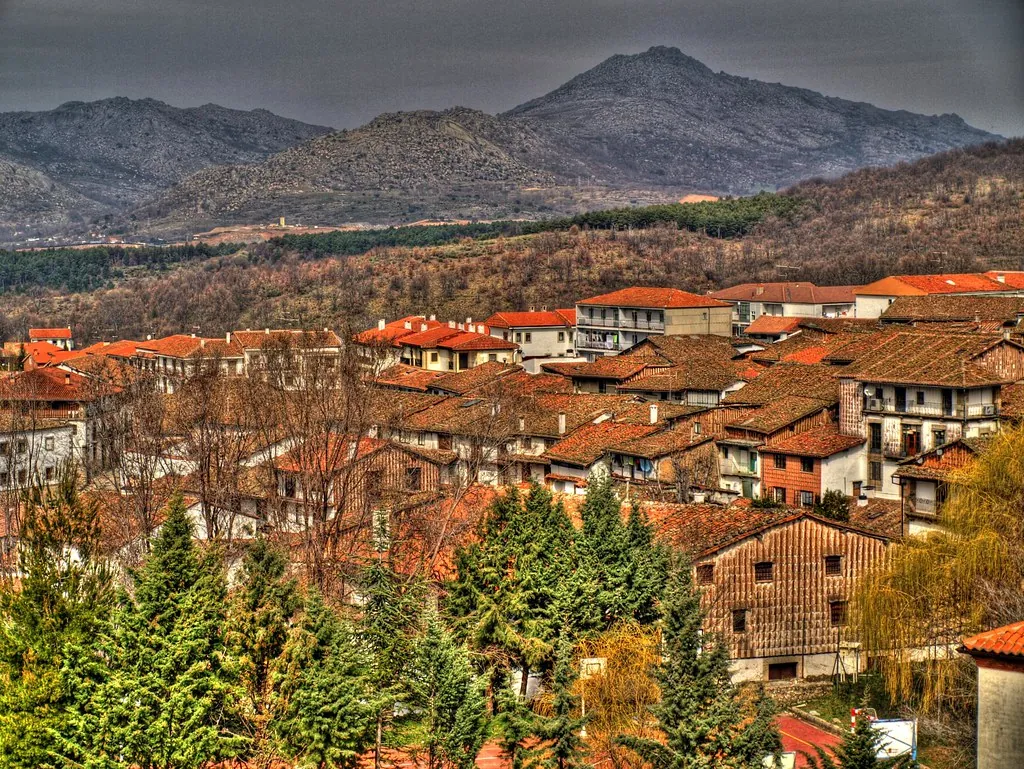
Early in the day, before the sun clears the ridge of the Sierra de Béjar, Lagunilla sits almost silent. A distant cockerel breaks the stillness, along with the soft scrape of a broom across stone outside a doorway. This small municipality has just over four hundred residents, and tourism here has little to do with signs or queues. What exists instead is a place that carries on at its own rhythm, where daily life continues among stone houses and enclosed yards that still hold cows or chickens.
The streets are narrow, some stretches packed earth, others laid with uneven stone that slows the pace of anyone passing through. Facades show darkened granite, marked by damp and moss. Many doors are made from thick wood that feels heavy when pushed open. The parish church appears suddenly in a small square, simple in form and built from masonry and granite blocks. It is not always open, and on weekdays the door is usually closed, the interior quiet. Even so, the building remains a focal point during points in the agricultural calendar, especially in May when celebrations linked to the countryside take place.
A walk without a fixed route quickly reveals how life here has been shaped. Many houses still keep a stable on the ground floor or a hayloft at the back. Some windows hold old plant pots, others just a thin curtain that lets in the late afternoon light. From time to time there is a yard with livestock or a tractor parked beside a dry stone wall.
Beyond the village, the landscape shifts quickly. Meadows open out between patches of chestnut and oak trees. In damper areas, the ground carries the smell of wet leaves for much of the year. Autumn deepens that scent, with chestnuts scattered on the ground, their spiky husks split open, and paths covered in brown leaves that crackle underfoot.
Walking Out from the Village
Lagunilla does not have a clearly marked network of walking routes. The usual approach is simple: take one of the agricultural tracks that begin at the edge of the village and follow it as far as the terrain allows. Some paths descend towards narrow streams that run between alder trees. Others climb gradually towards more open meadows, where parts of the sierra come into view.
Early hours bring movement overhead. Kites, vultures or the occasional hawk make use of rising air currents along the slopes. In autumn, mushrooms appear along the edges of the woods. Anyone thinking of collecting them needs experience and should follow any local rules in place.
These paths also connect Lagunilla with other villages in the Sierra de Béjar, such as Navacarros and Valdesangil. The routes are not especially difficult, though signposting is limited. A map or a preloaded route on a mobile helps avoid unnecessary detours.
Food from Nearby Land
Cooking in Lagunilla centres on what has been raised or grown nearby. Many households continue to serve hearty, spoon-based dishes when the cold sets in, alongside lamb or kid goat on special occasions. Cured meats prepared during the winter months are also common. It is not unusual to find dark local honey or simple cheeses made from milk produced close to home.
Presentation is not the focus here. The food is practical, designed to satisfy after long hours spent outdoors rather than to impress at the table.
Seasons and Shifts in Mood
The feel of Lagunilla changes noticeably with the seasons. Autumn brings the chestnut groves to their most expressive point, and the air carries the scent of damp wood. Winter introduces very dark nights, with cold that settles in quickly once the sun drops. At the same time, the sky often appears clear and full of stars.
Summer has its own rhythm. Visiting early in the day or towards evening makes a difference, as the heat builds even at this altitude around midday. During those hotter hours, the streets tend to empty.
Lagunilla does not revolve around packed schedules or major attractions. The place makes more sense at a slow pace, paying attention to the sound of wind moving through trees and the way light shifts across stone walls as the day progresses. What matters here is not so much what happens, but how gradually everything unfolds.