Full Article
about Peñacaballera
Small town on the provincial border with the historic garden of the Coto de Nuestra Señora.
Ocultar artículo Leer artículo completo
The church bell strikes noon, echoing across granite rooftops and empty lanes. Somewhere below, a tractor coughs to life. In Peñacaballera, population 149, this counts as rush hour.
Granite, Grass and Silence
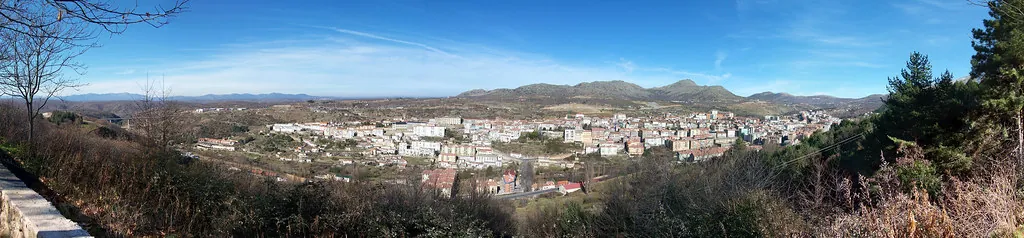
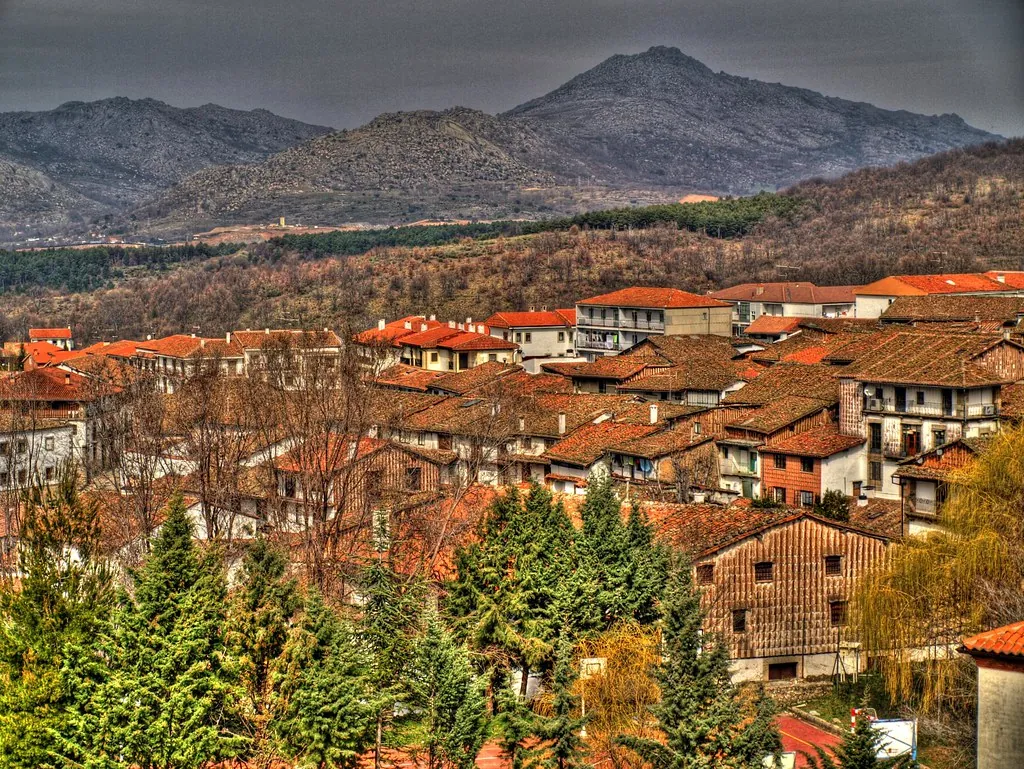
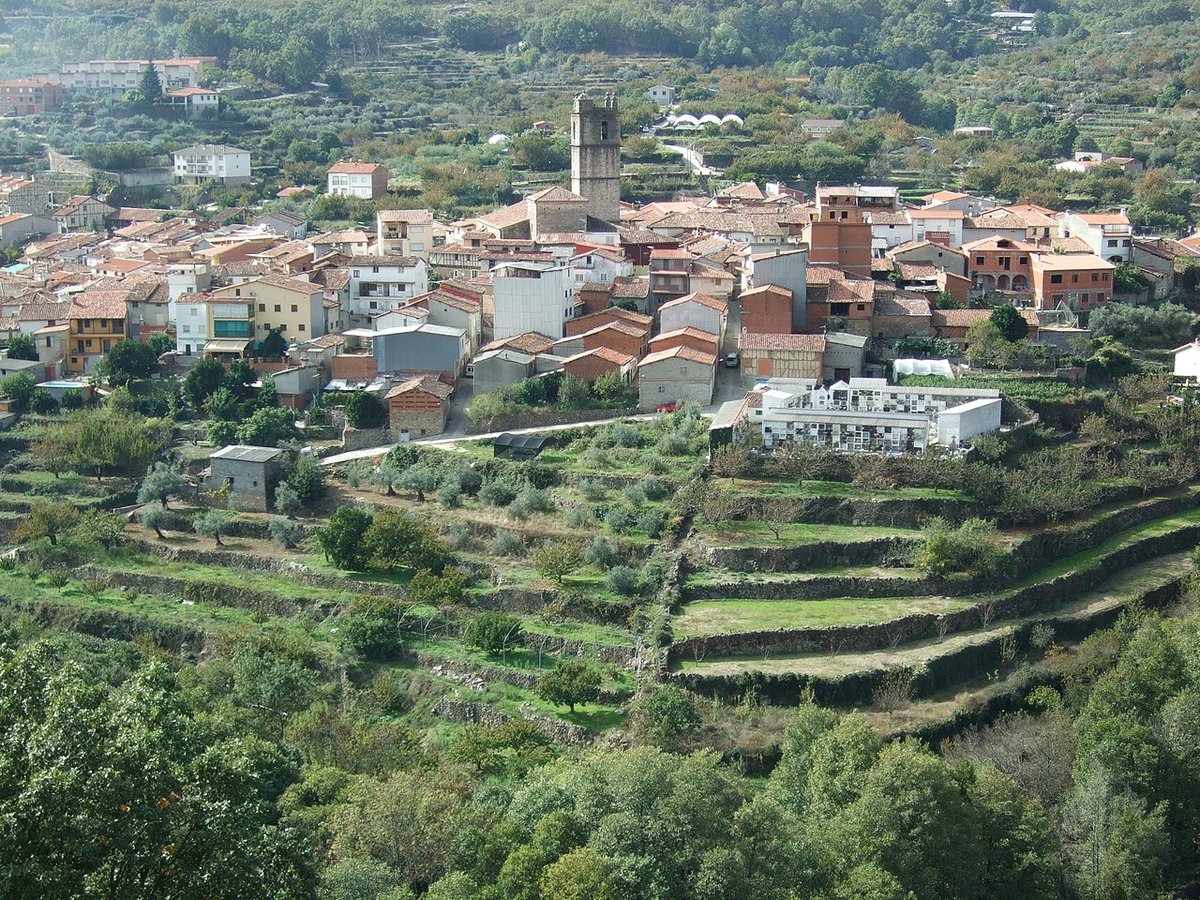
Perched at 850 m on the southern flank of the Sierra de Béjar, the village sits where meadow blends into chestnut and oak. The name translates loosely as “horse-rock place”, a nod to the bulbous granite tors that poke through the pasture like ancient sculptures. Those same stones built the houses, so everything here – walls, church, even the drinking troughs – shares the same steel-grey hue. When the low winter sun hits, the whole settlement glows like cooling iron.
Visitors arrive expecting a sleepy backdrop; they leave remembering the acoustics. Without traffic or bars, you hear what really matters: cowbells on the next ridge, wind combing through broom, your own pulse in the thin air. Bring a coat even in May; nights stay cool enough to warrant the wood-smoke that drifts from every chimney.
A Map of Footprints, Not Attractions
There is no ticket office, no audio guide, no selfie-frame. The single sight is the fifteenth-century parish church, its square tower patched after lightning in 1932. Step inside and the temperature drops five degrees; the stone floor is worn into shallow bowls by four centuries of Sunday processions. That is it for monuments. Ten minutes, door to door.
The real draw is the lattice of old drove roads that radiate into the hills. One path heads east to the abandoned hamlet of El Cabezo (45 min), another climbs west to the Puerto de Béjar col (2 h 30 min) where Salamanca province tips into Extremadura. None are way-marked beyond the occasional faded stripe on a barn gable. Download the tracks beforehand; the village shop does not sell maps, and mobile data flickers in and out like a bad radio signal.
After rain – common from October to May – the clay sections turn into skating rinks. Lightweight walking boots with deep tread are sensible; poles save knees on the 15 % gradients. In July and August the same paths become dusty staircases; start early or wait for the long shadow of evening when the thermometer finally dips below 25 °C.
Empty Plates, Full Cellars
Peñacaballera has no restaurant, no café, no Sunday pop-up tapas bar. The last grocer retired in 2018; groceries now mean a 14 km drive to Béjar. Self-catering is essential, yet the payoff is access to some of Spain’s least-known produce. In the covered market at Béjar (Tues/Fri until 14:00) look for judiones – giant butter beans grown in the neighbouring village of El Barco – and miniature kid goats that roast in a single hour.
Villagers still keep the winter matanza ritual: one pig, one family, one long weekend of chopping, spicing and stuffing. If you rent a house in January, the aroma of paprika and garlic will leak from every doorway. Polite enquiries can earn a fistful of fresh chorizos; payment is refused, but a bottle of half-decent Rioja is remembered next year.
When the Village Swells
For eleven months Peñacaballera practices social distancing by default. Then August arrives. The fiesta patronale, held around the 15th, triples the headcount as emigrants return from Madrid, Barcelona, even Swindon. A sound system appears in the plaza, competing with the ancient diesel generator that powers the dodgems. Locals apologise for the noise; outsiders call it authentic. Either way, book accommodation early – there are only six rental houses – and expect the single cash machine in Béjar to run dry.
Winter brings the opposite extreme. Snow can block the SA-516 for half a day; the council clears the tarmac but not the side streets. Chains are rarely needed, yet a flask and blanket in the boot feel prudent when the slate sky presses against the windscreen. On clear nights the lack of light pollution delivers a star field sharp enough to cut yourself on. Orion seems close enough to snag with a walking pole.
Beds, Bikes and Buses
Accommodation is entirely private homes, mostly renovated barns with under-floor heating and wood-burning stoves. Expect €90–€120 per night for a two-bedroom cottage, linen and logs included. Two allow dogs for a €20 supplement; cats are politely declined. There is no hotel, no parador, no pilgrim albergue.
Cyclists appreciate the 25 km loop north to Candelario, a stone-and-timber village where smokehouses still hang jamón above the lanes. The climb out of Peñacaballera averages 6 %, enough to warm thighs before the long glide home. Traffic averages four cars an hour; sheep have right of way.
Public transport is a myth. The weekday bus from Salamanca to Béjar (1 h 15 min, €6.40) connects with nothing smaller. From Madrid, the Avanza coach to Béjar runs twice daily; after that, a taxi costs €25 each way. Hiring a car at Salamanca airport (90 min drive) is simpler and usually cheaper for stays longer than two nights.
Leave the Checklist at Home
Peñacaballera will never feature on a “Top Ten” anything. It offers no souvenirs beyond the thyme you crush between your fingers, no adrenaline beyond the moment a red kite skims the ridge. What it does provide is a gauge for how loud ordinary life has become elsewhere. When the only decision is whether to walk to the next valley before lunch, the mind resets to a quieter frequency.
Come with supplies, sensible shoes and realistic expectations. Leave before the church bell decides you might stay forever.