Full Article
about Puerto de Béjar
Last village before Extremadura; known for its chestnut forest and the station quarter.
Hide article Read full article
A Village of the Pass
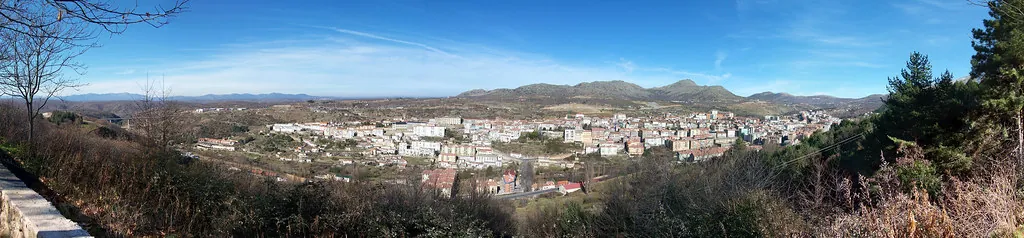
Puerto de Béjar takes its name and reason for being from the geography. The mountains here part to form a natural corridor, a pass historically used to move livestock and goods between the plains of Salamanca and the valleys of northern Extremadura. The village grew where the route met the first slopes of the Sierra de Béjar, at about 948 metres. Its population, just over three hundred, has always been modest, tied to the traffic through the pass and the pastoral life of the surrounding hills.
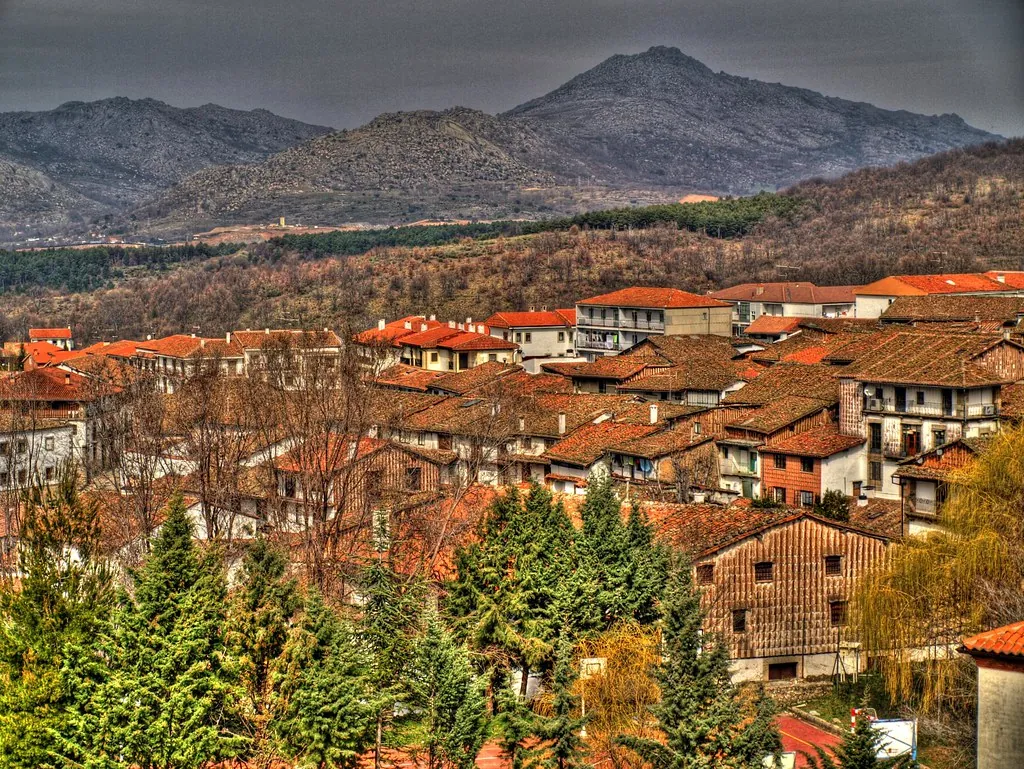
The layout confirms this origin. Streets are narrow and follow the contour of the land, not a planned grid. Houses are built from local granite, with steep roofs to shed winter snow and wooden balconies on upper floors. Many still have small stone corrals attached, a direct architectural record of the livestock economy that sustained the place.
The Parish Church and Local Building
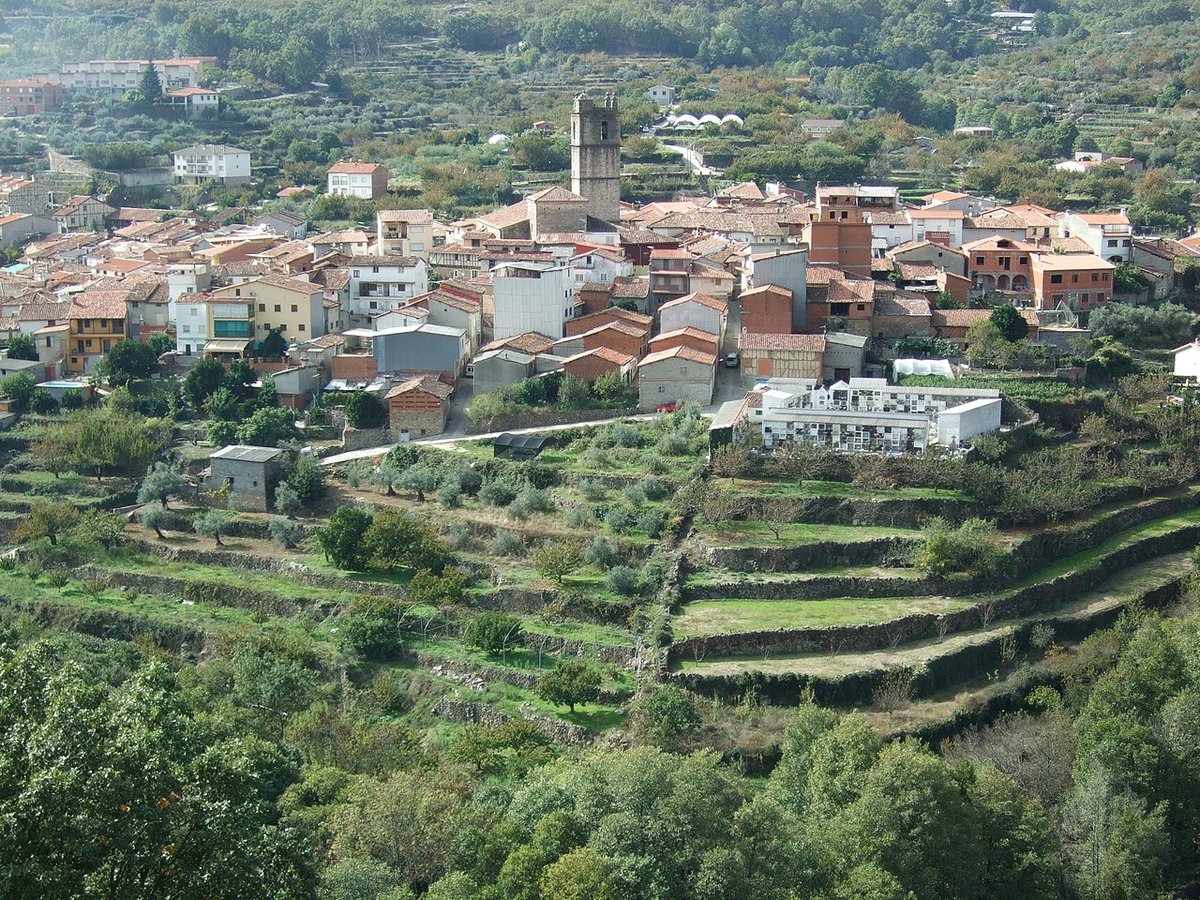
The parish church sits at the village centre. Its exterior is sober, built from the same granite as the houses around it. The architecture is functional, typical of rural churches in this part of the Sierra that served as both a place of worship and a community meeting point.
Inside, the preserved altarpieces and images are modest in scale. They are examples of the everyday devotional art found in these villages, reflecting the resources available to the community over generations. More telling, perhaps, is the church’s location: it anchors the settlement, visible from several approaches.
The domestic architecture tells a clearer story. Construction methods respond directly to the climate. Thick stone walls provide insulation, long eaves offer protection from rain at doorways, and south-facing balconies catch winter sun. The buildings cluster tightly, creating sheltered passages that feel like a direct response to mountain weather.
The Working Landscape
The landscape around Puerto de Béjar isn't scenery; it's the source of materials and livelihood. Oak and chestnut woods cover the slopes, interspersed with meadows still used for grazing. In autumn, the chestnut harvest remains an activity for some families, and you’ll see people in the groves. Spring brings a sharp green to the pastures after the snow melts.
Wild boar and deer are present in these woods. You’re more likely to see signs of them—tracks, disturbed earth—than the animals themselves, especially if walking near dawn or dusk. Their presence is a reminder that the village edges into a largely undeveloped stretch of the sierra.
Paths and Seasonal Use
A network of old livestock paths and trails extends from the village into the surrounding countryside. They are not waymarked for tourism but are used by locals for walking and foraging. The walking is generally gentle, crossing streams and through chestnut groves. The value is in the immersion, not a destination vista.
Mushroom foraging is common in season. If you plan to join in, note that gathering is regulated in certain areas; it’s best to ask locally about current rules. In winter, the focus shifts to snow. The La Covatilla ski station is accessible by road, but the journey from the village is entirely dependent on weather conditions—the same snow that defines the ski slopes can make the connecting roads slow or difficult.
Food from Climate and Tradition
The local cuisine is built for sustenance. You’ll find dishes based on kid goat, game from the sierra, and pulses used in hearty stews. Cured pork products are common. Chestnuts appear in some traditional recipes, a direct link to the woods. In baking, staples like perrunillas (shortbread-like biscuits) and bollo maimón (a simple sponge cake) are found here, as they are across much of the province.
Festivals and Community Rhythm
The annual pace has marked accents. The main festival, honouring the patron saint, usually falls in August. The population swells noticeably as former residents return, and there’s music in the streets—a contrast to the quieter tone of most of the year.
In deep winter, around January, bonfires are lit for San Sebastián. It’s a tradition shared by many mountain villages, a gathering point for warmth and community in the coldest weeks. Holy Week is observed with sobriety, through religious services rather than large processions, in keeping with the general character of the place.
Puerto de Béjar remains a settlement defined by its location on a pass and its adaptation to mountain life. Its size, its stone houses, and the seasonal rhythms of its calendar all stem from that long-standing relationship with a specific piece of geography.