Full Article
about Aldeanueva de la Sierra
Mountain village with traditional architecture and oak surroundings
Hide article Read full article
Aldeanueva de la Sierra es el pueblo que te recuerda que hay otra velocidad
Llegas, apagas el motor y lo primero que te llama la atención es lo que no oyes. Nada. Ni un coche, ni una radio, ni siquiera el runrún de un frigorífico en un bar. Solo el viento en los robles y, con suerte, el graznido lejano de un buitre. Aldeanueva de la Sierra, en plena comarca salmantina de la Sierra de Francia, es así: noventa y pocas almas y una paz que casi pesa.
El pueblo está alto, rondando los mil metros. Se nota al salir del coche; el aire pica diferente incluso en primavera. Aquí no hay tiendas con souvenirs ni carteles que te guíen. Hay calles cortas de piedra, portones grandes para guardar el ganado que ya no hay y alguna huerta detrás de una tapia. La vida pública consiste en dos vecinas charlando al sol en la plaza, si acaso.
No vengas buscando monumentos espectaculares o una agenda cultural. Aldeanueva es ese tipo de sitio donde lo interesante es precisamente lo contrario: ver cómo se llena una calle de sillas al atardecer cuando refresca.
La iglesia como punto de referencia
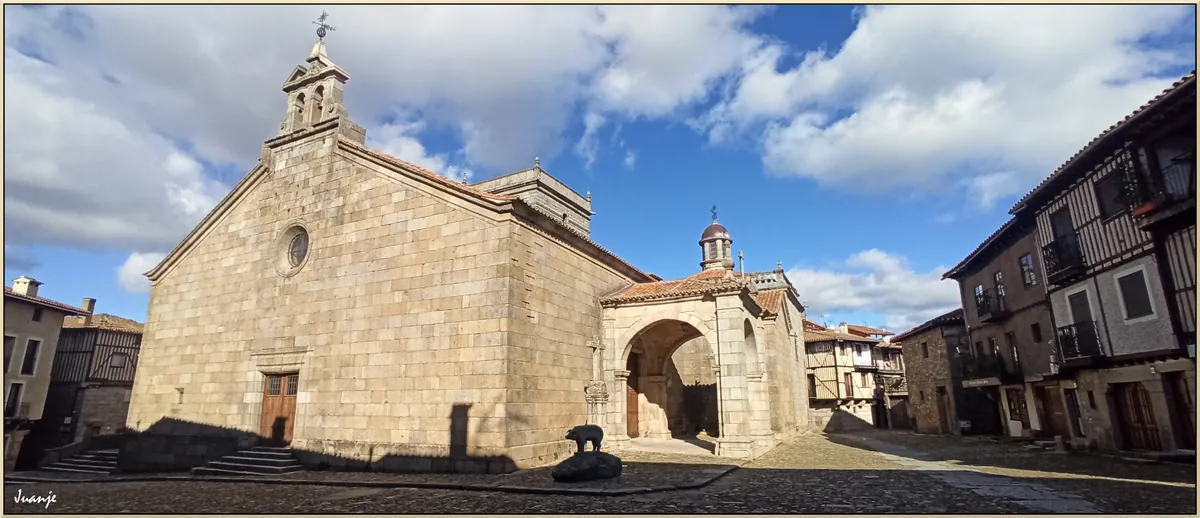
La iglesia de Santa María Magdalena preside el pueblo. No es una catedral, es más bien un edificio sólido y práctico, como todo por aquí. En pueblos tan pequeños, la iglesia hace las veces de plaza cubierta, de punto de encuentro para las pocas fiestas que quedan y de referencia visual cuando te orientas.
Es útil para entender la escala del lugar. Desde sus escalinatas ves todo el núcleo en un vistazo: las casas de piedra oscura, los tejados a dos aguas y las cuestas que se pierden entre prados. Es el centro geográfico y social, aunque un centro muy tranquilo.
Andar por aquí es seguir caminos viejos
Lo mejor que puedes hacer en Aldeanueva es calzarte unas zapatillas y salir a caminar sin mucho plan. No esperes rutas señalizadas con balizas amarillas y verdes. Aquí se camina por pistas forestales, por veredas que usan los tractores y por senderos que bajan a los arroyos.
La gracia está en perderse un poco. Subes por una cuesta entre robles y, de repente, el bosque se abre. En días claros puedes ver la silueta lejana de la Sierra de Béjar al fondo. No hay mirador oficial ni panel explicativo; la recompensa es esa vista inesperada que te encuentras porque sí.
Si buscas un recorrido concreto, pregunta a algún vecino mayor por el camino viejo hacia El Cabaco o Las Casitas del Conde. Te darán indicaciones con referencias como “la era grande” o “donde estaba el chozo”, pero llegarás.
La fauna aparece cuando no la buscas
Parece todo muy quieto, pero si aguzas el ojo y tienes paciencia, el monte está vivo. Es zona de buitres leonados; los ves planear arriba sin mover casi las alas. También hay cigüeña negra (más esquiva) y corzos.
Pero ojo: si sales con los prismáticos colgados y la cámara lista para disparar, lo más probable es que no veas nada más que árboles. El truco es andar despacio, pararte a escuchar y dejar de buscar activamente. Entonces pasa: un movimiento entre las ramas, una sombra cruzando el claro… Un instante breve que se va tan rápido como llegó.
El silencio ayuda mucho. Sin ruido de fondo hasta tu propio paso suena alto.
Cómo organizar la visita (sin frustrarse)
Venir aquí requiere cierto ajuste mental. Aldeanueva no es La Alberca; no hay bares en cada esquina ni artesanía en los portalones.
Mi recomendación práctica: trae agua y algo para picar en la mochila. Si quieres comer sentado en una mesa, planea combinar la visita con alguno de los pueblos más grandes de la comarca cercanos.
Aldeanueva funciona mejor como una parada dentro de una ruta más amplia por la Sierra de Francia. Llegas, das un paseo por sus calles (en diez minutos las has visto), te aventuras por uno de los caminos durante una hora u otra… Y luego te sientas en un banco o en el bordillo de una fuente a no hacer nada.
No es un pueblo para llenar ocho horas de actividad turística. Es justo lo contrario: un lugar para vaciar la cabeza durante un par de horas. A veces eso es justo lo que necesitas