Full Article
about Cepeda
Municipality known for the Senda de los Mil Colores and its tradition of hospitality
Ocultar artículo Leer artículo completo
The church bell strikes noon, but nobody checks their watch. In Cepeda's single main street, two elderly men pause their conversation about chestnut prices long enough to let a farmer's Land Rover squeeze past. The vehicle carries not tourists, but firewood—oak from the surrounding slopes that will burn in the same hearths its ancestors heated three centuries ago.
At 625 metres above sea level, this Sierra de Francia village doesn't so much occupy its mountainside as cling to it through sheer determination. The stone houses appear to have grown from the rock itself, their weathered walls holding stories that predate the Spanish constitution. With barely 300 permanent residents, Cepeda functions less as a destination and more as a working example of how rural Spain stubbornly persists.
The Architecture of Necessity
Forget the honey-coloured villages of Andalucía or the perfectly restored medieval centres that populate Instagram feeds. Cepeda's appeal lies in its refusal to perform for visitors. The narrow lanes twist according to medieval livestock routes, not tourist convenience. Houses stand shoulder-to-shoulder because shared walls meant less stone to haul up the hillside, not because it photographs well at golden hour.
Local stone forms the base of every building, topped with timber frames filled with adobe. The distinctive Arab tiles—curved terracotta pieces that interlock like clasped fingers—speak to centuries of practical roofing in a region where summer temperatures hit 35°C and winter brings genuine cold. These aren't heritage features; they're simply what works.
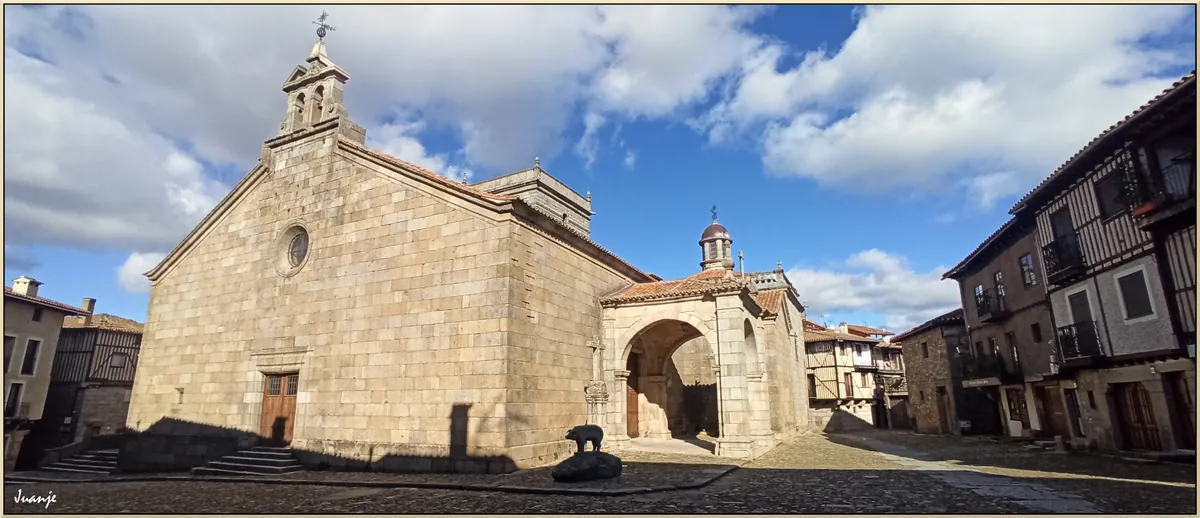
The parish church anchors the village centre, its medieval bones visible beneath later modifications. Unlike cathedral towns where the church dominates, here it serves as social anchor. Benches outside host evening conversations, while the steps become impromptu playgrounds for local children. The building's modest scale reflects Cepeda's honest assessment of its place in the world: sufficient, never excessive.
Walking Through Living Landscape
Step beyond the last house and you're immediately in dehesa country—the ancient Spanish system that combines livestock grazing with cork and holm oak management. No ticket booths, no guided tours, just public footpaths that locals have used since Moorish times. The landscape changes dramatically with altitude: walk twenty minutes uphill and chestnut trees replace oaks, their autumn transformation painting entire slopes copper and bronze.
Wild boar tracks criss-cross the paths, while griffon vultures circle overhead on thermals. Early mornings bring the best wildlife encounters—perhaps a family of wildcats disappearing into gorse, or the mechanical call of a hoopoe echoing across the valley. The absence of large predators means walking feels genuinely peaceful rather than nervously exhilarating.
Spring arrives late at this elevation, typically mid-April when cherry orchards in neighbouring valleys explode into white blossom. The contrast proves startling: one day you're trudging through leafless woodland, the next you're surrounded by drifts of petals that locals collect for medicinal teas. Summer walking requires strategy—start at dawn, seek shade during the brutal midday heat, resume as shadows lengthen.
Food That Knows Its Place
Cepeda's cuisine refuses cosmopolitan influences with the same stubbornness its houses resist modern architecture. The local hornazo—a savoury pie stuffed with pork loin, hard-boiled eggs and chorizo—originated as portable food for agricultural workers. Farinato, a spiced pork and bread sausage, appears on every menu accompanied by fried eggs and potatoes. These aren't trendy rediscoveries but daily staples that never left local tables.
autumn transforms the culinary calendar. Wild mushrooms appear in stews (check local regulations—some areas require permits), while chestnuts feature in everything from soups to desserts. The village's one bar serves patatas meneás, potatoes mashed with paprika and pork fat, alongside wine that costs €1.50 a glass and arrives in whatever glass happens to be clean.
Regional specialities travel well: Iberian ham from acorn-fed pigs, artisan cheeses made from local goat and sheep milk, honey from chestnut and heather flowers. Purchase directly from producers—most farms welcome visitors who phone ahead, though don't expect tourist facilities. Bring cash and your own bag.
When Cepeda Comes Alive
August transforms the village completely. The fiesta patronale brings back emigrants who've built lives in Madrid, Barcelona, even London. Suddenly those empty houses overflow with three generations sharing meals, stories flowing faster than the local wine. Street lighting appears inadequate for the crowds; the single bar imports extra staff; music drifts until dawn.
The rest of year operates at different rhythms. Winter weekends see day-trippers from Salamanca seeking proper mountain air, their city cars inappropriate for the final approach road. Spring brings Spanish retirees touring neighbouring villages—La Alberca's perfectly preserved centre lies twenty minutes away, Mogarraz's celebrity portraits another fifteen. They visit Cepeda for contrast, proof that not every mountain village has succumbed to boutique hotels and craft shops.
Getting here requires commitment. Salamanca's bus station offers infrequent services that terminate at the village edge, but having your own transport proves essential for exploring the wider Sierra. The final six kilometres twist upwards through oak forest, the road narrowing to single-track sections where reversing skills matter more than satellite navigation.
Staying overnight means choosing between two basic guesthouses or renting a village house—expect simple facilities, not boutique luxury. Night-time temperatures drop sharply even in summer; pack layers regardless of season. The single shop stocks essentials but closes for siesta and all day Sunday; plan accordingly.
Cepeda won't change your life. It offers no epiphanies, sells no lifestyle, promises no transformation. What it delivers is perhaps more valuable: evidence that rural Spain continues on its own terms, indifferent to whether visitors approve or even understand. The mountains that shelter it also isolate it, preserving something increasingly rare—a place that exists for its inhabitants first, everyone else second.