Full Article
about El Cabaco
Municipality home to the visitor center for the Roman mining site of Las Cavenes
Ocultar artículo Leer artículo completo
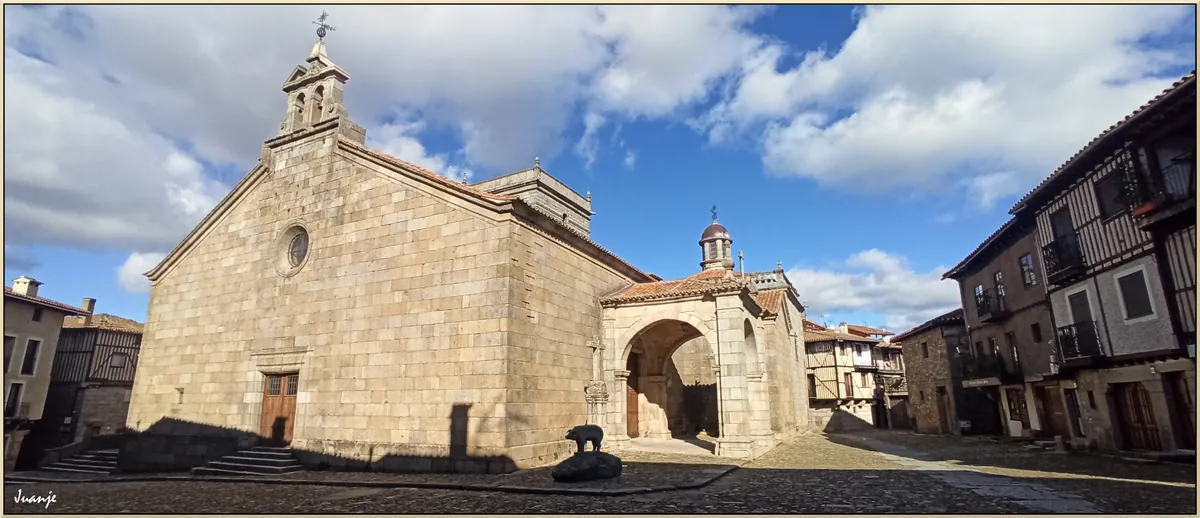
The church bell strikes noon and the only reply is a tractor grinding its way up a 30-degree slope. At 964 metres, El Cabaco is high enough for the air to feel thin, yet low enough for holm oaks to give way to sweet chestnuts outside the village. Stone houses grip the hillside like barnacles; their timber balconies spill geraniums into streets barely two metres wide. This is not a film set—just a working mountain hamlet where the population drops to 180 once the August cousins leave.
Altitude Adjustments
Nights up here surprise first-time visitors even in July. Temperatures can dip to 12 °C after sunset, so that fleece you packed for the plane suddenly earns its luggage space. Daytime highs hover around 26 °C—cooler than Madrid by ten degrees—making midsummer hiking feasible if you start early. Winter, by contrast, is serious: the CL-512 is regularly closed by snow for a morning or two each January, and the village fountain ices over. Book only fully refundable accommodation between December and March unless you enjoy last-minute B&B hunts in La Alberca.
The upside of the elevation is clarity. On a clear dawn you can pick out the granite bulk of the Peña de Francia, 3 km above, while the Cuerpo de Hombre valley unrolls 500 metres below like a crumpled green blanket. Black kites ride the thermals at eye level; their shadows sprint across the slate roofs faster than the post van.
Walking Without Waymarks
Footpaths radiate from the upper end of Calle Real, but the red-and-white stripes of the GR-14 long-distance route stop at the municipal boundary. Local tracks are maintained by farmers, not tourism boards, which means two things: you’ll meet more goats than people, and you need to download an offline map. A straightforward loop heads south along the Arroyo de los Huertos, drops to an abandoned watermill, then climbs back through chestnut coppice. Allow two hours, not the optimistic 70 minutes suggested by the tourist office flyer. After heavy rain the mill stream swells into a proper waterfall; in August it’s a tepid trickle where village kids dunk their heads.
Ambitious walkers can tackle the 12 km ridge walk to the Santuario de la Peña de Francia. The path gains 600 m of height, parts company with shade after kilometre three, and finishes with a knee-jarring stone staircase built by 15th-century friars. Take two litres of water per person—there’s no bar until you reach the summit car park, and the sanctuary café prices assume a captive pilgrimage audience.
What Passes for a Menu
El Cabaco keeps one proper restaurant, La Casa del Tiempo, open Friday to Sunday only. Mid-week visitors eat at the bar of the grocery shop on Plaza de España; the owner grills half a dozen pork steaks at 13:30 and when they’re gone, that’s lunch finished. Expect judiones—buttery white beans stewed with chorizo and bay—for €9, followed by cabrito asado (roast kid) at €16. Vegetarians get a plate of patatas meneás: potatoes mashed with paprika and olive oil, topped by a fried egg. House wine arrives in a chipped white jar and tastes better after the second glass, or perhaps the altitude makes it seem so.
If you’re self-catering, ring the bread van the night before (it toots through the village at 09:30) and buy cheese from the dairy fridge in the same grocer’s. The local pata de mulo is semi-cured, nutty rather than salty, and travels better than the soft goat’s milk quesos de la Serena.
When the Village Doubles in Size
Fiestas begin on the penultimate weekend of August when returning emigrants inflate the population to roughly 450. A sound system appears on the basketball court, pumping 1990s Spanish pop until 04:00; light sleepers should request rooms at the lower end of the village where granite walls muffle the bass. The high point, literally, is the Saturday night torchlight procession to a field above the cemetery for a communal paella. Entry costs €5 and you need to bring your own bowl—an etiquette detail missed by the odd Madrid family who end up eating from a borrowed dog bowl.
Winter has its own low-key ritual. The matanza tradicional takes place in early December on selected smallholdings. Tourists are welcome if they ask first, but this is not a photo-op of costumed re-enactors: it’s two pigs, three generations of the same family, and a morning’s work that ends with morcilla filling every sink in the house. Vegetarians have been known to emerge as carnivores once they smell the fresh loin sizzling in last year’s rendered fat.
Getting There, Getting Out
Madrid-Barajas to El Cabaco is 220 km door-to-door. Take the A-50 to Salamanca, then the SA-345 towards La Alberca; the final 20 km wriggle through quartzite ridges where Spanish drivers treat the centre line as decorative. Allow 2 h 30 m including a coffee stop, longer if mist clings to the passes. Public transport exists in theory: Avanza runs one daily bus from Salamanca at 16:00, returning at 07:00 next day. Miss it and a taxi costs €95, so hire a car at the airport and factor in €20 for motorway tolls.
Fuel pumps close at 21:00 even in La Alberca; after that you’re relying on the 24-hour tarjeta-only pump on the N-620 at Béjar. Phone coverage is patchy below the Peña: Vodafone picks up one bar on the main square, Movistar users need to climb to the mirador. Download your Spotify playlist before arrival—streaming will buffer every 30 seconds.
Worth It?
El Cabaco delivers silence, starlight and the smell of woodsmoke drifting down medieval lanes. It also delivers shuttered shops on Monday, a single taxi for the entire comarca, and the realisation that “rural authenticity” includes a neighbour’s rooster that starts at 04:45. Come if you want trails without signposts, beans cooked in last night’s pork fat, and conversations that end when the other party remembers they left the goats unfed. Skip it if you need boutique linen, evening entertainment beyond the village bench, or a choice of restaurants after 21:00. The Sierra de Francia starts here—but so does the 20th century, and it’s not entirely sure the 21st has arrived yet.